 how-to
How to Fix Well Water Sulfur Smell: 7 Proven Steps
Table of Contents
- Why Your Well Water Smells Like Rotten Eggs
- Well Water Testing for Sulfur: Start Here Before You Treat
- How to Shock a Well for Sulfur Smell
- Fixing Sulfur Smell From the Water Heater
- Best Water Filtration for Sulfur Smell
- DIY vs. Professional Treatment: A Cost-Benefit Breakdown
- Maintenance Schedule to Keep Sulfur From Coming Back
- Conclusion
- Frequently Asked Questions
Last Updated: September 23, 2026
Why Your Well Water Smells Like Rotten Eggs
That well water sulfur smell coming from your tap is hydrogen sulfide gas, and it forms underground when sulfur bacteria break down organic matter in your well. The smell is strongest in hot water and often fades after the tap runs. That pattern tells you a lot about where the problem starts.
Hydrogen Sulfide vs. Sulfur Bacteria
These two problems look the same at the tap but need different fixes.
Well Water Testing for Sulfur: Start Here Before You Treat
Well water testing for sulfur is the step most homeowners skip, and it costs them money. You cannot pick the right treatment until you know three things:
- Is the odor in cold water, hot water, or both?
- What is the hydrogen sulfide concentration in ppm?
- Is sulfur bacteria present in the well?
| Where the smell appears | Likely cause | First step |
|---|---|---|
| Cold water only | Hydrogen sulfide in supply | Test ppm, then treat at point of entry |
| Hot water only | Anode rod reaction | Replace anode rod |
| Both hot and cold | Sulfur bacteria or high sulfide | Shock the well, then filter |
| Smell fades after running | Bacterial buildup in pipes | Disinfect the plumbing |
How to Shock a Well for Sulfur Smell
Shock chlorination kills sulfur bacteria in the well, casing, and plumbing. It is the standard first move when bacteria are the source, and it is a job most homeowners can do in an afternoon.
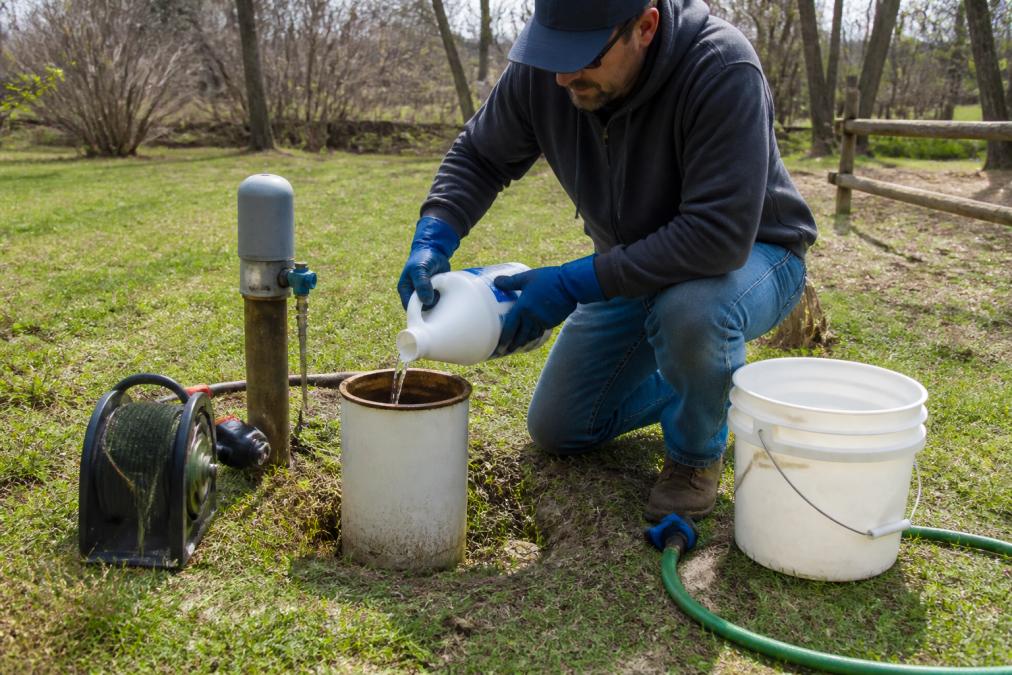
Step-by-Step Shock Chlorination
- Check the well depth and casing. You need enough chlorine to reach the water column.
- Pour unscented bleach into the casing. Skip scented or splashless products, which add unwanted chemicals.
- Run a hose back into the well. This circulates the chlorine and coats the casing walls.
- Open every tap in the house. Run each one until you smell chlorine, then shut it off.
- Let it sit for 12 to 24 hours. This gives the chlorine time to kill bacteria in the lines.
- Flush the system. Run outdoor taps until the chlorine smell clears before using indoor water.
Chlorine bleach works fast and costs little. The catch is that it can corrode metal components over time if you overdo it, and it does not remove hydrogen sulfide gas that comes from the supply itself.
Fixing Sulfur Smell From the Water Heater
If the smell only shows up in hot water, your water heater is the culprit. The magnesium anode rod inside the tank reacts with sulfate in the water and produces hydrogen sulfide gas.
Best Water Filtration for Sulfur Smell
The best water filtration for sulfur smell is not the most expensive system, it is the one matched to your test results. Two wells with the same rotten-egg odor can need completely different equipment once pH, iron, manganese, and hardness enter the picture. This is the step most guides skip, and it is why so many homeowners buy a filter that quits working within months.
Match the System to Your Water Chemistry
Hydrogen sulfide rarely travels alone. In most wells it shows up alongside iron, manganese, and hardness, and each one changes how a treatment system performs.
- pH below 7.0 (acidic water): Aeration strips sulfide gas efficiently, but acidic water corrodes metal components and shortens equipment life. A acid-neutralizing stage ahead of the sulfur system protects everything downstream.
- Iron above 0.3 ppm: Iron fouls carbon cartridges and clogs aeration spray heads. Oxidizing filters or chemical injection handle iron and sulfide together; carbon alone will not keep up.
- Manganese present: Even low manganese coats filter media and blinds carbon. It needs an oxidizing stage, not just adsorption.
- Hardness above 7 grains per gallon: Scale builds on aeration media and valve heads. A water softener placed after sulfur removal protects the whole-home system and keeps soap working.
- Sulfide above roughly 5 ppm: Carbon and standalone aeration struggle. Chemical injection with hydrogen peroxide or chlorine, followed by a backwashing filter, is the reliable path.
System Comparison by Water Condition
| System | Best for | Watch-outs |
|---|---|---|
| Aeration | Moderate sulfide, whole home, low iron | Needs pH correction if acidic; spray heads need cleaning |
| Activated carbon | Low sulfide, taste and odor polishing | Frequent cartridge swaps when iron or sulfide is high |
| Chemical injection (peroxide or chlorine) | High sulfide, heavy iron and manganese | Regular chemical refills; dosing must be sized correctly |
| Oxidizing filter (air or chemical) | Sulfide plus iron together | Backwash water demand; media replacement over time |
Where Softeners and Reverse Osmosis Fit
If you want the system sized to your actual chemistry instead of a generic spec sheet, a licensed water treatment team can test, design, and install the full stack, sulfur removal, softening, and reverse osmosis, as one matched package.
DIY vs. Professional Treatment: A Cost-Benefit Breakdown
Shock chlorination and anode rod swaps are realistic DIY jobs. Whole-home aeration, chemical injection, and softener installation are not. The real question is not whether you can turn a wrench, it is whether the DIY path saves money over the life of the system or quietly costs more.
What DIY Actually Saves, and What It Doesn't
DIY wins on labor. It loses when a mis-sized or mis-installed system has to be redone.
- Testing: Always DIY-friendly. A certified lab panel is the cheapest dollar you will spend on this problem.
- Shock chlorination: DIY-friendly. Bleach, a hose, and an afternoon. The risk is over-chlorinating and corroding metal components, which is a repair cost, not a savings.
- Anode rod replacement: DIY-friendly on most tanks, but the wrong rod material or a cross-threaded port turns a cheap fix into a tank replacement.
- Cartridge and media changes: DIY-friendly and worth doing on schedule, skipped changes are the number one reason sulfur smell returns.
- Aeration install: Pro-only in practice. Sizing depends on sulfide ppm, flow rate, and pH. A mis-sized unit runs constantly, wastes energy, and never fully clears the odor.
- Chemical injection setup: Pro-only. Dosing must match concentration and flow. A wrong dose leaves residue or fails to oxidize the gas.
- Water softener and reverse osmosis install: Pro-only for whole-home. Bypass plumbing, drain lines, and pressure requirements are easy to get wrong.
The Long-Term Ownership Picture
The cost-benefit split is not just the install bill. It is the total cost of ownership across the life of the equipment:
- DIY-only path: Low upfront cost, but recurring chemical and cartridge purchases, plus the risk of replacing a mis-sized unit within a year or two. On high-sulfide wells, this path often costs more over five years than a correctly sized system installed once.
- Professional path: Higher upfront cost, but the system is sized to your test results, so media lasts longer, energy use is lower, and the smell actually stays gone. Warranty coverage and service calls also reduce the odds of a full replacement.
- Hybrid path (most common): DIY the testing, shock chlorination, anode rod, and routine maintenance; hire a pro for aeration, chemical injection, softening, and reverse osmosis. This captures most of the savings without the mis-sizing risk.
When to Call a Pro
- Sulfide is above roughly 5 ppm, or iron and manganese are also elevated.
- You want whole-home treatment, a water softener, or reverse osmosis installed.
- The well pump, pressure tank, or plumbing needs work.
- The smell returns within weeks of a DIY fix.
If you would rather skip the trial-and-error, a licensed water treatment team can test your well, design the full stack, sulfur removal, softening, and reverse osmosis, and quote the work before anything is installed.
Maintenance Schedule to Keep Sulfur From Coming Back
Sulfur problems return when maintenance slips. A short schedule keeps the smell gone.
- Monthly: Check the aeration vent and clear any blockages.
- Every 3 months: Inspect sediment filters and swap as needed.
- Every 6 months: Test for hydrogen sulfide and bacteria.
- Yearly: Service the chemical injection pump and check the anode rod.
- Every 1 to 3 years: Re-shock the well if bacteria return.
Conclusion
Rotten egg odor is a solvable problem once you know whether it comes from the well, the heater, or both. Start with a test, shock the well if bacteria are present, and match your filtration to the concentration you find.
Frequently Asked Questions
Is it safe to drink well water that smells like sulfur?
Hydrogen sulfide at the low levels that cause a rotten egg odor is not usually a health hazard, but the smell makes water unpleasant and can indicate sulfate-reducing bacteria or corrosion in your plumbing. The EPA classifies hydrogen sulfide as a secondary contaminant, meaning it affects taste and odor rather than safety. However, you should test your well water for sulfur and other contaminants like coliform bacteria before assuming it is safe. If the smell is strong or accompanied by other issues, get a professional water test.
Can a water softener fix sulfur smells in well water?
No. A standard water softener removes hardness minerals like calcium and magnesium, not hydrogen sulfide gas or sulfur bacteria. In fact, a softener can make the problem worse by providing a surface where sulfur bacteria can grow. To fix well water sulfur smell, you need a treatment method designed for sulfur, such as aeration, activated carbon filtration, or chemical injection. A softener may be part of a whole-home system, but it should not be your primary sulfur treatment.
How long does it take to get rid of sulfur in well water?
If the sulfur comes from your water heater, replacing the anode rod can eliminate the smell within a day. For well water with hydrogen sulfide or sulfur bacteria, shock chlorination may clear the odor in 24 to 48 hours, but the smell can return if the bacteria are not fully eliminated. Aeration or filtration systems typically remove sulfur immediately once installed and properly adjusted. Persistent problems may require a combination of treatments and a maintenance schedule.
What is the most effective way to remove sulfur from well water?
The best water filtration for sulfur smell depends on your water chemistry and the source of the sulfur. For low levels of hydrogen sulfide, an activated carbon filter or oxidizing filter may be enough. For higher concentrations, aeration systems or chemical injection pumps are more effective. If sulfur bacteria are present in the well, shock chlorination followed by a whole-home treatment system is often the most reliable approach. Testing your water first ensures you choose the right method.