 How-to
How to Prevent Scale in Tankless Water Heaters
Last Updated: November 22, 2026
Quick Summary
To prevent scale in tankless water heaters, stop the calcium and magnesium at the source with a correctly sized water softener, then add a point-of-entry anti scale filter as a secondary layer of protection. Softening and conditioning slow scale formation but do not remove existing deposits, so pair prevention with descaling every 6-12 months based on your measured water hardness.
- Tankless heaters are more exposed to scale because water passes through narrow copper or stainless channels.
- Size a softener to your measured grains per gallon and the number of bathrooms it serves.
- An anti scale filter undersized for your heater's maximum flow will starve the unit and cause cold-water spikes.
- A pre filter catches sediment, grit, and debris but will not prevent scale on its own.
- A home on softened water still benefits from an annual flush, just a lighter one.
Table of Contents
- Why Scale Buildup Threatens Your Tankless Water Heater
- The Best Water Softener for Tankless Water Heater Protection
- How an Anti Scale Filter for Tankless Water Heater Systems Works
- Choosing a Pre Filter for Tankless Water Heater Inlet
- How Often to Descale a Tankless Water Heater
- Step-by-Step Installation and Commissioning of Scale Prevention Equipment
- Prevention vs. Descaling: Building a Maintenance Schedule That Works
- Get a Free Estimate for Scale Prevention Solutions
- Frequently Asked Questions
Why Scale Buildup Threatens Your Tankless Water Heater
Hard water leaves mineral deposits inside your tankless water heater every time it runs, and the only real way to prevent scale is to stop those minerals at the source. Those deposits, mostly calcium and magnesium, bake onto the heat exchanger as scale. The result is a unit that works harder, heats slower, and eventually fails.
Tankless heaters are more exposed to this than tank models. Water passes through narrow copper or stainless channels, and a thin layer of limescale acts like insulation on a hot pan. Heat transfer drops. The unit fires longer to reach the same temperature.
Watch for these early signs of scale buildup:
- Hot water takes longer to arrive
- Temperature fluctuates in the shower
- The unit makes a rumbling or knocking sound
- Flow from hot taps feels weaker
- Error codes tied to overheating or flow
If any of those sound familiar, hard water is the likely cause. A water hardness test tells you how much scale-forming mineral your supply carries before you buy any equipment.
In homes across Northern Colorado, the fix is often stopping the minerals before they reach the heat exchanger.
The Best Water Softener for Tankless Water Heater Protection
A water softener sized to your home's hardness and peak hot-water demand can reduce the calcium and magnesium that enter a tankless unit, which lowers the likelihood of scale on the heat exchanger.
Sizing matters more than brand. A softener that is too small will exhaust its resin bed between regenerations, letting hard water slip through. Match the system to your measured grains per gallon and the number of bathrooms it serves.
A few selection points we walk homeowners through:
- Ion exchange over salt-free if you want true mineral removal
- Correct grain capacity based on hardness and household size
- Demand-initiated regeneration to save salt and water
- Bypass valve so the heater can still run during service
Installing a softener is plumbing work, not a weekend project. If you want it done right the first time, you can request water softener system installation in Wellington, CO and the surrounding area.
How an Anti Scale Filter for Tankless Water Heater Systems Works
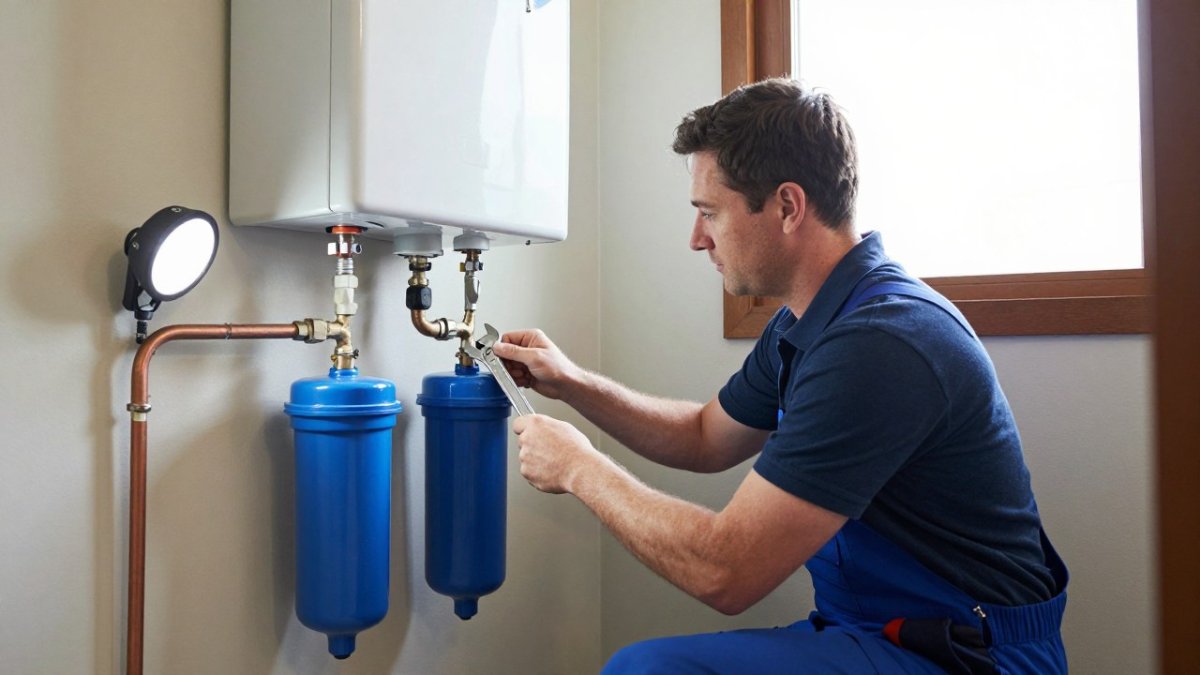
An anti scale filter for tankless water heater systems treats water at the point it enters the unit.
Template-assisted crystallization (TAC). Water passes over a polymer media bed.
Chelation and sequestration media. Some cartridges release food-grade polyphosphates or similar compounds that bind dissolved minerals and keep them from precipitating.
Magnetic and electronic descalers. These wrap coils or magnets around the pipe and claim to alter crystal structure.
Physical sediment and scale screens. A fine mesh or sintered cartridge catches particles but does nothing to dissolved minerals. It is a pre filter, not a scale preventer.
These devices have real limits and are generally best used as a secondary layer of protection rather than a replacement for softening in very hard water.
What most guides miss is the flow-rate rating. A filter undersized for your heater's maximum flow will starve the unit and cause cold-water spikes.
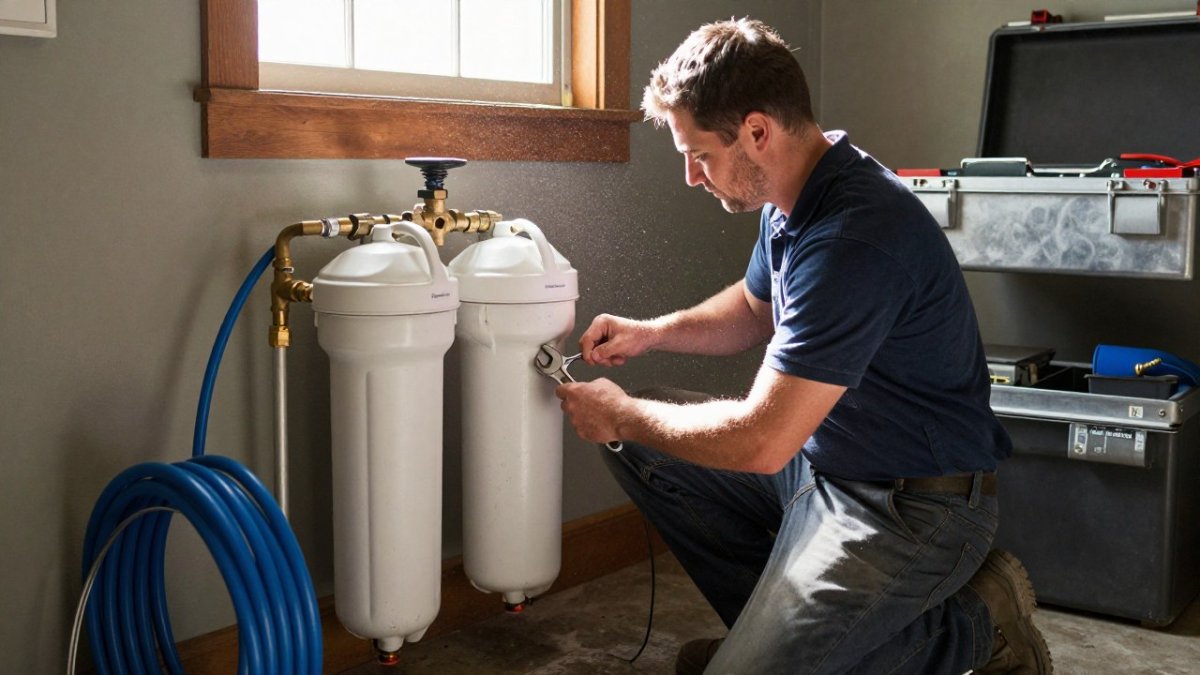
Placement and bypass. Install after any sediment pre filter and before the heater inlet, with isolation valves on both sides so you can swap media without draining the system.
Choosing a Pre Filter for Tankless Water Heater Inlet
A pre filter for tankless water heater inlet catches sediment, grit, and debris before they reach the unit. It protects the small waterways inside the heat exchanger and keeps the flow sensor clean.
Sediment is a separate problem from scale, and both matter. A dirty inlet screen can mimic scale symptoms: low flow, error codes, and uneven heating. If your water comes from a well or an older municipal line, a pre filter is close to essential.
Selection checklist:
- Confirm the filter's flow rating meets your heater's maximum
- Pick a mesh size fine enough for your sediment load
- Choose a serviceable housing you can open and clean
- Add isolation valves so you can service it without draining the system
- Plan a cartridge replacement interval you will actually keep
Here is the honest trade-off. A pre filter stops dirt, not dissolved minerals. It will not prevent scale on its own. Pair it with softening or conditioning for full protection.
How Often to Descale a Tankless Water Heater
Manufacturers' recommended descaling intervals vary, so follow your model's manual, and let your measured water hardness guide how often you descale. The interval should follow your measured hardness, not a calendar habit.
Set the interval from your water test. A water hardness test reports grains per gallon (gpg).
What descaling actually removes. A flush dissolves calcium carbonate scale from the heat exchanger waterways. It does not remove sediment, restore a corroded exchanger, or fix a failed flow sensor. If the unit still underperforms after a proper flush, the problem is likely something else.
Diagnose before you descale. Scale symptoms overlap with other faults:
- Low flow at hot taps only, with normal cold flow, points toward scale or a clogged inlet screen.
- Low flow at all fixtures points toward a supply, pressure, or pre filter issue.
- Temperature fluctuation with a scale-related error code supports descaling.
- A flow-sensor or ignition fault that persists after flushing is not a scale problem.
- Rumbling or knocking can be scale or can be air in the lines after service.
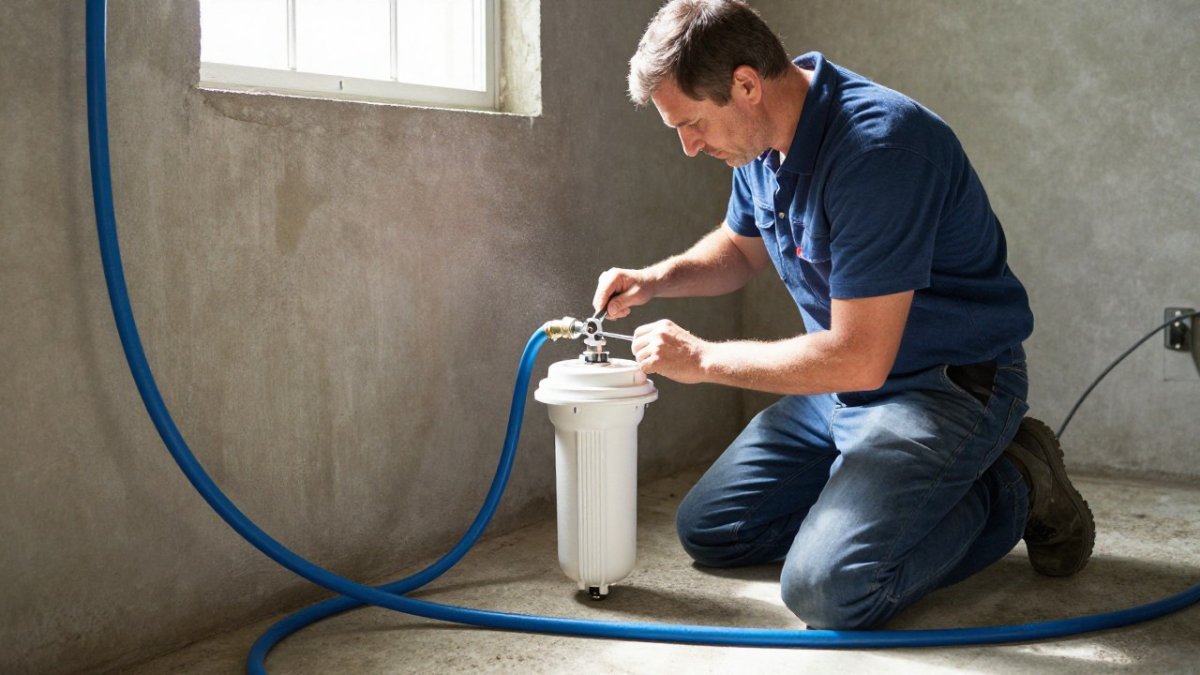
The flush, step by step. You need a pump, two hoses, a bucket, and a descaling solution made for tankless units. Connect the pump to the service valves, circulate the cleaner through the heat exchanger per the solution's dwell time, then flush with clean water until the return runs clear. Follow the model's instructions exactly, and only attempt it yourself if you are comfortable with basic plumbing.
Prevention does not replace descaling. Softening and conditioning reduce how fast scale forms, but they do not remove deposits already on the exchanger. A home on softened water still benefits from an annual flush, just a lighter one.
Watch out: running descaling solution through a unit with the gas or power on, or leaving it in longer than the label allows, can damage the exchanger and void coverage. Isolate the heater and follow the solution's dwell time exactly.
If descaling and filter schedules feel like a lot to track, our whole home filtration maintenance guide lays out the intervals in one place.
Step-by-Step Installation and Commissioning of Scale Prevention Equipment
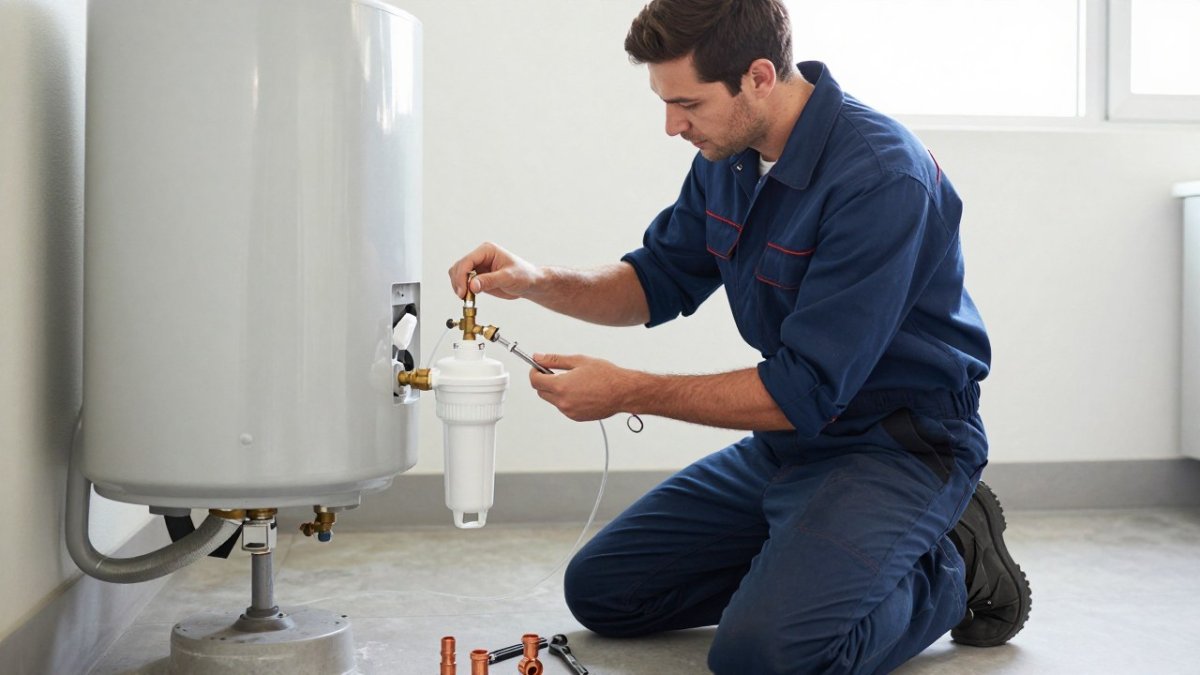
Installing scale prevention equipment is a sequence, and the order matters. Here is how we approach a typical setup.
- Shut off water and power. Close the main supply and cut power to the heater.
- Mount the equipment. Set the softener and pre filter on a level, dry surface with room to service them.
- Cut in the bypass. Install isolation valves so the heater can be serviced without shutting down the house.
- Plumb the inlet side. Route supply through the pre filter, then the softener, then into the heater.
- Flush and purge. Run water through the new equipment to clear air and media fines.
- Check for leaks. Pressurize slowly and inspect every joint.
- Set the softener. Program hardness and regeneration based on your test results.
- Commission the heater. Restore power, run hot water, and confirm stable temperature and flow.
Watch out: skipping the purge step traps air in the heat exchanger and can trigger a dry-fire fault. Follow your model's startup procedure to the letter.
Prevention vs. Descaling: Building a Maintenance Schedule That Works
Prevention and descaling are not competing strategies. You need both, and the balance depends on your water.
Prevention, meaning softening or conditioning, stops most scale at the source. Descaling removes what slips past. A home on softened water still benefits from an annual flush, just a lighter one.
A schedule that holds up in practice:
- Monthly: glance at the pre filter and softener salt level
- Every 6-12 months: descale the heater based on hardness
- Yearly: replace filter cartridges and check softener settings
- As needed: address error codes or flow changes right away
Softener maintenance is the piece people forget. A system that stops regenerating is just a fancy pipe. Our guide to common water softener problems and fixes covers the failures that quietly undo your protection.
Here is the maintenance cadence the article recommends for keeping scale in check.
| Frequency | Task |
|---|---|
| Monthly | Glance at the pre filter and softener salt level |
| Every 6-12 months | Descale the heater based on hardness |
| Yearly | Replace filter cartridges and check softener settings |
| As needed | Address error codes or flow changes right away |
Get a Free Estimate for Scale Prevention Solutions
You can test your water, size a softener, and descale on your own. Many homeowners do. But the installation and sizing decisions are where most mistakes happen, and a wrong-sized system wastes money and still leaves scale behind.
AquaShield Home Systems is family-owned and has served Northern Colorado and the Denver metro for over five years. AquaShield Home Systems works with licensed installers and plumbers on whole-home softeners, reverse osmosis, and iron removal systems matched to your water test.
If you are ready to stop scale at the source, you can request an estimate through water filtration repair and maintenance services. Get a free estimate from AquaShield Home Systems and protect your tankless heater before the next flush.
Scale does not wait, and every month of hard water adds another layer to your heat exchanger. AquaShield Home Systems can test your water, recommend the right softener or filtration setup, and install it with licensed hands. You get transparent pricing, a no-pressure assessment, and a system built for local water quality. Get started with AquaShield Home Systems and keep scale off your tankless heater for good.
Frequently Asked Questions
Can I use 30% vinegar to descale a tankless water heater?
Vinegar is a mild acid that can dissolve scale, but 30% vinegar is far stronger than the household vinegar sold in grocery stores. Manufacturers typically specify a food-grade descaler or a diluted white vinegar solution, and using a high-concentration acid without the right pump, hoses, and neutralization steps risks damaging the heat exchanger and voiding the warranty. Always follow the water heater manufacturer's instructions and use a proper descaling kit to prevent scale damage safely.
Does a water softener help prevent scale in a tankless water heater?
Yes. A water softener removes the calcium and magnesium that form limescale, so the water entering the heater is less likely to leave mineral deposits on the heat exchanger. For homes with hard water, pairing a softener with a pre-filter and an anti-scale filter creates a layered defense. Regular maintenance, including descaling when needed, keeps the system efficient and extends equipment lifespan.
Do tankless water heaters need a sediment filter or pre-filter?
A pre-filter is highly recommended. It captures sediment, rust, and debris before they reach the heater, protecting the water flow sensor and internal components from clogging. In areas with well water or older municipal pipes, a pre-filter is essential for preventing scale and mineral buildup. Combine it with a water softener for comprehensive appliance protection.
How often should you descale a tankless water heater?
Descaling frequency depends on water hardness and usage. Descaling frequency depends on your model's manual and your water hardness. If you notice reduced water flow, popping sounds, or inconsistent hot water, scale accumulation may already be restricting the heat exchanger. A water treatment professional can test your water and set a maintenance interval that matches your home's needs.