 blog
blog
Licensed Plumber for Water System Installation
Table of Contents
- Why Hiring a Licensed Plumber for Water System Installation Matters
- Questions to Ask a Plumber Before Hiring
- How to Verify a Plumbing License and Credentials
- Plumbing Permit Requirements for Water Softeners and Filtration Systems
- Average Time to Install a Whole Home Water Filtration System
- What to Expect During Your Water System Installation
- Common Mistakes Homeowners Make When Hiring for Water System Work
- Frequently Asked Questions
Last Updated: September 27, 2026
Why Hiring a Licensed Plumber for Water System Installation Matters
A licensed plumber for water system installation brings expertise that DIY approaches and unlicensed contractors simply cannot match. When you're installing a whole-home water filtration system, reverse osmosis unit, or water softener, the difference between a professional job and a botched one often becomes apparent months later, when leaks appear, water quality suffers, or systems fail prematurely.
Incorrect pressure settings damage fixtures. Poor plumbing connections cause mineral buildup in unexpected places. Systems that should last 10 years fail in three because they weren't sized or configured correctly for your home's specific water conditions.
A licensed plumber for water system installation carries credentials that matter. They understand local plumbing codes, know how to pull permits correctly, and carry insurance that protects your home if something goes wrong. More importantly, they've installed dozens or hundreds of these systems. They know what works in your climate, with your water chemistry, and in your home's specific plumbing configuration.
Questions to Ask a Plumber Before Hiring
Ask about their licensing and insurance. Request their license number and verify it with your state's licensing board. Ask for proof of general liability insurance and workers' compensation coverage. If they dodge or deflect, move on.
Ask about their experience with your specific system type. Ask how many water softeners, reverse osmosis systems, or iron removal filters they've installed and whether they can provide recent references.
How to Verify a Plumbing License and Credentials
Your state's plumbing licensing board maintains a searchable database. Search by name or license number to verify the license is current and check for disciplinary history.
Plumbing Permit Requirements for Water Softeners and Filtration Systems
Permit requirements vary by location. A licensed plumber for water system installation knows local requirements and protects your home from code violations.
What inspectors actually check during a water system installation:
-
Backflow prevention devices. Most jurisdictions require a backflow preventer (typically an atmospheric vacuum breaker or reduced-pressure principle device) installed on the outlet side of your water softener or filtration system. This prevents treated water from flowing backward into the main water supply if pressure drops. Inspectors will verify the device is installed at the correct height and orientation.
-
Drain line configuration. The drain line from your system must have proper slope (typically ¼ inch per foot) and cannot be directly connected to a sewer line in many jurisdictions, it must terminate at an air gap (like a floor drain or utility sink) to prevent siphoning. Inspectors check that the drain won't cause backups or water damage.
-
Pressure regulation. If your system reduces incoming water pressure below the minimum required for your home's fixtures (typically 20 PSI minimum), the inspector verifies a pressure booster pump is installed. Undersized pressure can damage appliances and create liability.
-
Main water line connection. The inspector confirms the system is installed on the main water line before any branch lines serving fixtures, so all water in the home is treated. They also verify the connection doesn't create dead legs or stagnant water pockets that harbor bacteria.
-
Isolation valves. Most codes require isolation valves on both sides of the system so water can be shut off to the system without shutting off water to the entire house. Inspectors verify these are installed and accessible.
-
System sizing and capacity. Inspectors verify the system is sized for your home's water usage and hardness level. Your licensed plumber should provide sizing documentation.
The permit application process:
Without a permit, you risk significant problems:
-
Home sale complications. Pre-sale inspections often flag unpermitted water system work. Buyers may demand removal or require expensive corrections before closing. Some lenders won't finance homes with unpermitted plumbing modifications.
-
Insurance denial. If your water system causes damage (a leak, water damage, or contamination), your homeowner's insurance may deny the claim if the system was installed without a permit.
-
Code violations and fines. Some municipalities assess fines for unpermitted plumbing work discovered during routine inspections or when you apply for other permits.
-
Liability. If an unpermitted system causes harm to your water supply or your neighbors' water supply (through backflow contamination), you may be liable for damages.
Average Time to Install a Whole Home Water Filtration System
Most whole-home water filtration system installations take between 4 to 8 hours, depending on your home's plumbing configuration, the system complexity, and whether unexpected complications arise. Understanding what drives installation time helps you plan your day and recognize when a plumber is rushing the job.
Typical timeline for a straightforward installation:
What extends installation time beyond the baseline:
-
Corroded or brittle pipes. Older homes with galvanized steel or copper pipes may require careful work or section replacement, adding 1-2 hours.
-
Difficult main line access. If your main water line enters through a concrete foundation, crawlspace, or attic, or if it's buried under cabinets or appliances, locating and accessing it takes longer. Some homes require creative rerouting to avoid structural damage.
-
Drain line routing challenges. Running a drain line across the basement or through walls can add 1-2 hours.
-
Pressure or flow issues requiring regulation. If your home's incoming water pressure is unusually high (above 80 PSI), a pressure regulator must be installed before the filtration system to prevent damage. If pressure is low, a booster pump may be needed. Installing these devices adds 30-60 minutes.
-
Code-required modifications. Correcting plumbing that doesn't meet current code can add 1-3 hours.
-
Water softener or reverse osmosis system complexity. Water softeners and reverse osmosis systems with storage tanks or separate faucets add 1-2 hours compared to basic filtration.
-
Permit inspection delays. If a municipal inspection is required before water can be turned back on, your plumber may need to schedule the inspector separately, which adds a day or more to the overall project timeline. Some municipalities allow same-day inspections; others require 24-48 hours notice.
How to prepare your home to minimize installation time:
You can help your plumber work efficiently:
-
Clear access to your main water shut-off valve. Make sure the valve is accessible and not buried behind boxes or appliances. Test it beforehand to confirm it works.
-
Identify potential system locations in advance. Walk your plumber through your basement or utility room and point out where you'd prefer the system installed. Discuss drain line routing options.
-
Plan for water to be off for 2-4 hours. Even if installation finishes faster, account for testing and flushing time. Avoid scheduling other water-dependent activities (laundry, dishwashing) during this window.
-
Have your water tested beforehand if possible. If you know your water hardness, iron content, or sediment level, share this with your plumber. It helps them verify the system is sized correctly and installed properly.
-
Ensure someone is home during installation. Your plumber may need to ask questions about your water usage, plumbing layout, or system preferences. Being present prevents delays and ensures the system is configured for your needs.
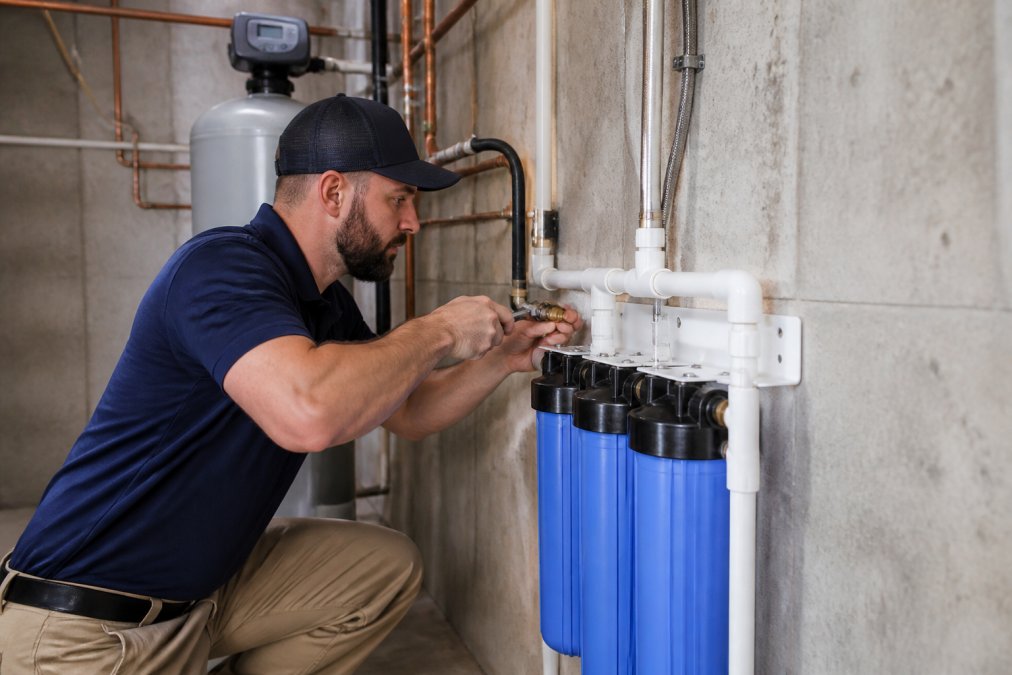
What to Expect During Your Water System Installation
Understanding the installation process helps you prepare your home and know what's happening when the licensed plumber for water system installation arrives.
Common Mistakes Homeowners Make When Hiring for Water System Work
Avoiding these mistakes saves money, time, and frustration.
Hiring based on price alone. The cheapest quote often reflects corners being cut. Compare quotes, but don't choose based solely on the lowest number.
Frequently Asked Questions
Why is it important to hire a licensed plumber for water filtration installation?
A licensed plumber has completed required training, passed exams, and carries bonded and insured credentials that protect your home. They understand plumbing code compliance, know how to size systems correctly for your water pressure and flow rate, and ensure your installation passes inspection. If something goes wrong after installation, you have legal recourse. Unlicensed installers may not handle code requirements properly, leaving you liable for costly repairs or system failures.
How can I verify a plumber's license status in my state?
Contact your state's plumbing board or licensing authority directly, most maintain searchable online databases. Ask the plumber for their license number and verify it matches their name. Confirm their bonded and insured status with their insurance provider. Request references from recent water system installations and follow up with those customers. A reputable licensed plumber will provide this information immediately without hesitation.
What should I ask a plumber about their experience with whole-home water softeners and reverse osmosis systems?
Ask how many whole-home water filtration systems they've installed in the past year, whether they've worked with your specific water quality issues (hard water, iron, sulfur), and if they conduct water testing before recommending a system. Request details on their approach to pressure regulation, service line connections, and fixture installation. Ask about their maintenance schedule recommendations and whether they offer ongoing support. Licensed plumbers with deep experience will explain how they handle local plumbing standards and code compliance for your area.
Do I need a plumbing permit for installing a water softener or whole-home filtration system?
Most jurisdictions require plumbing permits for whole-home water system installations because they connect to your main water line and plumbing infrastructure. A licensed plumber handles the permit process, ensuring your installation meets local plumbing code compliance. Permits protect you by requiring inspections that verify the work is safe and properly done. Skipping permits can create problems when selling your home or filing insurance claims. Ask your plumber to explain what permits apply to your specific installation and include that cost in their estimate.