 blog
What Makes a Good Water Treatment Alternative?
Last Updated: October 25, 2026
Quick Summary
A water treatment alternative is a customized solution that addresses your specific water quality issues, whether hard water, iron staining, sulfur odors, or sediment. The right alternative starts with professional water testing to identify exactly what contaminants are present, then selecting between whole-home systems or point-of-use solutions based on your needs.
- Professional water testing reveals mineral content, pH levels, iron concentration, and bacteria to guide treatment decisions
- Whole-home systems treat all water entering your house and protect appliances throughout your home
- Water softeners remove hardness, reverse osmosis filters drinking water, and iron removal systems target staining
- Local providers understand regional water challenges better than national chains with standardized approaches
- Routine maintenance like filter replacement every 6-12 months keeps your system working effectively
Table of Contents
- Understanding Your Water Treatment Needs
- Water Testing for Homes: The Foundation of Any Decision
- Whole-House Water Filtration Systems vs. Point-of-Use Solutions
- Questions to Ask a Water Treatment Company
- Water Treatment System Maintenance and Long-Term Costs
- How Local Providers Differ from National Chains
- Getting Your Free Water-Quality Assessment
- Frequently Asked Questions
Understanding Your Water Treatment Needs
When you're searching for a water treatment alternative, you're likely facing a specific problem: hard water buildup on appliances, iron staining in your sink, sulfur odors from your well, or simply water that doesn't taste right. At AquaShield Home Systems, we've spent over five years helping Northern Colorado homeowners solve these exact issues.
Your water quality depends on where you live, whether you're on municipal or well water, and what contaminants are actually present. A treatment system that works perfectly for your neighbor might be overkill for your situation, or completely ineffective.
Common water quality issues in Northern Colorado
Hard water is the most common complaint we hear. It leaves white, chalky deposits on faucets and shower heads. Your appliances wear out faster. Soap doesn't lather well.
Iron and sulfur problems are equally frustrating. Iron staining turns your bathtub orange or brown. Sulfur creates that rotten egg smell. Both are common in well water across the region.
Some homeowners also deal with sediment, chlorine taste, or bacterial concerns. Each requires a different treatment approach.
Why one-size-fits-all solutions fall short
Big-box retailers sell water filters that promise to handle everything. They're inexpensive and easy to install. But they rarely solve the real problem because they're designed for average water conditions, not your specific water chemistry.
A reverse osmosis system works brilliantly for some homes and wastes money in others. A water softener fixes hard water but won't remove iron or sulfur. A whole-home filter handles sediment but might not address mineral content. Without knowing what's in your water, you're essentially guessing.
This is why the first step matters so much.
Water Testing for Homes: The Foundation of Any Decision
Professional water testing reveals exactly what you're dealing with. A certified lab analysis shows mineral content, pH levels, iron concentration, bacteria presence, and other contaminants specific to your water source.
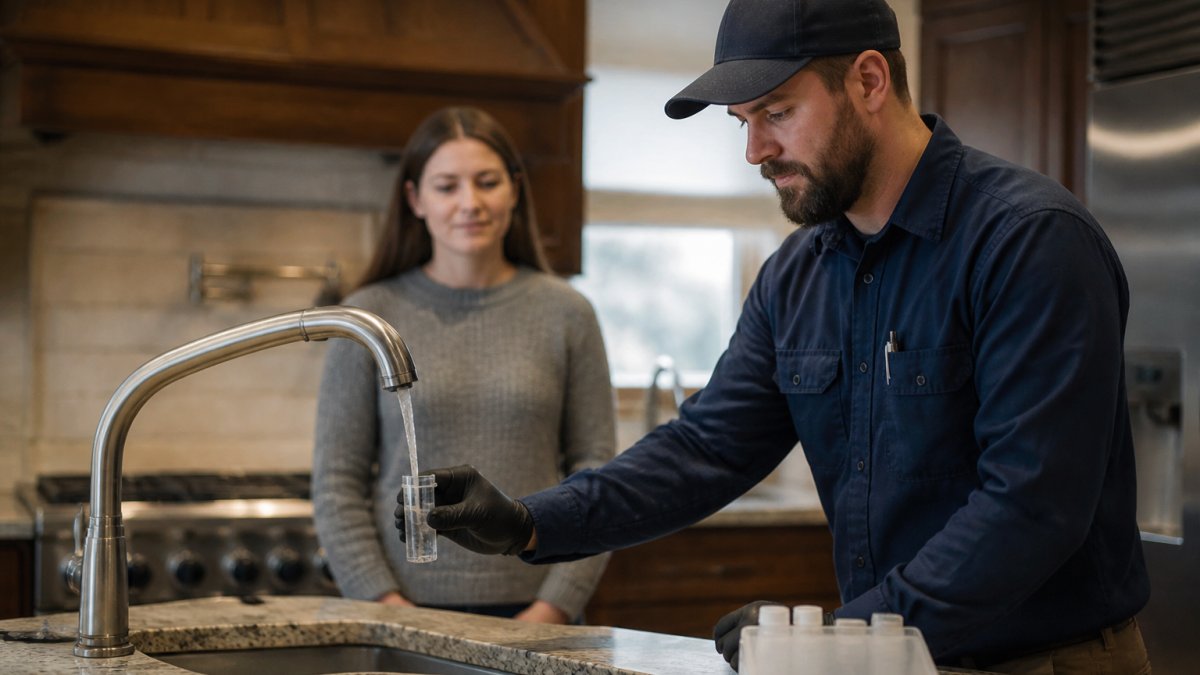
Many homeowners skip this step because they think they already know the problem. Hard water feels obvious. Sulfur smells unmistakable. But water quality is more complex than that. Your water might have multiple issues layered together. A professional analysis separates what you can see from what you can't.
What a professional water analysis reveals
A comprehensive water test identifies hardness levels, iron content, pH balance, total dissolved solids, bacteria, and other parameters that affect your health and your home. Some of these matter more than others depending on your situation.
Hard water isn't dangerous, it's just annoying. Iron and sulfur can affect taste and smell. Bacterial contamination is the one that genuinely concerns health. pH imbalance can corrode your plumbing over time.
The report also helps you compare treatment options. If your water is hard but not acidic, a water softener alone might solve the problem.
Free water-quality reports and what to look for
When you get a free water-quality assessment, a professional evaluates your water and explains what the results mean.
Look for reports that explain not just what's present, but whether it's actually a problem. Some water conditions are cosmetic. Others affect appliance longevity. A few genuinely impact health. The report should help you distinguish between them.
A reputable provider also explains treatment options without pushing you toward the most expensive solution. They should discuss what you actually need versus what's optional. This is where transparency matters.
Whole-House Water Filtration Systems vs. Point-of-Use Solutions
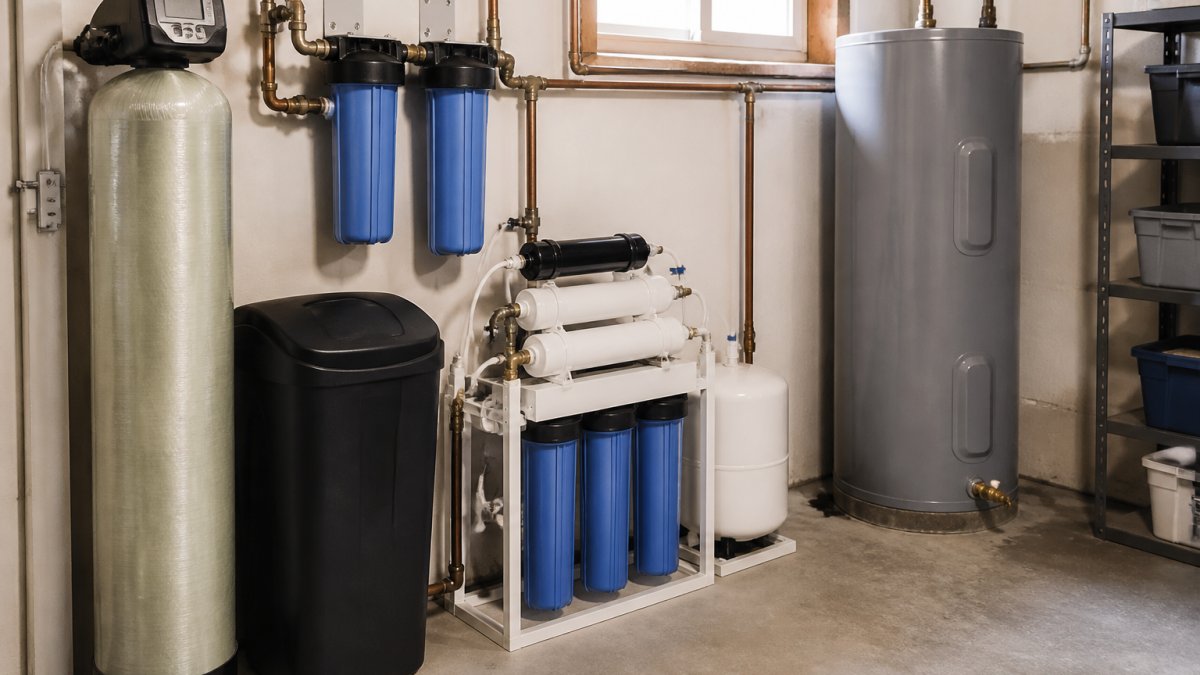
This decision shapes everything that comes next. A whole-home system treats all water entering your house. Point-of-use systems treat water at specific locations, typically your kitchen sink or shower.
Whole-home systems are more expensive upfront but solve problems throughout your entire house. Your washing machine, dishwasher, and water heater all benefit. Your washing machine, dishwasher, and water heater all benefit.
Point-of-use systems cost less initially but only address one location. You get clean drinking water at your kitchen sink, but your shower water is untreated. Your washing machine still deals with hard water.
Why whole-home systems protect your entire water supply
Hard water damages appliances everywhere in your house, not just at your kitchen sink. Mineral buildup in your water heater reduces efficiency and shortens its lifespan. Sediment clogs washing machine inlet screens.
Whole-home systems also provide consistent water quality. You don't have to think about which tap is safe to drink from. Every shower, every load of laundry, every glass of water is treated.
The investment pays dividends over time. You replace fewer appliances. Your water heater lasts longer. Your plumbing stays cleaner.
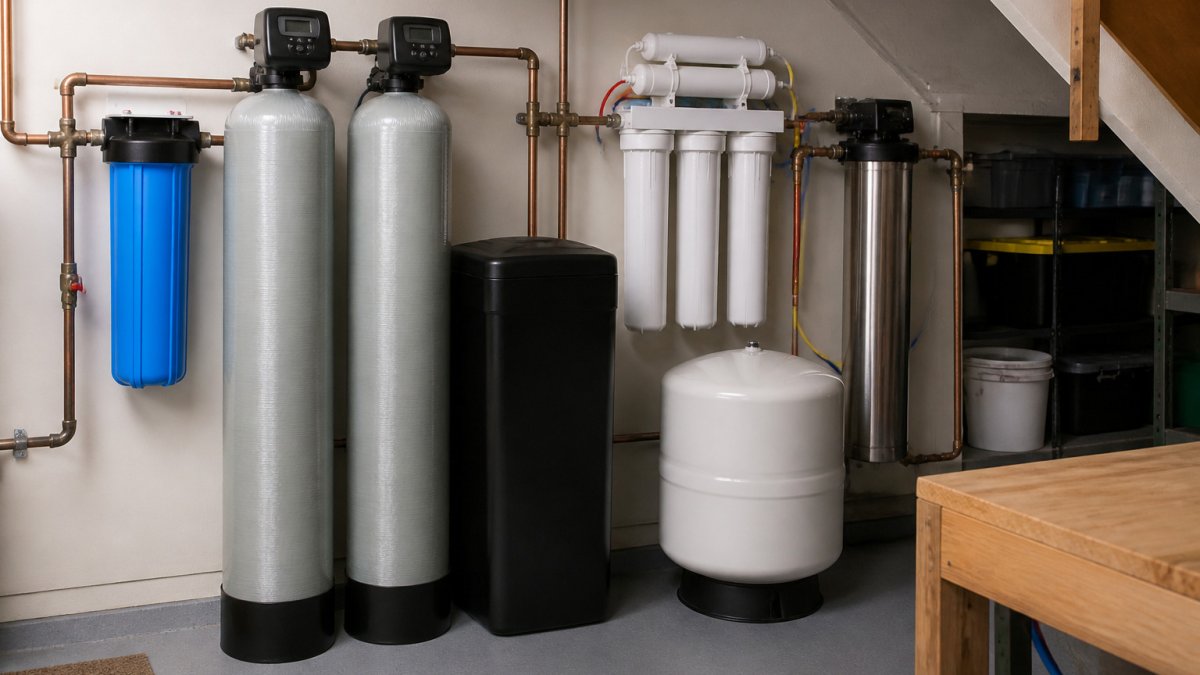
Comparing softeners, reverse osmosis, and iron removal
A water softener removes hardness minerals through ion exchange. It's effective for hard water but doesn't address iron, sulfur, sediment, or other contaminants. It's effective for hard water but doesn't address iron, sulfur, sediment, or other contaminants.
Reverse osmosis filters water through a semi-permeable membrane, removing most contaminants. It produces very clean water but is slow, typically used for drinking water only.
Iron removal systems specifically target iron contamination. If your well water is orange or brown, you need iron removal. Some systems use oxidation and filtration. Others use ion exchange.
| Treatment Type | Best For | Limitations |
|---|---|---|
| Water Softener | Hard water, mineral buildup | Doesn't remove iron, sulfur, or sediment |
| Reverse Osmosis | Drinking water purity | Slow, wastes water, expensive for whole-home |
| Iron Removal | Orange/brown water staining | Doesn't address hardness or sulfur |
| Whole-Home Filter | Sediment, chlorine, taste/odor | May not address hardness or iron |
Questions to Ask a Water Treatment Company
Not all water treatment providers are equal. Some push expensive systems you don't need. Others lack the expertise to recommend the right solution. Before you commit to any company, ask these questions.
Licensing, experience, and local service area
Ask whether the company is licensed to perform plumbing work in your area. Licensing matters because it means someone has verified their credentials and they're accountable to a regulatory body.
Ask how long they've been serving your specific area. Local experience matters. A company that's worked in Northern Colorado for years understands regional water challenges.
Ask whether they service your location. Remote areas like Estes Park sometimes have long wait times or service limitations. Some companies won't travel beyond certain distances. Knowing this upfront prevents frustration later.
Transparent pricing and no-pressure consultations
A reputable company explains costs clearly before you commit. They break down installation, equipment, and ongoing maintenance separately. They don't hide fees or surprise you at the end.
They also don't pressure you to buy. A good consultation includes options, not just the most expensive solution, but alternatives that might work for your situation. They explain trade-offs honestly.
Watch out: Some companies quote inflated prices to make their own systems seem like a bargain. Others use high-pressure sales tactics. You should feel comfortable asking questions and taking time to decide.
Water Treatment System Maintenance and Long-Term Costs
The system you install today needs ongoing care. Understanding maintenance requirements and costs helps you choose something you can actually sustain.
Different systems have different needs. Water softeners need salt or potassium replenishment. Filters need periodic replacement. Reverse osmosis systems need pre-filters and membrane changes. Iron removal systems need backflushing. These aren't optional, they're necessary for the system to keep working.
Routine upkeep and replacement filter schedules
Most whole-home filters need cartridge replacement every 6 to 12 months, depending on water quality and usage. Sediment filters might need more frequent changes if your water is heavily contaminated.
Water softener salt or potassium needs replenishment every few months depending on water hardness and household size. Reverse osmosis membranes typically last 3 to 5 years before replacement. Iron removal systems need periodic backflushing to clean the media.
Staying on top of maintenance keeps your system working as designed. Neglecting it leads to reduced water quality, reduced system lifespan, and eventually expensive repairs or replacement.
Repair costs and professional support after installation
When something breaks, you need a company that responds quickly. Ask about their service response time before you hire them. Do they offer emergency service? What's their typical turnaround?
Ask about warranty coverage. Does the system have a manufacturer's warranty? Does the company warranty their installation work? What's covered and for how long?
Watch out: Some companies disappear after installation. They're hard to reach when you need service. Others charge premium rates for repairs because they know you're stuck. A company that stands behind their work makes service easy and pricing fair.
How Local Providers Differ from National Chains
National water treatment chains bring brand recognition and standardized processes. Local providers bring something different: hands-on service and customized solutions.
National companies often follow a standard playbook. They install the same systems everywhere, regardless of local water conditions. They prioritize efficiency and volume. Local providers adapt to your specific situation.
Response time and hands-on service in your community
When something goes wrong with a national chain, you might wait days for service. Local providers typically respond faster because they're serving a smaller area. You're not competing with customers across multiple states for service slots.
Local companies also tend to have the owner or senior technician involved in your project. You're not just a ticket number. They take pride in their work because they live in the same community where they're working.
Customized solutions for regional water challenges
Northern Colorado water challenges are specific. Well water here often contains iron and sulfur. Municipal water can be hard. Local providers understand these patterns. They know which treatment combinations work for your area.
National chains might recommend a generic solution. A local provider like AquaShield Home Systems recommends what actually solves the problem in your region. They've worked with dozens of homes with your exact water conditions.
Getting Your Free Water-Quality Assessment
The path forward starts with understanding what's actually in your water. A professional assessment removes the guesswork. You learn exactly what you're dealing with and what treatment options make sense.
Get a free estimate to schedule your water-quality assessment. A technician will test your water, explain the results, and recommend solutions tailored to your home's specific needs. No pressure. No sales pitch.
Finding the right water treatment alternative means moving past generic solutions and one-size-fits-all systems.
Frequently Asked Questions
Should I get my water tested before choosing a water treatment alternative?
Yes. A professional water analysis reveals exactly which contaminants, hard water minerals, iron, sulfur, or other issues, are present in your home. Without testing, you risk choosing a system that doesn't address your actual problems. Many providers, including AquaShield, offer free water-quality reports that show what you're dealing with before recommending any solution.
What questions should I ask a water treatment company before hiring them?
Ask about their licensing and local experience, how long they've served your area, whether they offer a no-pressure assessment, and how transparent their pricing is. Also ask what happens if something goes wrong after installation, do they provide repair support and maintenance? A trustworthy provider will answer directly without pushing you toward expensive upgrades you don't need.
How often does a whole-house water filtration system need maintenance?
Maintenance depends on your water quality and the system type. Most whole-home systems require filter replacements annually or every 6-12 months, and water softeners need salt replenishment monthly or quarterly. A professional provider should outline a maintenance schedule specific to your system and water conditions during installation.
Why is a whole-house system better than a store-bought filter pitcher or under-sink filter?
A whole-house water filtration system treats all the water entering your home, protecting appliances, plumbing, and water heaters from mineral buildup and extending their lifespan. Pitcher filters and point-of-use systems only treat water at one location. For hard water, sulfur odors, or iron contamination, a whole-home approach is more effective and cost-efficient over time.