 how-to
Remove Hard Water Stains From Shower Glass: Step-by-Step
Table of Contents
- What Causes Hard Water Stains on Shower Glass
- What You'll Need Before You Start Cleaning
- Step-by-Step Removal Process for Hard Water Stains
- Preventing Hard Water Stains on Shower Doors
- How Whole-Home Water Softeners Address the Root Cause
- Common Mistakes to Avoid When Cleaning Shower Glass
- When to Call a Professional for Permanent Etching
- Frequently Asked Questions
Last Updated: September 25, 2026
What Causes Hard Water Stains on Shower Glass
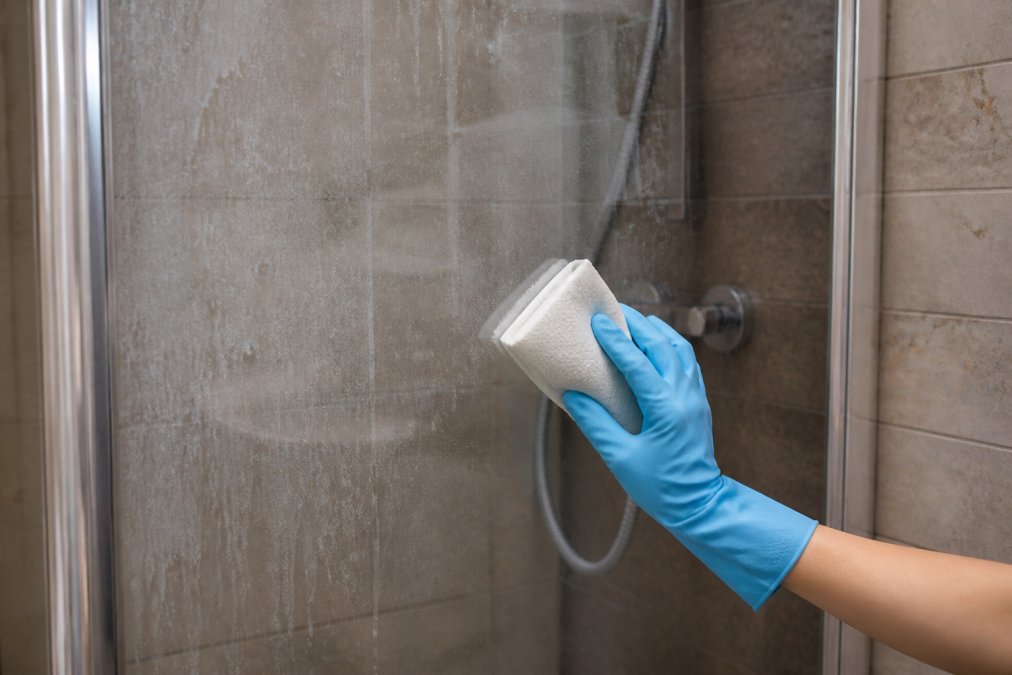
Hard water stains shower glass when mineral-rich water evaporates and leaves behind deposits on the surface. The culprits are calcium and magnesium, minerals that dissolve in your water supply and cling to glass surfaces as water dries.
Soap scum forms when hard water minerals react with soap residue, while mineral deposits appear as cloudy white or brownish spots. Each requires a slightly different cleaning approach.
Understanding mineral deposits and soap scum
Mineral deposits are pure calcium and magnesium buildup appearing as white, chalky spots on glass surfaces. Soap scum forms when soap mixes with hard water minerals, creating a slicker, more stubborn film. Both worsen in homes with untreated hard water.
Glass etching vs. surface stains: what's the difference
This distinction changes everything about how you clean.
Surface stains sit on top of the glass. They're deposits you can remove without damaging the glass itself. Vinegar, baking soda, and commercial cleaners all work here because they dissolve mineral buildup without harming the underlying material.
Glass etching is permanent damage caused by acidic solutions sitting on glass too long, creating microscopic pitting. Run your fingernail across the spot: if it's smooth and wipes away, it's a surface stain; if rough and pitted, it's etching. Most hard water stains are surface deposits. Catching stains early prevents etching damage.
What You'll Need Before You Start Cleaning
Successful hard water stain removal depends on using the right tools for your specific stain type and glass condition. Here's what works and why.
Acidic solutions: vinegar vs. citric acid vs. commercial cleaners
Distilled white vinegar (5% acidity) works well for light to moderate deposits and is safe around pets and septic systems. It requires longer dwell time (15-30 minutes) and may need multiple applications for heavy buildup.
Citric acid crystals are 2-3 times stronger than vinegar and dissolve heavy deposits faster. They require careful measurement and complete dissolution before applying, and thorough rinsing to avoid white residue.
Commercial hard water cleaners contain hydrochloric or phosphoric acid and work fastest on stubborn deposits but carry higher etching risk. Always follow label instructions, wear gloves, ensure ventilation, and never use if glass shows existing etching.
Abrasive vs. non-abrasive scrubbers
Non-abrasive scrubbers (microfiber cloths, soft sponges, plastic-bristle brushes) remove deposits without scratching glass. Plastic scrapers can be used only on extremely thick deposits with extreme caution. Never use metal scrapers or steel wool.
Water removal and drying tools
Squeegees remove standing water before minerals deposit; replace blades annually. Microfiber cloths prevent streaking by trapping water molecules, resulting in a clear finish.
Optional but strategic additions
Spray bottles (16-24 oz) allow controlled application. Rubber gloves protect hands from acidic solutions. Safety glasses are recommended with commercial cleaners. Distilled water for final rinsing prevents new deposits, as tap water contains the same minerals that created original stains.
The prevention advantage: water softening changes your toolkit
If your home has a whole-home water softener installed, your toolkit simplifies dramatically. Softened water contains virtually no calcium or magnesium, so mineral deposits form much more slowly. Many homeowners with soft water find that a weekly squeegee and occasional microfiber wipe are sufficient, no acidic cleaners needed. This eliminates the need for vinegar, citric acid, or commercial products entirely, reducing chemical exposure and disposal concerns. For homes considering water softening, this toolkit reduction is one of many quality-of-life improvements that justify the investment.
Step-by-Step Removal Process for Hard Water Stains
Method 1: Distilled white vinegar and baking soda paste
This is the most effective DIY approach for most homeowners.
Step 1: Prepare the paste
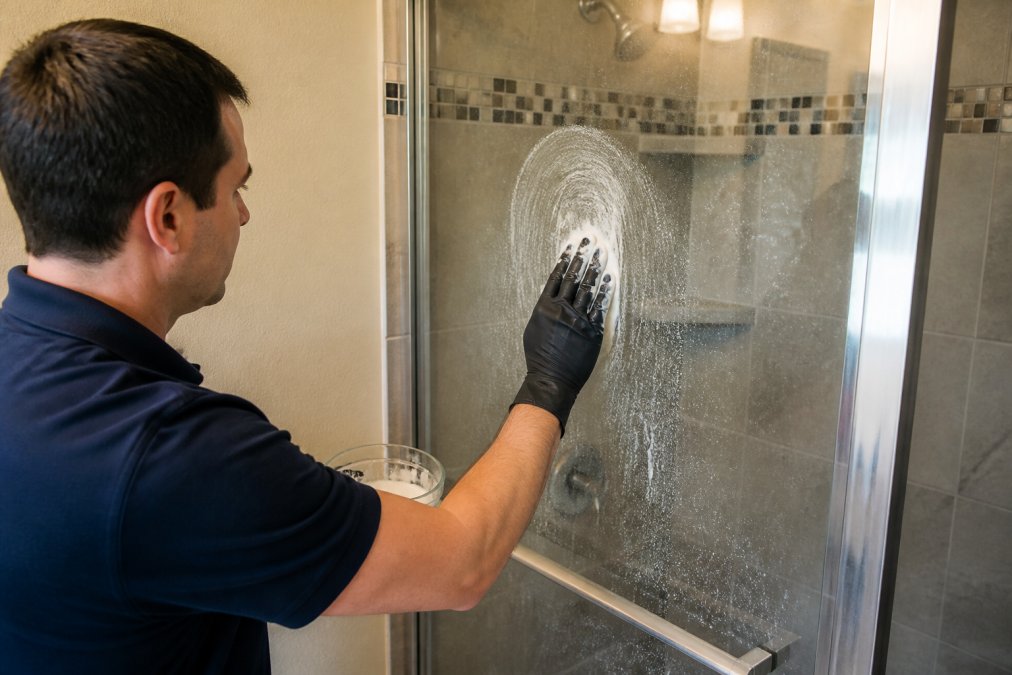
Mix equal parts baking soda and distilled white vinegar until spreadable, thicker than water but able to cling to vertical surfaces.
Step 2: Apply generously
Spread the paste onto stained areas, working top to bottom so gravity helps it cling.
Step 3: Let it sit
Leave the paste for 15-30 minutes (longer for heavy buildup) to allow vinegar to dissolve mineral deposits.
Step 4: Scrub gently
Use a non-abrasive scrubber in circular motions with moderate pressure to dissolve deposits.
Step 5: Rinse thoroughly
Rinse the glass with clean water. Use your spray bottle or shower spray to remove all paste residue. Make sure no baking soda remains, as it will create new spots as water dries.
Step 6: Dry immediately
This step prevents new stains from forming.
Method 2: Citric acid crystals for heavy mineral buildup
When vinegar and baking soda don't cut it, citric acid is your next move.
Step 1: Mix the solution
Step 2: Apply with a spray bottle
Spray affected areas generously and let soak 20-30 minutes.
Step 3: Scrub and rinse
Step 4: Dry completely
Method 3: Commercial cleaners for stubborn deposits
Commercial hard water cleaners contain stronger acidic compounds for stubborn deposits. Follow product instructions: spray, wait 10-15 minutes, scrub gently, rinse multiple times, and dry. Always wear gloves, ensure ventilation, and never mix cleaners.
Preventing Hard Water Stains on Shower Doors
Prevention is easier than removal. These daily habits stop stains before they start.
Daily maintenance routines that work
Squeegee after every shower
This habit prevents 80% of hard water stain problems. Water that evaporates leaves minerals; water you remove leaves nothing. Keep the squeegee mounted on the door frame for convenience.
Wipe with a microfiber cloth
Improve air circulation
Hydrophobic coatings and protective sealants
Hydrophobic coatings create water-repellent surfaces that make water bead and roll off rather than evaporate. Most last 6-12 months and take 15-20 minutes to apply. They reduce stain formation but don't eliminate it entirely.
How Whole-Home Water Softeners Address the Root Cause
Everything above treats the symptom: mineral deposits on glass. A whole-home water softener treats the disease: hard water itself. Understanding how softening works and how it prevents stains is critical for homeowners tired of constant cleaning.
How ion exchange softening works
Water softeners use ion exchange to remove hardness minerals before water reaches your home. Resin beads attract calcium and magnesium ions while releasing sodium ions, producing softened water with minimal mineral content. The softener automatically regenerates nightly using salt brine to recharge the resin, keeping it effective indefinitely.
Softened water vs. hard water: the cleaning difference
Hard water homes: deposits form within 2-3 days, requiring cleaning every 1-2 weeks and acidic cleaners. Soft water homes: deposits form slowly (weeks to months), requiring only weekly squeegee and occasional wiping. Homeowners report maintenance drops from weekly to monthly.
Water softening vs. other filtration approaches
Reverse osmosis systems remove minerals from water but typically serve only one faucet (usually the kitchen sink). They don't address hard water at the whole-home level, so shower glass stains continue forming.
The broader benefits of soft water
Beyond shower glass, soft water improves your entire home:
- Appliances last longer: Water heaters, dishwashers, and washing machines accumulate scale deposits in hard water. Soft water prevents this buildup, extending appliance life by years.
- Plumbing stays clear: Hard water deposits can restrict water flow in pipes over time. Soft water prevents scale accumulation in your plumbing system.
- Skin and hair feel better: Hard water leaves mineral residue on skin and hair. Soft water rinses completely, leaving skin softer and hair shinier.
- Cleaning becomes easier: Soft water allows soap and detergents to work more effectively. You use less product and get better results throughout your home.
- Energy efficiency improves: Scale-free water heaters and pipes operate more efficiently, reducing energy consumption and utility costs.
The maintenance reality
Water softeners require periodic salt replenishment (typically every 4-8 weeks, depending on water hardness and household size). Salt costs are modest, usually $5-$15 per bag, and the softener handles regeneration automatically. Some municipalities have restrictions on salt discharge, so check local regulations before installation.
Common Mistakes to Avoid When Cleaning Shower Glass
These errors waste time and sometimes damage glass.
Using abrasive scrubbers
Steel wool and rough scouring pads scratch glass. Scratches trap minerals and create permanent cloudiness. Stick to non-abrasive scrubbers, soft cloths, or plastic scrapers only.
Letting acidic cleaners sit too long
Mixing different cleaners
Skipping the drying step
Cleaning only when stains are visible
Using tap water for rinsing
When to Call a Professional for Permanent Etching
If your glass has been neglected for years, or if you've used the wrong cleaning products, you might be looking at permanent etching rather than surface stains.
Frequently Asked Questions
Can hard water stains be permanent on glass?
Hard water stains on shower glass can become permanent if mineral deposits are left untreated for extended periods. Calcium and magnesium buildup can etch the glass surface, creating damage that cannot be removed with cleaning alone. The difference between surface stains and etching is critical: surface stains respond to vinegar or citric acid solutions, while etched glass requires professional restoration. Addressing stains early prevents this irreversible damage.
What is the best cleaner for hard water on glass shower doors?
Distilled white vinegar and baking soda paste works well for light to moderate mineral deposits, while citric acid crystals handle heavier buildup more effectively. For stubborn residue, commercial cleaners formulated specifically for hard water stains offer faster results. The best approach depends on stain severity: start with natural solutions, then escalate to commercial products if needed. Always test any cleaner on a small area first to ensure it won't damage the glass finish.
How often should I clean my shower glass to prevent buildup?
Weekly cleaning with a squeegee after each shower prevents mineral deposits from accumulating. A deeper vinegar or commercial cleaner treatment every 2-4 weeks maintains clarity and prevents stains from setting. Frequency depends on your water's hardness level: homes with very hard water may need more frequent maintenance. Consistent preventative care is far easier than removing heavy, calcified deposits that have built up over months.
Does hard water damage shower glass permanently?
Hard water causes two types of damage: removable surface stains and permanent glass etching. Early-stage mineral deposits respond to cleaning with vinegar, citric acid, or commercial products. Once etching occurs, the glass surface is chemically altered and cannot be restored through cleaning alone. Installing a whole-home water softener addresses the root cause by removing calcium and magnesium before they reach your fixtures, preventing both staining and long-term glass damage.