 blog
blog
Rise Plumbing vs Done Plumbing Comparison Guide
Table of Contents
- Rise Plumbing vs Done Plumbing: Service Models Compared
- Daily Responsibilities and Technical Differences
- Questions to Ask a Plumber Before Hiring
- How to Choose a Residential Plumber for Your Home
- Plumbing Service Cost Estimates: What to Expect
- Regional Licensing and Regulatory Differences
- Conclusion
- Frequently Asked Questions
Last Updated: September 20, 2026
Rise Plumbing vs Done Plumbing: Service Models Compared
A plumbing comparison between service-focused and construction-focused contractors comes down to one core difference: service plumbers fix and maintain systems already in your home, while construction plumbers install new plumbing infrastructure in homes being built or heavily remodeled. This guide breaks down how each model works, what it costs, and which one to call.
Residential vs Commercial Plumbing Focus
Residential plumbing covers single-family homes and small multi-unit properties: fixtures, drain cleaning, water heaters, and water pressure. Commercial plumbing serves larger buildings such as restaurants, offices, and industrial systems.
Service Plumbing vs New Construction
Service plumbing is repair-and-maintenance work on existing systems. New construction plumbing means installing pipe sizing, venting, and fixtures from blueprints before drywall goes up.
| Model | Primary Work | Typical Call | Where It Happens |
|---|---|---|---|
| Service plumbing | Repairs, maintenance, diagnostics | Clogged drain, leak, water heater failure | Finished homes |
| New construction | System installation from blueprints | Rough-in, pipe sizing, fixture setting | Job sites, new builds |
| Residential focus | Homes and small multi-unit | Fixtures, water pressure, drain cleaning | Occupied homes |
| Commercial focus | Larger buildings | Industrial plumbing, code compliance | Businesses, institutions |
Daily Responsibilities and Technical Differences
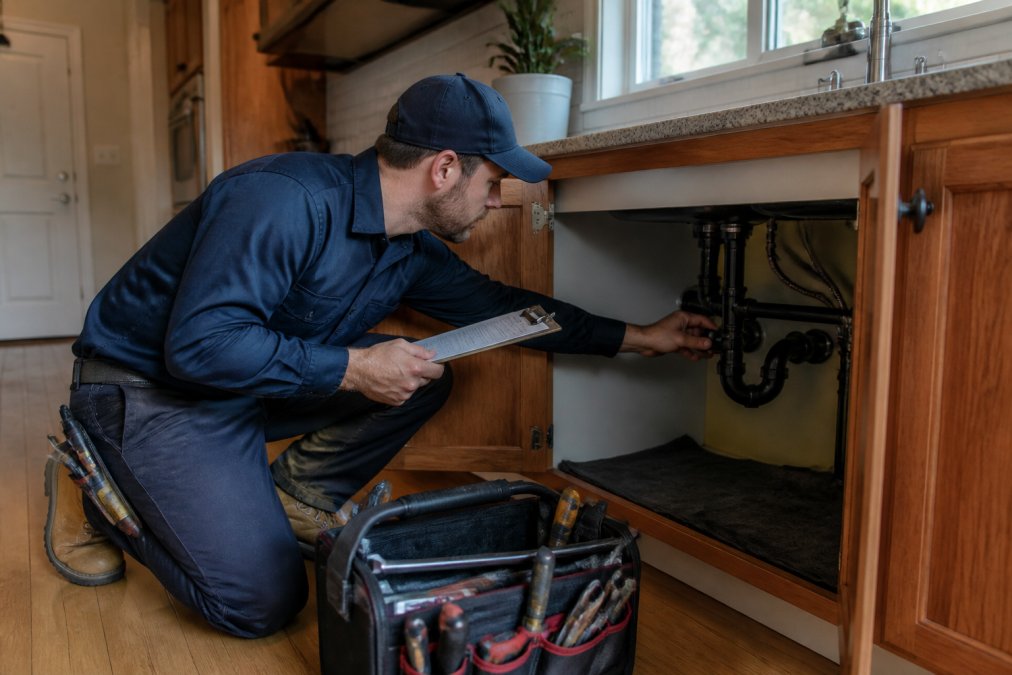
Service plumbers spend their days on diagnostics, troubleshooting, and preventative maintenance, carrying drain cleaning equipment, cameras, and leak detection tools. They work in occupied homes, protecting floors and coordinating with families.
Tools, Equipment, and System Complexity
Service work demands diagnostic gear: inspection cameras, pressure gauges, and drain machines. Construction work demands installation gear: pipe cutters, presses, and layout tools.
Questions to Ask a Plumber Before Hiring
The best questions to ask a plumber before hiring depend on which service model you need. A service plumber and a construction plumber answer the same question differently, and the wrong answer signals you called the wrong type of contractor.
Questions for a Service Call (Repairs, Maintenance, Diagnostics)
- Are you licensed for residential service work in this state, and what is your license number? A service plumber should read the number off without looking it up. Construction-only contractors often carry a different classification and may not be permitted to pull residential service permits.
- Can you show proof of liability insurance and bonding? Ask for the certificate of insurance, not a verbal yes. If an uninsured contractor damages your home, you may be filing the claim.
- Do you handle this type of job yourself, or subcontract it? Service work is usually performed by the company's own technicians. Construction firms frequently subcontract specialty trades, changing who is accountable when something fails.
- How do you price: flat rate, hourly, or diagnostic-plus-repair? A service-focused shop typically quotes a flat rate or a diagnostic fee credited toward the repair. A construction-focused shop may bill time-and-materials because scope is harder to fix upfront.
- What is your process if the repair fails after you leave? Look for a written warranty period and a stated callback window. "We stand behind our work" is not a process.
- Do you pull permits when the job requires one? Water heater replacements, gas line work, and sewer line replacements commonly require a permit. A contractor who offers to skip it transfers risk to you.
Questions for a Construction or Remodel Job
- Have you worked from plans with a general contractor before? Construction plumbing is sequenced around framing, rough-in inspection, and drywall. A service-only plumber may never have coordinated a rough-in inspection.
- Who is responsible for the rough-in inspection sign-off? On a new build or major remodel, the plumber and general contractor split responsibility. Get the answer in writing.
- What is your change-order process? Construction scope shifts. A clear written change-order process protects both sides.
The Two Questions Most Homeowners Skip
"What is your license classification?" Most states issue different license types or endorsements for residential service versus commercial or construction work. An active license is not automatically one that covers your job, so confirm the classification matches the work.
Matching the Contractor to the Job
If your job is a clogged drain, failed water heater, leak, or whole-home water treatment install, you want a service-model contractor. If it is a new build, addition, or full repipe during a remodel, you want a construction-model contractor. Calling the wrong one wastes a trip fee and delays the work, so when in doubt, describe the job in plain terms and ask the dispatcher which model fits.
How to Choose a Residential Plumber for Your Home
Learning how to choose a residential plumber starts with matching the contractor's model to your job: for repairs and maintenance on an existing home, a service-focused, licensed local plumber; for a remodel or addition, someone with construction experience.
Verifying Licensing and Insurance
Verification is straightforward once you know where to look. Most states run a public license lookup through a state board or department of licensing. Search the contractor's name or license number and confirm the status is active and the classification matches residential service work.
Plumbing Service Cost Estimates: What to Expect
Plumbing service cost estimates vary by job type, system age, and local labor rates, so no honest contractor quotes a flat number before seeing the work. Expect a written estimate breaking down labor, parts, and any permits.
Pricing structures fall into three common patterns:
- Flat rate: A set price per job, quoted upfront
- Hourly: Billed by time, often with a minimum
- Diagnostic plus repair: A service call fee, then a repair quote
Cost-Benefit Analysis for Clients
The cheaper quote is not always the better deal. A low hourly rate with vague scope often leads to upsells and change orders. A higher upfront quote with clear scope and a written guarantee usually costs less by the end.
Regional Licensing and Regulatory Differences
Most comparison articles stop at "check the license." That advice is useless without knowing how plumbing regulation is structured, because the structure determines what you are verifying and who has authority over the contractor in your home. This section most often decides whether a job goes smoothly or turns into a dispute.
Who Regulates Plumbers
Plumbing regulation in the United States is set at the state and local level, and the structure varies widely:
- State-licensed model. A state board or department of licensing issues apprentice, journeyman, and master plumber credentials. The license is valid statewide, though local jurisdictions may still require a separate registration or permit.
- Local-licensed model. Some states delegate licensing to individual cities or counties. A plumber licensed in one city may not be legally permitted to work in the next city over.
- Hybrid model. A state issues the core license, but individual municipalities add their own registration, bonding, or permit requirements on top.
License Tiers and What They Mean for Your Job
Where states use the apprentice/journeyman/master tier system, the tiers are not interchangeable:
- Apprentice. Works under supervision. Cannot pull permits or supervise work independently.
- Journeyman. Can perform most plumbing work independently but typically cannot pull permits or supervise apprentices in all jurisdictions.
- Master. Can pull permits, supervise, and in many states is the only tier allowed to own or operate a plumbing contracting business.
Permits: The Trigger Most Homeowners Miss
A permit is a separate requirement from a license. Even a fully licensed plumber may need to pull a permit for certain jobs. Common triggers include:
- Water heater replacement
- Gas line installation or modification
- Sewer line repair or replacement
- Repiping
- Any work that alters the venting system
How to Verify a License in Practice
The verification process is straightforward once you know the steps:
- Ask for the license number and the name it is issued under. The name should match the company you are hiring, not a related entity.
- Find the correct authority. That may be a state board, a county department, or a city licensing office. The contractor should be able to tell you which one applies.
- Look up the license and confirm three things: the status is active, the classification matches the work (residential service vs. commercial vs. construction), and there are no disciplinary actions on record.
- Confirm the permit requirement for your specific job. Ask the local building department, not just the contractor.
- Ask for the certificate of insurance and verify the coverage is current. A lapsed policy is a common problem.
Why This Matters for the Service vs. Construction Choice
A service plumber working in an occupied home usually operates under a residential service classification and pulls permits for individual repairs. A construction plumber on a new build operates under a construction classification and coordinates rough-in inspections with a general contractor. The two classifications are not always interchangeable, and a contractor licensed for one may not be permitted to do the other in your jurisdiction.
The Practical Takeaway
Ask for the license number, which authority issued it, and whether your job requires a permit, then verify all three against the correct local source. A contractor who answers quickly and specifically is almost always the one you want. A contractor who deflects is telling you something.
Conclusion
Choosing between a service plumber and a construction plumber comes down to matching the model to your job, then verifying credentials before anyone touches your pipes. If your home needs repairs, maintenance, or a whole-home water system, you want a licensed service specialist who knows local water conditions.
Frequently Asked Questions
How do I verify if a plumbing company is licensed and insured?
Ask for their state license number and verify it through your state's licensing board website. Request a certificate of insurance showing general liability and workers' compensation coverage. A legitimate plumbing contractor will provide these without hesitation. In Colorado, plumbing contractors must be licensed at the state level, and local municipalities may require additional permits. Always confirm coverage before any work begins to protect yourself from liability if damage occurs.
What factors should I consider when comparing local plumbing companies?
Compare licensing status, insurance coverage, years in business, and whether they specialize in residential or commercial work. Look at online reviews and ask for references from recent jobs. Request written plumbing service cost estimates that break down labor and materials separately. Also consider response time for emergency repairs, warranty terms on workmanship, and whether they offer preventative maintenance plans. A company that serves your specific area and understands local plumbing codes will deliver better results.
What is the difference between emergency plumbing and routine maintenance services?
Emergency plumbing addresses sudden issues like burst pipes, sewer backups, or no hot water, often requiring immediate response outside normal hours. Routine maintenance covers scheduled inspections, drain cleaning, water heater flushing, and preventative maintenance to avoid costly failures. Emergency calls typically cost more due to after-hours availability. A good plumbing contractor offers both services and can advise on a maintenance schedule that reduces emergency situations over time.
How can I tell if a plumbing quote is fair and transparent?
A fair quote itemizes labor, materials, permits, and any equipment needed. It should specify the scope of work, timeline, and warranty terms. Be wary of estimates given without an on-site inspection or that seem unusually low compared to others. Ask whether the price is fixed or subject to change and what conditions would trigger additional charges. Getting at least two or three written plumbing service cost estimates helps you identify reasonable pricing for your area.