 blog
blog
Lion Home Service Alternative for Plumbing: 2026 Guide
Table of Contents
- Why Homeowners Search for a Lion Home Service Alternative for Plumbing
- Questions to Ask Before Hiring a Plumber
- Your Plumbing Company Comparison Checklist
- Choosing a Plumber for Water Filtration System Installation
- Water Quality Testing for Home Systems Before You Hire
- How a Local Plumbing Alternative Handles Service and Emergency Response
- Frequently Asked Questions
Last Updated: October 17, 2026
Why Homeowners Search for a Lion Home Service Alternative for Plumbing
Homeowners look for a Lion Home Service alternative for plumbing when they want a licensed local plumber who handles water treatment work directly, not a national brand that subcontracts or upsells. In Northern Colorado and the Denver metro, hard water, iron, and sulfur problems push many families to ask a simple question: who actually installs and services the system?
This guide from AquaShield Home Systems answers that question. We are a family-owned water filtration and plumbing company with more than five years serving the region. Below, we walk through the questions to ask, the checklist to run, and how to evaluate any plumber you hire for filtration work.
Most national home service brands sell through a sales-first model. A technician arrives, runs a demo, and pitches a system the same visit. That works for some homes. It frustrates plenty of others. The homeowners who search for an alternative usually want three things: a straight answer on price, a licensed installer, and someone who picks up the phone after the install.
Keep reading, because the checklist is the same one we would want a neighbor to use before hiring anyone, including us.
Questions to Ask Before Hiring a Plumber
The first question to ask any plumber is whether they hold a current license and can show proof of insurance before work begins. Everything else follows from that. A licensed plumber protects your home, your warranty, and your resale value.
Ask these questions on the phone, before anyone comes out:
- Are you licensed in this state, and what is your license number?
- Do you carry general liability insurance and workers' compensation?
- Who performs the actual install: your employees or a subcontractor?
- What does your workmanship warranty cover, and for how long?
- Is the estimate written, itemized, and free of trip charges?
A common mistake is treating a friendly sales visit as a quote. It isn't. Ask for the estimate in writing before you schedule.
Licensing, Insurance, and Warranty Questions
Licensing is the legal permission a plumber holds to perform plumbing work in your state. In Colorado, plumbing work falls under state and local rules, so ask for the license number and verify it with the issuing authority. The Colorado Division of Professions and Occupations maintains public license lookups you can check in minutes.
Insurance matters just as much. If a pipe breaks during install and the contractor has no liability coverage, the claim can land on your homeowner's policy. Ask for a certificate of insurance and confirm the dates are current.
Warranty terms separate serious shops from fly-by-night operators. Look for two separate warranties: one on the equipment and one on the labor. A labor warranty of at least a year signals the installer expects the work to hold.
Pricing and Estimate Questions
Pricing for water filtration and plumbing work depends on your water quality, home layout, and the system you choose. Any company that quotes a firm number over the phone, sight unseen, is guessing. Ask instead how the estimate is built.
Good questions here:
- What is included in the quote, and what would cost extra?
- Are there trip charges, diagnostic fees, or financing add-ons?
- Is the estimate good for a set period?
- Will you put the scope in writing before I sign anything?
Transparency shows up in how a company answers. A pressure-free assessment means the technician tests your water, explains the findings, and leaves you with a written option. It does not mean a same-day discount that expires tonight.
Your Plumbing Company Comparison Checklist
Most homeowners compare plumbers on price alone, then regret it when the install is rushed or the warranty is thin. A better approach is to score each company on the factors that actually predict a good outcome for water treatment work: credentials, scope, availability, and what happens after the install. Use the checklist below to compare two or three plumbers side by side before you commit.
- License number provided and verified with the state
- Certificate of insurance on file, with current dates
- Written, itemized estimate before work starts
- Separate equipment and labor warranties, with terms in writing
- Local crew, not a distant subcontractor
- Reviews you can read and cross-check across more than one platform
- Clear answer on emergency response times and who answers after hours
- Water testing offered before a system is recommended
- Bypass valve and manual regeneration walkthrough included at handoff
- Written scope that separates plumbing tie-in from treatment setup
Score each item yes or no. A company that checks most boxes but stumbles on one or two is worth a follow-up question; a company that checks fewer than half is a risk, no matter how good the sales visit felt.
Here is how the two common models stack up on the factors that matter for filtration and plumbing work:
| Factor | National Brand Model | Local Licensed Plumber |
|---|---|---|
| Who installs | Often a subcontractor | In-house licensed crew |
| Estimate style | Sales visit, same-day pitch | Written, itemized quote |
| Warranty | Varies by franchise | Equipment plus labor |
| Service after install | Call center routing | Direct local contact |
| Water testing | Bundled into the pitch | Offered before recommendation |
| Emergency response | Routed through a national line | Direct line to the crew that did the install |
| Scope clarity | Plumbing and treatment may be split | Plumbing tie-in and treatment setup handled as one job |
The pattern is consistent. Local shops win on accountability because the person who installs your system is the person you call when something goes wrong. That matters most for water treatment, where a mis-sized softener or a poorly tied-in reverse osmosis system can create problems that show up weeks later.
Choosing a Plumber for Water Filtration System Installation
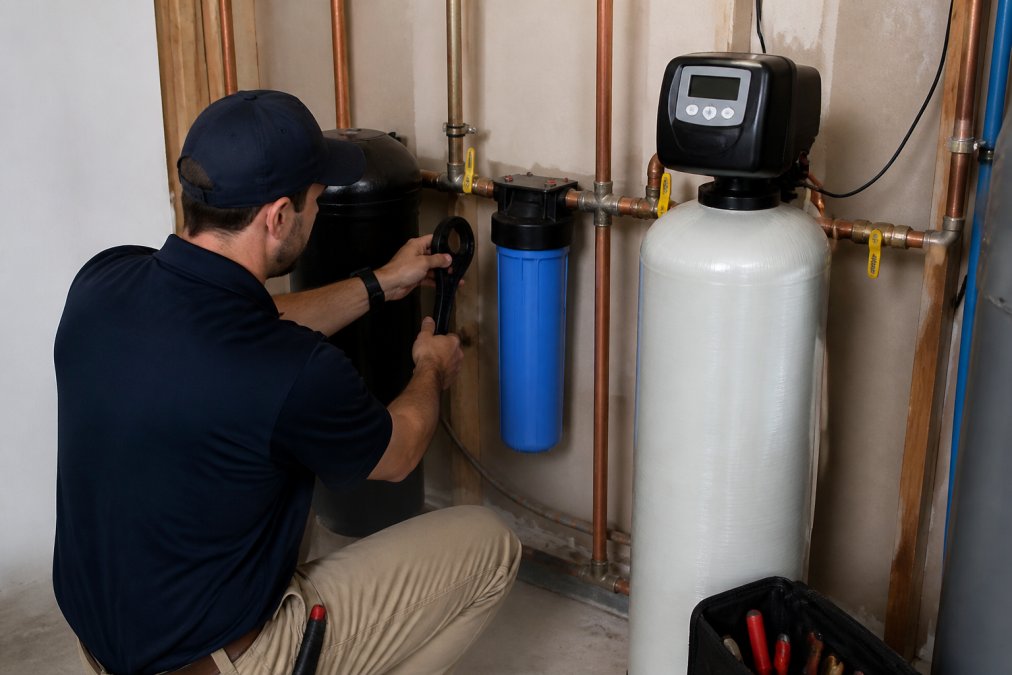
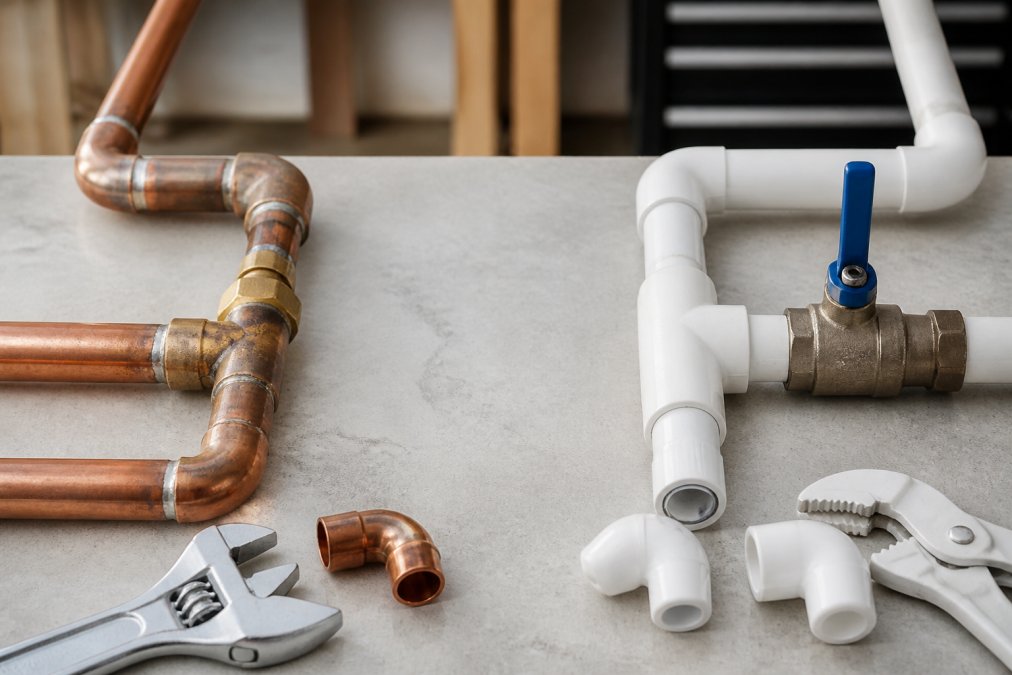
Choose a plumber for water filtration installation who has done that specific work before, not just general pipe repair. Filtration systems tie into your main line, need correct sizing, and fail early if installed with the wrong fittings or bypass setup.
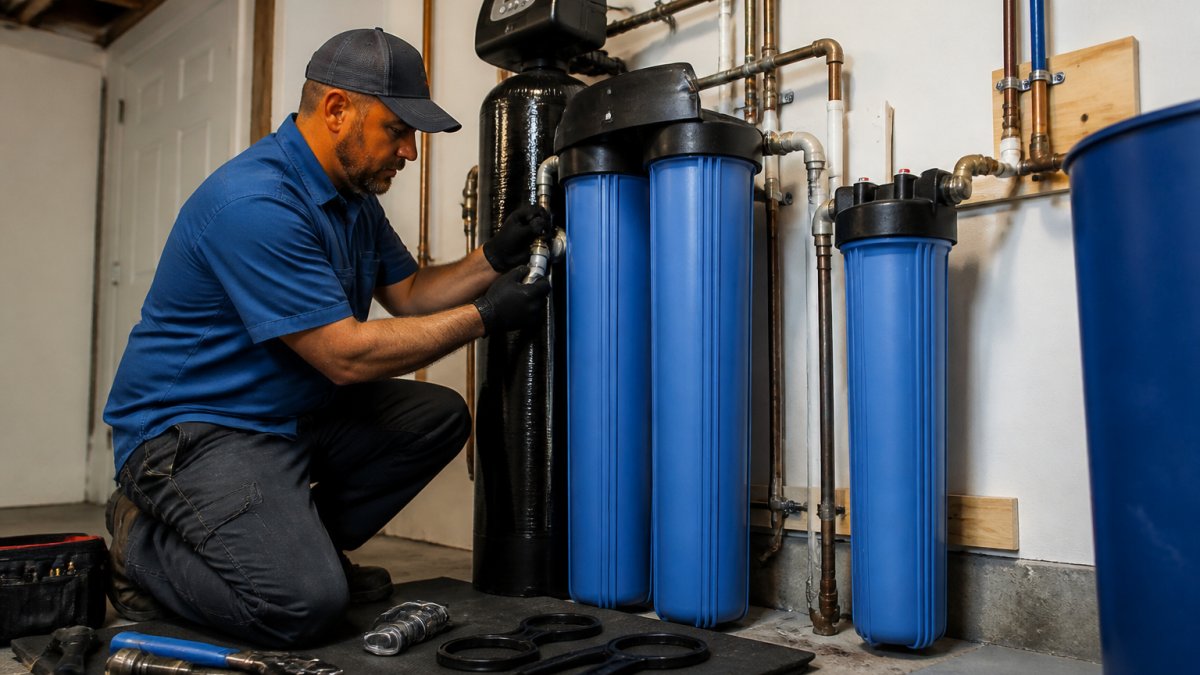
Ask what systems the crew installs regularly. A plumber who mostly does drain cleaning may be learning on your install. Ask how they size a system to your home and water. Ask whether they handle the plumbing tie-in and the treatment setup as one job, or hand off the water side to someone else.
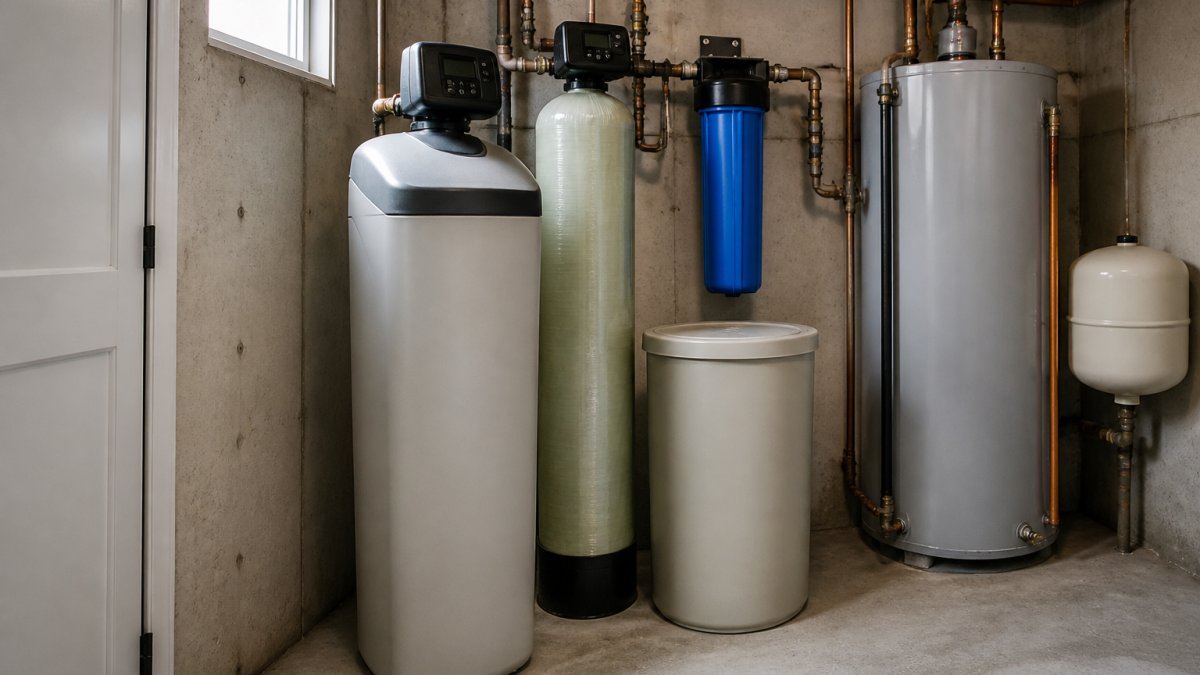
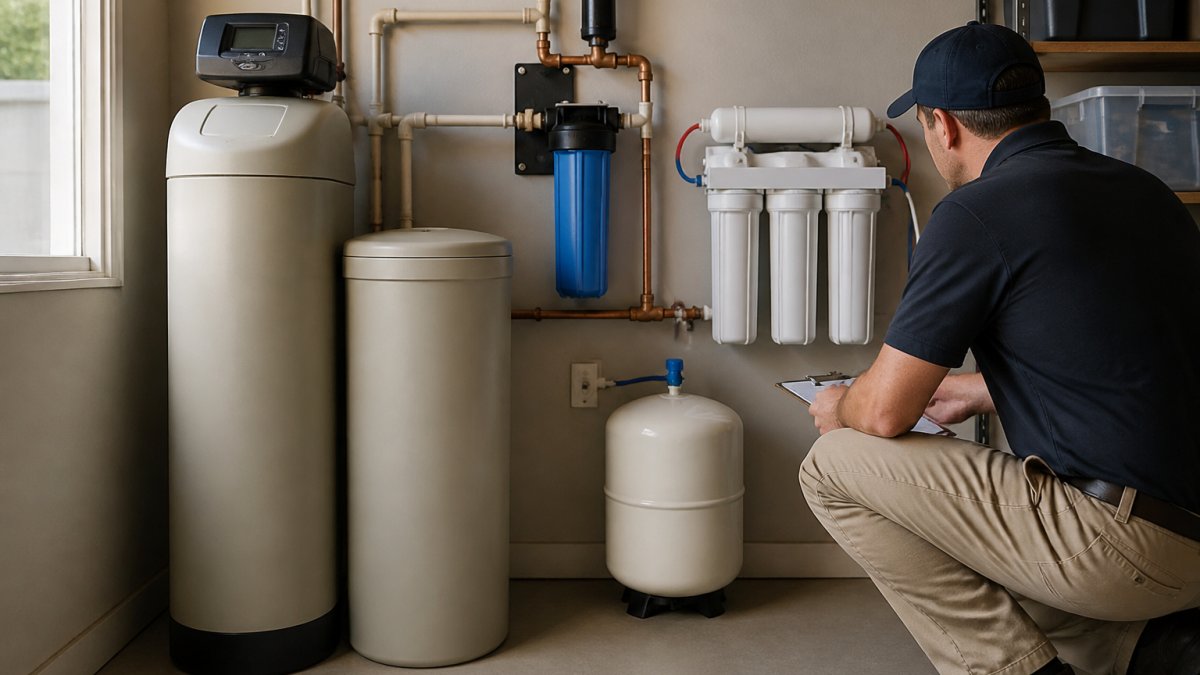
At AquaShield Home Systems, whole-home softeners, reverse osmosis systems, and iron removal are the core of our work. Our licensed installers handle the plumbing and the treatment side together, so there is one crew to call if anything needs attention later.
Water Quality Testing for Home Systems Before You Hire
Water quality testing should come before any system recommendation, not after. Testing tells you whether you have hardness, iron, sulfur, or something else, and each problem needs different equipment. A company that recommends a softener before testing your water is selling, not diagnosing.
What a proper test looks for:
- Hardness, measured in grains per gallon
- Iron, both clear water and red water types
- Sulfur odor, which often points to hydrogen sulfide
- pH level, since acidic water corrodes pipes
- Total dissolved solids
The U.S. Environmental Protection Agency's drinking water information explains what public water systems must report and what those reports mean for your home. If you are on a private well, testing is entirely your responsibility, which makes a pre-install test even more important.
A rotten egg smell is the classic example. Masking it with a filter that isn't rated for sulfur wastes money and leaves the smell in place. Test first, then match the equipment to the result.
How a Local Plumbing Alternative Handles Service and Emergency Response
A local plumbing alternative handles service and emergencies through a direct line to the crew that did the install, not a national call center. That difference matters most at the worst moment: a burst fitting or a system stuck in regeneration at night. The competitive gap here is that most companies talk about emergency service without explaining what it actually looks like, so ask specific questions and judge the answers.
When you call a local shop, you reach people who know your address and your system. Response times depend on the day and the workload, so ask upfront what the emergency process looks like and who answers after hours. Get that answer before you sign, not after. A useful question is whether the after-hours line reaches a technician who can troubleshoot your system over the phone or schedule a visit, or whether it routes to a call center that takes a message.
For water treatment systems specifically, some emergencies are plumbing emergencies and some are treatment emergencies. A burst pipe needs a plumber immediately. A softener stuck in regeneration or a reverse osmosis system leaking from a fitting may need a technician who knows the equipment. Ask whether the company handles both, or whether one gets handed off to a third party.
For homeowners in outlying areas, ask directly whether the company services your address. We serve Northern Colorado and the Denver metro, including well and municipal water homes, and we would rather tell you honestly on the phone than leave you waiting.
Frequently Asked Questions
What questions should I ask before hiring a plumber?
Ask for the license number and verify it with the state, confirm liability insurance and workers' comp coverage, and request the warranty terms in writing. Ask whether the quote is flat-rate or hourly, whether permits are included, and who performs the work (employees or subcontractors). For water treatment work, ask whether the installer holds plumbing credentials and whether they test your water first. A reputable company answers all of these without pressure, and puts the scope and price in writing before work starts.
How do I compare plumbing companies for water filtration installation?
Build a shortlist and score each company on the same criteria: licensing and insurance, years serving your area, water testing included or not, warranty length, and how clearly they explain pricing. Ask each one for a written estimate covering equipment, installation, and any permit fees. Check reviews for patterns rather than single complaints, and ask whether the installer also handles plumbing repairs so you are not coordinating two contractors. A plumbing company comparison checklist keeps the decision objective instead of relying on who called back fastest.
Can a plumber install a whole-home water softener?
Yes. A licensed plumber can install a whole-home water softener, and it is often the better choice because the job involves cutting into supply lines, adding a bypass valve, and handling drainage for regeneration. Ask whether the installer will also test your water first so the system is sized to your actual hardness and iron levels. Confirm the warranty covers both the equipment and the installation labor, and get the bypass and drain details in writing so future service is straightforward.
What is the difference between a general plumber and a water treatment specialist?
A general plumber fixes pipes, drains, water heaters, and fixtures. A water treatment specialist focuses on what is in your water: hardness, iron, sulfur, sediment, and contaminants, and on the equipment that addresses them. Many water treatment installers also hold plumbing licenses, which matters because installation requires real plumbing work. For a filtration or softening system, look for someone who tests your water, explains the test results, and holds plumbing credentials, not just a sales background.