 ultimate-guide
Iron Removal Systems for Well Water: A 2026 Guide
Table of Contents
- Understanding Iron in Well Water
- Signs of Iron in Well Water You Shouldn't Ignore
- How to Test Well Water for Iron: What You Need to Know
- How Iron Removal Systems Work
- Types of Iron Removal Systems for Well Water
- Iron Filter Maintenance Tips for Long-Term Performance
- Choosing the Right Iron Removal System for Your Home
- Frequently Asked Questions
Last Updated: September 30, 2026
Understanding Iron in Well Water
Iron contamination is one of the most common water quality issues affecting homeowners with private wells. When dissolved iron oxidizes, it transforms into visible particles that stain fixtures, damage appliances, and affect water taste. Understanding the difference between ferrous and ferric iron is essential because each type requires different treatment.
Ferrous iron (also called clear water iron) remains dissolved in water and appears colorless when it comes from the tap. It oxidizes quickly once exposed to air, turning reddish-brown. Ferric iron (red water iron) has already oxidized and appears as visible particles suspended in water. Some well water contains both forms simultaneously, which complicates treatment.
Even low iron concentrations, as little as 0.3 PPM, cause noticeable staining on porcelain, laundry, and fixtures. Higher levels create metallic taste, reduce water clarity, and accelerate corrosion in pipes and appliances.
Ferrous vs. Ferric Iron Removal
The distinction matters because removal methods differ. Ferrous iron requires oxidation before filtration can capture it; ferric iron, already oxidized, can be removed directly through media bed filtration.
Ferrous iron removal involves air injection (aeration) or chemical oxidation to convert dissolved iron into particles that settle onto filter media. Ferric iron, already in particle form, settles directly onto media beds during filtration.
A lab analysis identifies ferrous, ferric, or both, determining whether you need aeration, chemical treatment, or standard filtration.
Signs of Iron in Well Water You Shouldn't Ignore
Iron contamination produces unmistakable signs that appear in your home's water system and on visible surfaces. Recognizing these indicators early prevents expensive damage to appliances and plumbing infrastructure.
Rust-colored staining on sinks, tubs, and toilets is the most obvious signal. Laundry develops permanent rust spots, and dishwashers and washing machines experience accelerated wear as iron particles accumulate.
Metallic taste in drinking water indicates dissolved ferrous iron, often accompanied by earthy or sulfurous odor.
Reduced water pressure and flow rate develop when iron particles accumulate inside pipes and appliance screens, with corrosion damaging pipe interiors over time.
Scale buildup on faucet aerators and showerheads appears as reddish or brown crusty deposits, indicating iron is affecting your entire water system.
How to Test Well Water for Iron: What You Need to Know
A professional water analysis reveals iron concentration, type, and other contaminants, though at-home test kits provide preliminary screening.
Professional lab testing measures total iron, ferrous iron, ferric iron, pH, hardness, manganese, and other parameters, providing specific PPM measurements and treatment recommendations.
At-home test kits provide quick results but lack precision and don't distinguish between ferrous and ferric iron or measure exact PPM levels.
pH level testing is critical because acidic water (pH below 7) keeps ferrous iron dissolved, reducing oxidation effectiveness. Neutral or slightly alkaline water (pH 7-8) favors iron oxidation and filtration.
A comprehensive well water analysis identifies iron, manganese, hydrogen sulfide, hardness, and bacterial contamination, ensuring you select an iron removal approach suited to your specific water chemistry.
How Iron Removal Systems Work
Iron removal systems use oxidation and filtration to transform dissolved iron into particles that can be captured and removed from water. The process involves two stages: converting ferrous iron into ferric iron, then filtering out the solid particles.
Oxidation and Media Bed Filtration
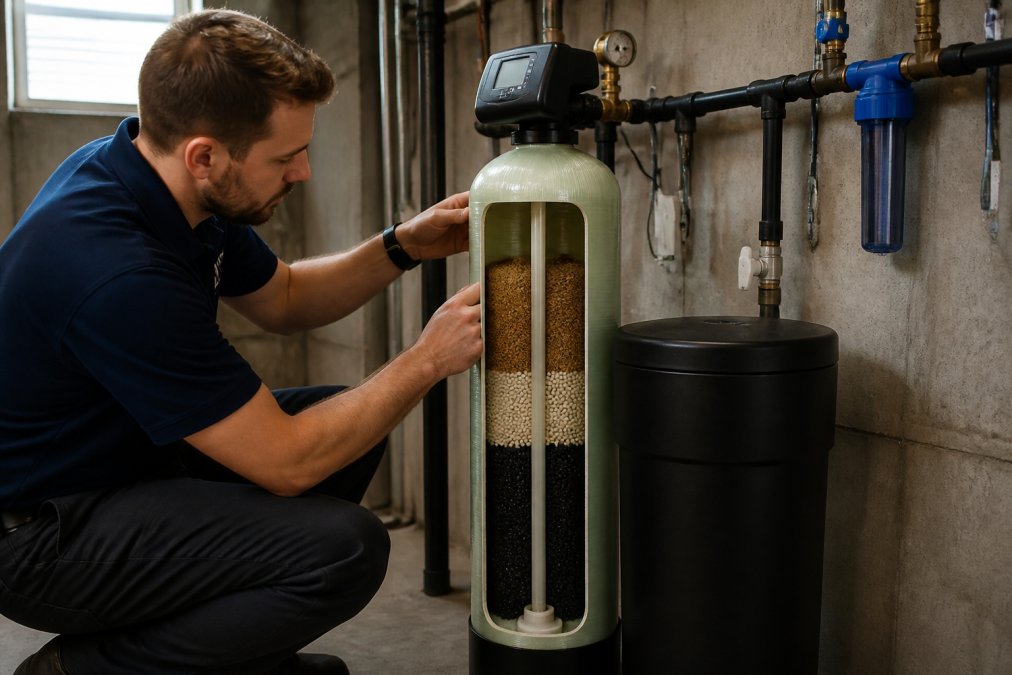
Oxidation converts invisible ferrous iron into visible ferric iron particles that precipitate out of solution. The media bed captures these particles as water passes through.
Catalytic media accelerates oxidation reactions, allowing ferrous iron to convert and be trapped in a single pass. Manganese dioxide is popular because it oxidizes iron efficiently across a wide pH range. The media bed must be backwashed periodically to remove accumulated particles and restore flow rate.
Backwashing extends media life by flowing water backward through the filter bed at higher velocity, dislodging trapped particles. This typically occurs weekly or monthly depending on iron concentration and water usage.
Air Injection vs. Chemical Oxidation
Two primary oxidation methods exist: air injection systems and chemical oxidation. Each suits different water conditions and iron concentrations.
Air injection systems introduce compressed air into water, oxidizing ferrous iron to ferric iron that settles on media. This method requires no chemical additives and suits moderately contaminated water, though it requires an air compressor and periodic air valve maintenance.
Chemical oxidation uses potassium permanganate or chlorine to oxidize iron, working effectively for high concentrations and mixed ferrous/ferric conditions. Chemical systems require storage, dosing equipment, and periodic purchases but handle challenging water chemistry.
The choice between air injection and chemical oxidation depends on your iron concentration, water pH, and presence of other contaminants like manganese or hydrogen sulfide. A water analysis revealing PPM levels and iron type guides this decision.
Types of Iron Removal Systems for Well Water
Three main categories of iron removal systems serve different household needs: whole-home filters, combination softener-iron removal units, and point-of-use systems. Each offers distinct advantages depending on your water quality issues and household size.
Whole-Home Iron Filters
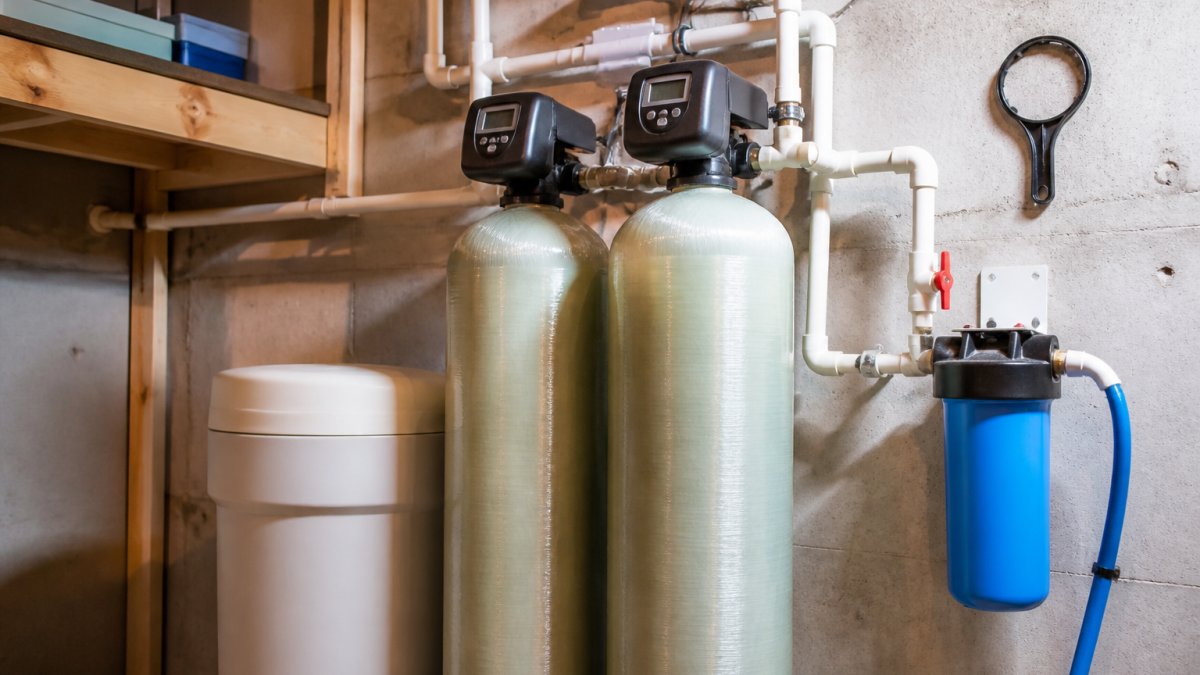
Whole-home iron filters treat all water entering your home before it reaches any fixture or appliance. These systems protect your entire plumbing infrastructure, appliances, and provide iron-free water at every tap.
Whole-home systems consist of a large tank with catalytic media, air or chemical injection, and automatic backwash. They handle higher flow rates than point-of-use alternatives and suit families of any size.
Installation requires connection to your main water line, typically in a basement, utility room, or crawlspace. The system needs access to a drain for backwash water.
Combination Water Softener and Iron Removal
Some households face both iron contamination and hard water (excess calcium and magnesium). Combination units address both issues in a single system, reducing equipment footprint and installation complexity.
Point-of-Use Iron Removal Systems
Point-of-use systems treat water at a single location, typically the kitchen sink or bathroom. These compact units remove iron from drinking and cooking water without treating your entire home's water supply.
Iron Filter Maintenance Tips for Long-Term Performance
Proper maintenance extends system life, preserves filtration efficiency, and prevents costly repairs. Neglected systems lose effectiveness and develop operational problems.
Choosing the Right Iron Removal System for Your Home
Selecting an effective iron removal system requires understanding your specific water quality, household usage patterns, and budget considerations. A one-size-fits-all approach often fails because water chemistry varies significantly even within the same region.
Assessing Your Water Quality and System Capacity
Begin with a professional water analysis that measures iron concentration (total, ferrous, and ferric), pH, hardness, manganese, and hydrogen sulfide. This analysis reveals your iron type, concentration in PPM, and whether secondary contaminants complicate treatment.
Installation Complexity: DIY vs. Professional Installation
Installation complexity varies significantly between system types. Simple point-of-use filters can be installed by handy homeowners, while whole-home systems require plumbing expertise and proper integration with existing water infrastructure.
Frequently Asked Questions
What's the difference between ferrous and ferric iron in well water?
Ferrous iron (dissolved iron) is invisible in water but turns reddish-brown when exposed to air. Ferric iron is already oxidized and appears as visible particles. Most iron removal systems for well water handle both types, but the method differs: ferrous iron requires oxidation first, while ferric iron can be filtered directly. Your water test results will specify which type you have, measured in parts per million (PPM).
How do I know if I need an iron removal system for my well?
Common signs include reddish-brown staining on fixtures and laundry, a metallic taste, or a rotten egg smell (often hydrogen sulfide). The only way to be certain is a water test from a certified lab, it will measure iron levels in PPM and identify whether you have ferrous or ferric iron. Most homeowners notice problems when iron exceeds 0.3 PPM, though some systems target even lower thresholds for better water quality.
How often do iron removal systems require maintenance?
Maintenance frequency depends on your iron levels and system type. Most whole-home iron filters need backwashing every 1-3 weeks to clean the media bed and maintain flow rate. Regular maintenance prevents pressure drop, extends system life, and ensures consistent contaminant removal. A professional can assess your specific needs during installation.
Can a standard water softener remove iron from well water?
Standard water softeners use ion exchange to remove hardness minerals but struggle with iron, especially ferrous iron. Some combination systems add catalytic media or oxidation stages to handle iron alongside softening. However, if iron is your primary concern, a dedicated iron removal system is more effective. Water testing will reveal whether you need a softener, iron filter, or both to address your well water quality issues.
What should I expect during professional installation of an iron removal system?
A professional assessment begins with water testing to measure iron levels, pH balance, and total dissolved solids. Based on results, the installer sizes the system for your home's flow rate and water usage. Installation involves connecting the filter to your main water line, setting up backwash drainage, and configuring the regenerative cycle. Most installations take several hours. The installer will explain maintenance schedules and answer questions about long-term operational costs.
How does pH level affect iron removal system effectiveness?
pH balance directly impacts how well media beds oxidize and filter iron. Most iron removal systems work best with pH between 6.5 and 8.0. If your water is too acidic (low pH), it can corrode pipes and reduce filtration efficiency. If too alkaline (high pH), scale buildup accelerates on fixtures and inside the system. Water testing reveals your pH; a professional can recommend pre-treatment or system adjustments to optimize performance and protect your plumbing.
What is the long-term cost of operating an iron removal system?
Operating costs include electricity for the pump and control valve, and water used during backwashing cycles. Backwashing typically uses 30-50 gallons per cycle, occurring weekly or bi-weekly depending on iron levels. Regular maintenance prevents costly repairs and extends system life. A professional assessment will help you understand expected costs for your specific situation and water quality needs.