 Ultimate guide
Water Filtration for Mountain Homes: A Complete Guide
Last Updated: October 28, 2026
Quick Summary
Water filtration for mountain homes starts with lab testing your source, because wells, springs, creeks, and lakes each carry different mineral, sediment, and bacteria loads. Build a treatment train matched to those results, sized for peak demand and cold-weather flow, with sediment filtration first to protect every stage downstream.
- Test private well water for bacteria, nitrate, iron, manganese, hardness, pH, and total dissolved solids.
- Sediment filters trap sand, silt, rust, and oxidized iron, and belong first in nearly every design.
- Water softeners remove hardness minerals but do not remove iron in meaningful amounts.
- UV purification only works on clear water, since turbidity shields microorganisms from UV light.
- Expect to change sediment cartridges more often in April and May than in September.
Table of Contents
- Why Mountain Homes Need a Different Water Filtration Plan
- Well Water Testing: The Step That Decides Your Whole System
- Types of Water Filtration and Purification Systems Compared
- Sediment Filter for Well Water: Protecting Everything Downstream
- Well Water Sulfur Smell Treatment That Fixes the Cause
- Reverse Osmosis Drinking Water System for the Kitchen Tap
- Sizing, Cold Weather, and Seasonal Operation
- Get a Free Estimate and Build the Right System for Your Home
- Frequently Asked Questions
Why Mountain Homes Need a Different Water Filtration Plan
A mountain home's water supply is not a suburban water supply with a nicer view. Across Northern Colorado foothill properties, water can arrive cold, heavily mineralized, and carrying whatever the watershed above the house decided to send down. Water filtration for mountain homes has to start from the source, not from a shelf at the hardware store.
Three things can affect mountain water: the source, the mineral load, and the season. A private well, a municipal line, and a surface-water intake from a creek or lake can have different characteristics. Iron, manganese, hardness, and sulfur may be present in foothill wells. Spring runoff can affect turbidity and sediment load, while winter can bring freeze risk and slow flow.
Below, we'll walk through testing, system types, and design decisions to consider.
Well Water Testing: The Step That Decides Your Whole System
A lab panel can identify contaminants and their concentrations, which can help inform treatment choices.
What to Test For and What the Results Actually Tell You
A private well panel may cover bacteria (total coliform and E. coli), nitrate, iron, manganese, hardness, pH, and total dissolved solids. Depending on local concerns and water conditions, testing may also include arsenic, uranium, or turbidity.
For a deeper walkthrough of panels, frequency, and how to read a lab report line by line, see our guide to professional well water testing services.
Types of Water Filtration and Purification Systems Compared
Water filtration and water purification refer to different treatment functions. The comparison below covers four possible water sources and how treatment choices can vary by source.
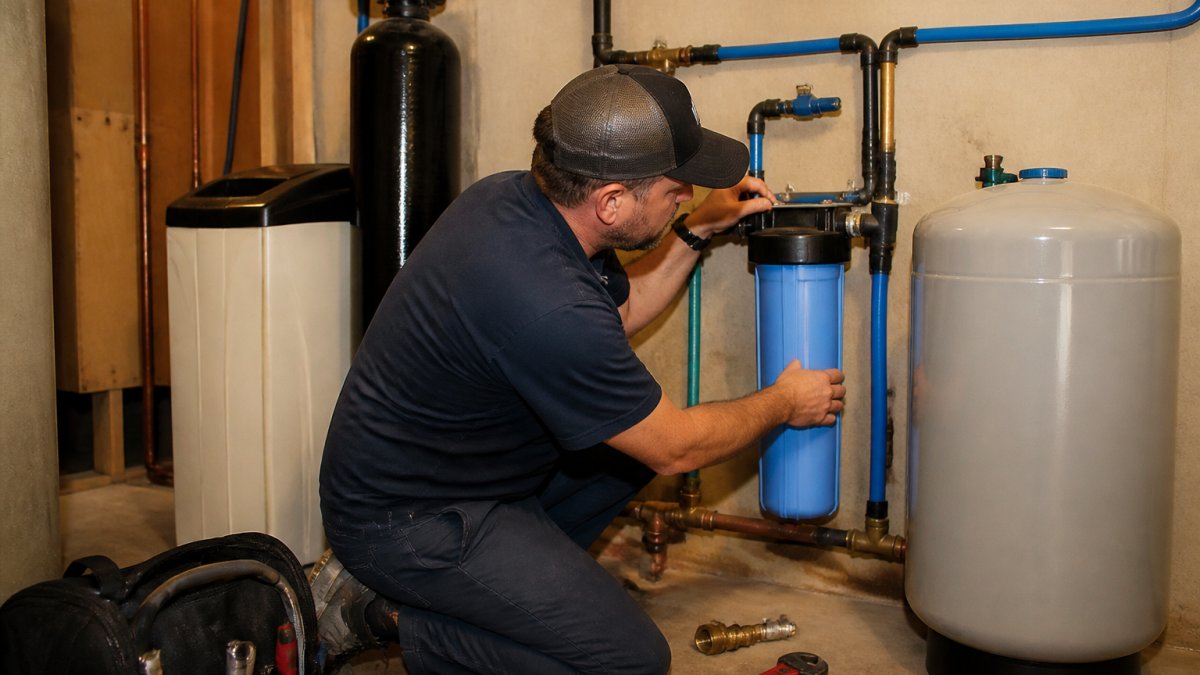
Filters vs. Purifiers vs. Treatment Methods: What Each One Does
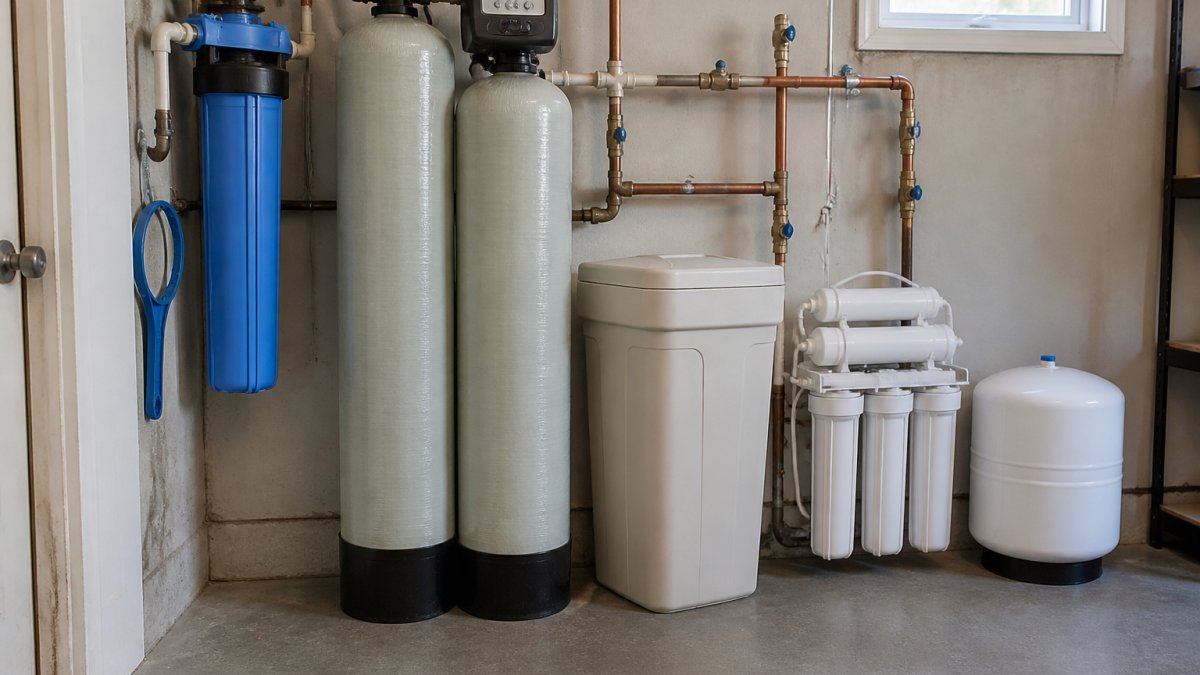
- Sediment filters trap sand, silt, rust, and oxidized iron particles. They protect everything downstream and are the first stage in nearly every mountain-home design.
- Activated carbon absorbs taste, odor, chlorine, and many organic compounds, including the ones behind sulfur smell. Carbon is a polisher, not a disinfectant.
- Water softeners use ion exchange to remove hardness minerals (calcium and magnesium). They do not remove iron in meaningful amounts and should not be sold as an iron solution.
- Iron and sulfur removal systems oxidize dissolved iron and hydrogen sulfide gas with air, ozone, or a chemical oxidant, then filter the resulting solids. These are point-of-entry systems sized to the well's flow.
- Reverse osmosis pushes water through a semi-permeable membrane, removing dissolved solids, nitrate, arsenic, and many other contaminants at the point of use. It needs clear, low-hardness feed water to last.
- UV purification neutralizes bacteria, viruses, and protozoa, and it only works on water that is already clear. Turbidity shields microorganisms from UV light.
- Distillation and ozonation are niche options; distillation is energy-intensive and slow, and ozone is usually applied as an oxidation step ahead of filtration rather than as a standalone purifier.
Matching the Treatment Train to Your Source
| Source type | Typical first concern | Treatment train that fits |
|---|---|---|
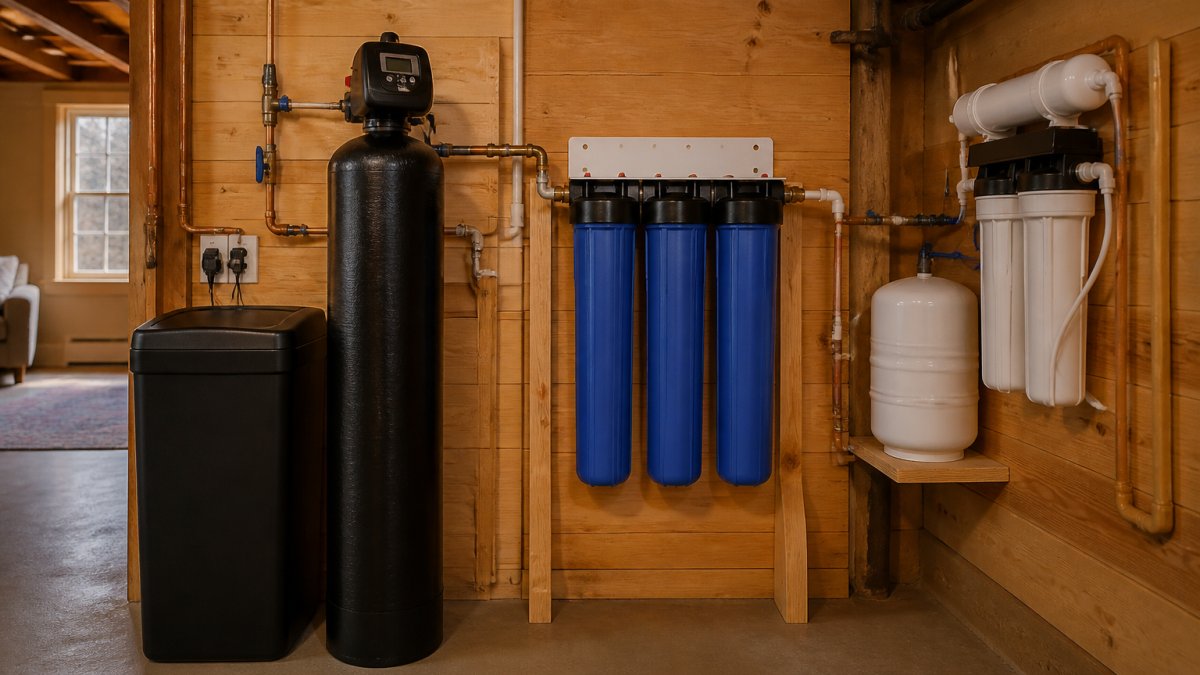
| Drilled well in fractured rock | Iron, manganese, hardness, sulfur, sometimes arsenic or uranium | Sediment → oxidation/iron-sulfur removal → softener → UV → RO at kitchen tap |
| Spring (developed or gravity-fed) | Bacteria, turbidity after storms, variable flow | Sediment → UV → carbon → RO at kitchen tap |
| Creek or river intake | Sediment spikes during runoff, pathogens, organic color | Coarse sediment → fine sediment → carbon → UV → RO at kitchen tap |
| Lake or pond intake | Algae, organic color, turbidity, pathogens | Sediment → carbon → UV → RO at kitchen tap; add coagulation if color is heavy |
For a side-by-side comparison of options built specifically around well water, our best water filtration for well water guide covers the trade-offs in more detail.
Sediment Filter for Well Water: Protecting Everything Downstream
A sediment filter for well water is used for particle filtration, including particles such as sand, grit, oxidized iron, and runoff silt.
Well Water Sulfur Smell Treatment That Fixes the Cause
A rotten egg smell in well water can be associated with hydrogen sulfide gas. The cause of an odor can vary, so testing can help identify the issue.
If you're tired of stained fixtures and foul-smelling water, our iron and sulfur removal system installation page explains how the equipment is matched to your test results.
Reverse Osmosis Drinking Water System for the Kitchen Tap
A reverse osmosis drinking water system is one option for drinking water.
If you want RO installed, our reverse osmosis system installation service covers the setup.
Sizing, Cold Weather, and Seasonal Operation
System sizing and hydraulic design are where good intentions meet real plumbing, and they are the two areas most mountain-home filtration guides skip. Size for peak household demand, account for pressure loss across every stage, and leave margin for the fact that cold water is more viscous and flows less freely through filters and membranes.
Sizing the System for Peak Demand
If the source is a low-yield well or a gravity spring, a storage tank and a booster pump are often the difference between a system that works and one that starves the house at breakfast. Design around the worst week of the year, not the best.
Cold-Weather Operation and Winterization
Cold-weather operation adds three concerns that most guides ignore:
- Freeze risk. Housings, lines, and pressure tanks in unheated crawl spaces, well pits, or outbuildings need insulation, heat trace, or a drained enclosure. A frozen filter housing cracks and floods the utility room on the thaw.
- Runoff season. Spring snowmelt drives turbidity and sediment load up sharply, which is when pre-filters earn their keep. Expect to change sediment cartridges more often in April and May than in September.
- Slow flow in winter. Cold water is more viscous, so the same equipment delivers lower flow rates at the tap. Design for that rather than being surprised by it.
Seasonal Startup and Intermittent Occupancy
A mountain home that sits empty for weeks or months needs a startup routine, not just a shutdown routine. On return, run the cold tap at each fixture until the water clears, check the sediment cartridge for the load it collected while the house was closed, and confirm the UV lamp is still operating if one is installed. If the system was drained for winter, refill slowly and bleed air from the housings before restoring pressure.
Maintenance, Monitoring, and Failure Response
Build the system around the worst week of the year, not the best. That single decision prevents most seasonal callbacks.
Get a Free Estimate and Build the Right System for Your Home
AquaShield Home Systems is family-owned, our installers and plumbers are licensed, and we quote transparently. We handle whole-home water softeners, reverse osmosis systems, and iron removal solutions.
Get started with AquaShield Home Systems and request a free estimate for a system sized to your water and your home.
Frequently Asked Questions
What water filtration system is best for a mountain home?
There is no single best system because mountain water sources vary. Water softeners, reverse osmosis systems, and iron removal solutions are among the options to consider. The right choice depends on your home's water quality needs.
How do you test well water before choosing a filtration system?
Testing options and panels vary. Consider discussing your water quality concerns with a qualified professional before choosing a treatment system.
How do you treat sulfur smell in well water?
A rotten egg smell in well water can be associated with hydrogen sulfide. The cause and appropriate treatment depend on the water quality. AquaShield Home Systems offers iron removal solutions tailored to your home's specific water quality needs.
Do mountain homes need a sediment filter?
Whether a mountain home needs a sediment filter depends on its water quality. Testing can help identify water quality concerns to consider when choosing a treatment system.
What is the difference between a water filter and a water purifier?
Water filtration and water purification refer to different approaches to water treatment. The appropriate option depends on the water quality and the treatment goals for the home.
How often should mountain home water filters be replaced?
Replacement timing depends on the manufacturer's guidance and the system. Consult the product documentation or a qualified professional for maintenance information.