 how-to
Does Water Softener Remove Iron: A Homeowner's Guide
Table of Contents
- Does a Water Softener Remove Iron?
- Water Softener Iron Removal Capacity: What You Need to Know
- Iron Filter vs Water Softener: Which Do You Need?
- How to Remove Iron from Water: Testing and Treatment
- Water Softener Resin Cleaner for Iron: Maintenance Matters
- Common Mistakes Homeowners Make with Iron and Softeners
- Getting Your Water System Right
- Frequently Asked Questions
Last Updated: October 15, 2026
Does a Water Softener Remove Iron?
It depends on the type and amount of iron in your water. Softeners remove some iron, but they're not always the best solution.
A water softener remove iron through a process called ion exchange, but it has real limits. The system works by swapping hardness minerals and some iron particles for sodium ions. However, ferrous iron, the dissolved kind that doesn't show color, is easier for softeners to handle than ferric iron, which has already oxidized and turned reddish-brown.
How Ion Exchange Works on Iron
Ion exchange is the mechanism behind water softening: hard water flows through resin beads coated with sodium ions, and calcium, magnesium, and some iron stick to the resin in exchange for sodium.
The process works reasonably well for ferrous iron, the clear, dissolved kind, because it interacts with the resin beads. Ferric iron, already oxidized into solid particles, doesn't respond the same way and can damage your resin bed. Iron removal is a secondary benefit that works only under certain conditions.
Ferrous vs. Ferric Iron: What's the Difference?
Ferrous iron is dissolved iron that hasn't oxidized yet. Water from a well or tap looks clear, but when it sits or meets air, ferrous iron oxidizes into ferric iron.
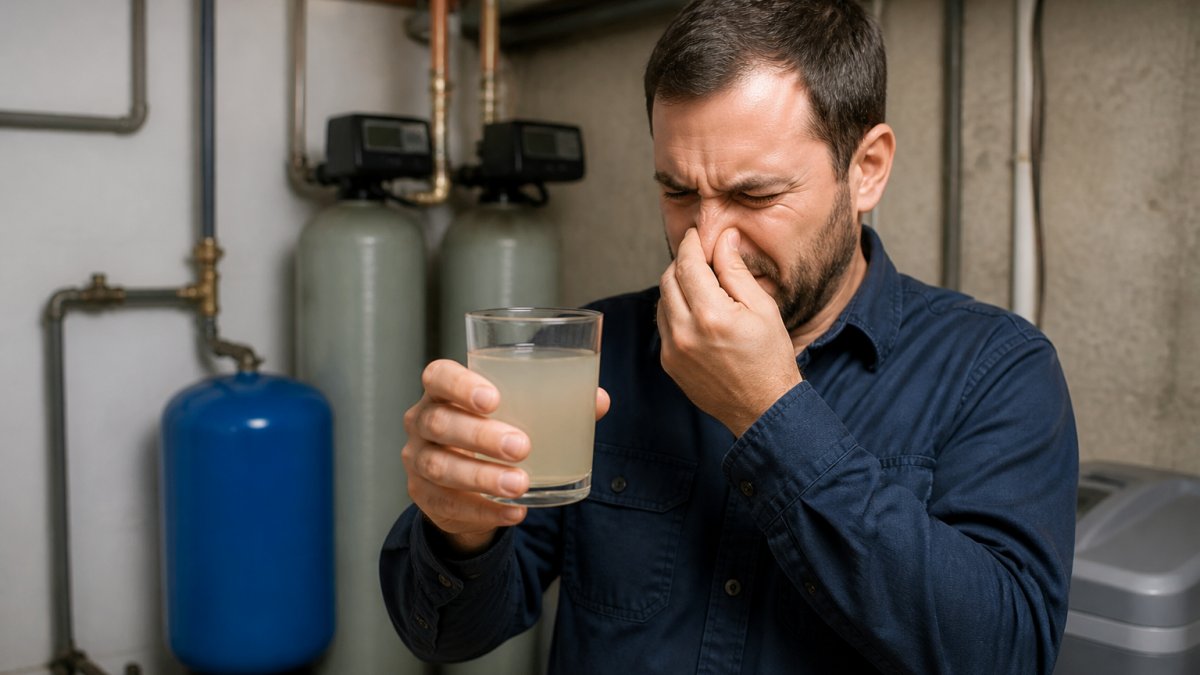
Ferric iron is oxidized iron, already solid particles suspended in your water. It stains sinks, tubs, and laundry, and causes the metallic taste and reddish discoloration you notice immediately.
Ferrous iron dissolves into the resin beads easily.
Water Softener Iron Removal Capacity: What You Need to Know
Your softener has a capacity limit, and iron eats into it faster than hardness does. Every grain of iron removed consumes exchange capacity that would otherwise go to calcium and magnesium, so a unit rated for 25 grains per gallon (gpg) of hardness can be overwhelmed by just 3 or 4 ppm of iron.
Three variables control whether a softener can keep up:
- Iron concentration, measured in parts per million (ppm), equivalent to milligrams per liter (mg/L)
- Iron form, dissolved ferrous iron exchanges onto resin; oxidized ferric iron does not
- Resin bed size and salt dose, a larger bed with a higher salt setting per regeneration tolerates more iron before fouling
Iron Concentration Thresholds and PPM Levels
Water quality is measured in parts per million (ppm). The practical thresholds most practitioners use are:
| Iron Level | What It Means for a Softener |
|---|---|
| 0-0.3 ppm | Below the secondary drinking water standard; not a treatment driver |
| 0.3-1 ppm | Softener handles ferrous iron comfortably with normal regeneration |
| 1-3 ppm | Softener can work, but resin needs periodic iron-specific cleaning and a higher salt dose |
| 3-5 ppm | Softener alone is unreliable; dedicated iron removal should come first |
| Above 5 ppm | Softener will foul quickly; iron filter or oxidizing system is required upstream |
The 0.3 ppm figure comes from the EPA's secondary standard for iron, a cosmetic guideline rather than a health limit. Above roughly 2 to 3 ppm, most manufacturers void or shorten the resin warranty if iron is not pretreated.
Two more numbers matter as much as the iron reading:
- pH. Below about 6.8, ferrous iron stays dissolved and is easier for resin to grab. Above about 7.5, iron oxidizes faster and starts plating out on resin and plumbing.
- Compensated hardness. Many softener sizing charts add 5 gpg of hardness equivalent for every 1 ppm of ferrous iron, so 8 gpg hardness plus 2 ppm iron is sized as if the water were 18 gpg hard. That rule of thumb explains why so many softeners that "should" work on iron fail in the field.
When a Softener Reaches Its Limits
Your softener reaches its limits when the resin bed becomes coated with iron, resin fouling. Unlike simple exhaustion, which reverses with normal regeneration, fouling does not, because the iron bonds to the resin in a form salt brine alone cannot strip off.
You will notice fouling in a predictable order:
- Rising salt use with no improvement in feel. The softener regenerates more often but the water stops feeling slippery.
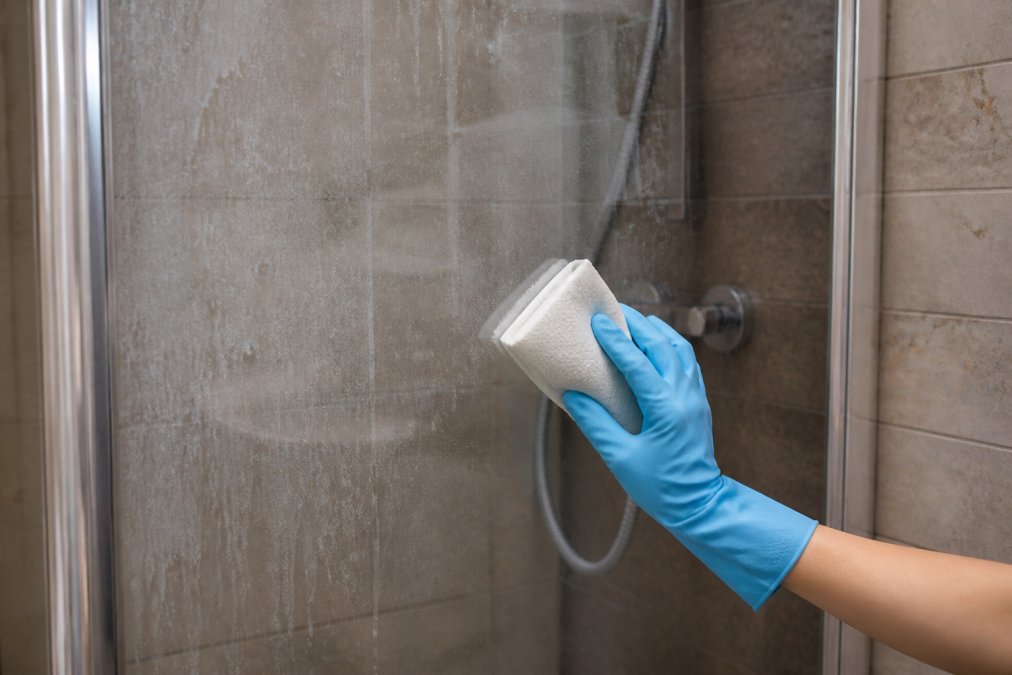
- Hardness breakthrough. Soap stops lathering, spots return on glassware, and the shower head scales up again.
- Iron breakthrough. Reddish or brownish tint returns at the tap, often worse right after a regeneration.
- Pressure loss. Fouled resin channels water through narrow paths, dropping flow at fixtures.
- Resin bead damage. In advanced cases the beads crack or turn dark brown-black and must be replaced, not cleaned.
If you catch fouling at stage 1 or 2, an iron-specific resin cleaner run through a dedicated cleaning cycle usually restores most of the bed's capacity. At stage 4 or 5, replacement is often the honest answer.
Iron Filter vs Water Softener: Which Do You Need?
A softener exchanges dissolved minerals onto resin; an iron filter oxidizes iron into a solid and traps it in a filter bed. The right answer depends on four water-test readings: iron form, iron concentration, pH, and whether manganese, sulfur, or iron bacteria are present.
A Decision Framework Based on Your Test Results
Work through these questions in order. The first one that applies usually settles the equipment choice.
1. Is the iron ferric (visible red-brown particles) or ferrous (clear water that stains later)?
- Ferric iron cannot be removed by a softener. It needs mechanical filtration or an oxidizing filter first, or the softener will foul within weeks.
- Ferrous iron can be exchanged onto resin, but only within the concentration limits below.
2. What is the iron concentration?
- Under 1 ppm ferrous, with hard water: a softener alone is usually sufficient. Size the bed using the compensated-hardness rule (add 5 gpg per ppm of iron).
- 1-3 ppm ferrous: a softener can work if you commit to iron-specific resin cleaning and a higher salt dose, or you can install an iron filter ahead of the softener and stop worrying about it.
- Above 3 ppm, or any ferric iron: install a dedicated iron filter. Air-injection oxidizing filters, greensand-style media, and catalytic carbon beds are the common categories. Each has trade-offs in backwash water demand, media life, and sensitivity to pH.
3. What is the pH?
- Below 6.8: acidic water keeps iron dissolved, which helps a softener but corrodes plumbing. A neutralizer may be needed first.
- 6.8-7.5: the sweet spot for most iron treatment.
- Above 7.5: iron oxidizes readily, favoring an oxidizing filter but accelerating softener fouling.
4. Are manganese, sulfur, or iron bacteria present?
- Manganese above 0.05 ppm behaves like iron but is harder to oxidize. It usually pushes the decision toward a dedicated filter.
- Hydrogen sulfide (rotten-egg smell) requires oxidation regardless of iron level. A softener will not touch it.
- Iron bacteria (slimy orange-brown biofilm in toilet tanks, toilet bowls, or the softener brine tank) is a biological problem. No softener or standard iron filter solves it; the well and plumbing need disinfection first, then treatment.
Sizing, Flow Rate, and Installation Order
Even the right equipment fails if sized wrong. Two numbers drive sizing:
- Peak flow rate. Add up the fixtures that can run at once, typically 8 to 12 gallons per minute (gpm) for a three-bath home. The iron filter must handle that peak without channeling or pushing iron through.
- Daily demand. A family of four uses roughly 250 to 300 gallons per day, which sets regeneration frequency and the salt or backwash water budget.
Installation order matters as much as equipment choice:
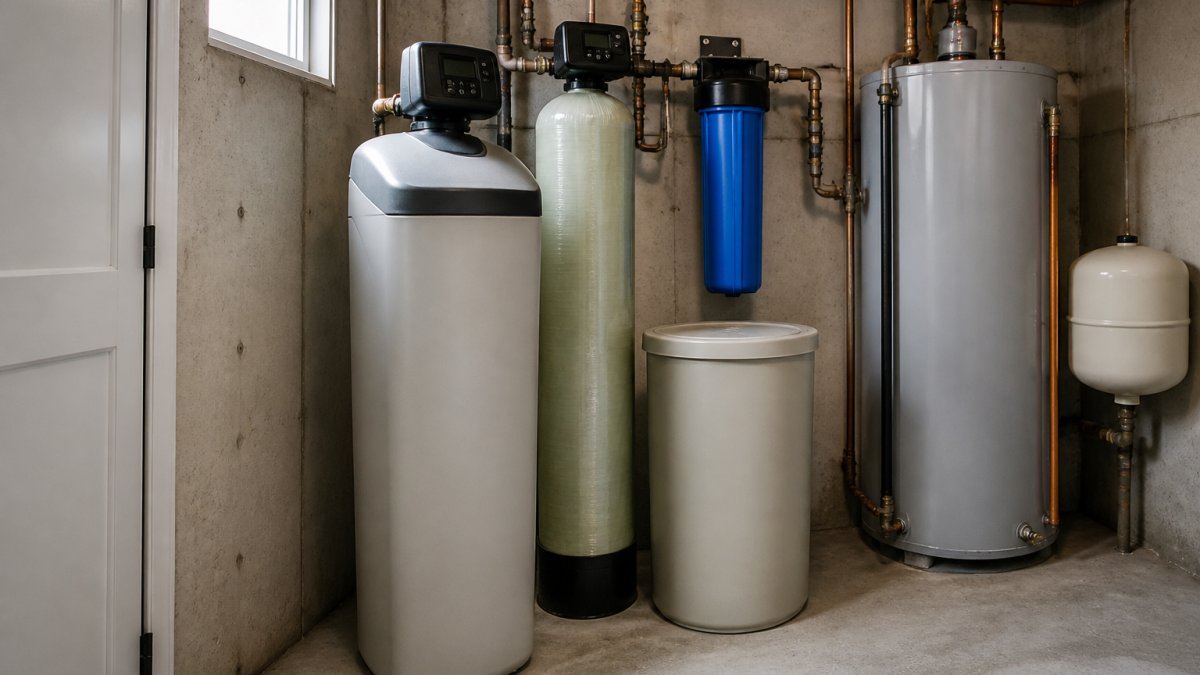
- Sediment filter (if the water has visible particles)
- Iron filter or oxidizing system
- Water softener
- Whole-home carbon or reverse osmosis at point of use, if taste or other contaminants are a concern
Putting the softener ahead of the iron filter is the most common installation mistake, guaranteeing premature resin fouling and voiding most resin warranties.
Signs Your Water Has Too Much Iron
Spotting iron in your water is usually straightforward. Watch for:
- Reddish or brownish staining on sinks, tubs, and fixtures
- Metallic taste in drinking water and coffee
- Discolored laundry, especially whites turning yellow or brown
If you see these signs, you have iron. The question is how much, what form, and what else is in the water with it.
Verifying the System Actually Works
Once treatment is installed, verify it with a before-and-after test plan.
- Baseline test before installation: iron (both forms), manganese, pH, hardness, sulfur, and bacteria if odor or slime is present.
- First verification 2 to 4 weeks after installation: retest iron and hardness at a treated tap.
- Ongoing monitoring every 6 to 12 months: retest iron, hardness, and pH, and watch salt consumption and backwash cycles.
If treated iron creeps back up between tests, the filter media is likely exhausted or the softener resin is fouling. Catching that early is far cheaper than replacing a resin bed or filter tank.
At AquaShield Home Systems, we start every project with a water test and a walk-through of your plumbing and fixtures, so the equipment choice is driven by your water, not a generic package.
How to Remove Iron from Water: Testing and Treatment
Removing iron starts with understanding what you're dealing with: testing first, treatment second.
Testing Your Water Accurately
A basic field test kit gives a quick read on whether iron is present, but accurate concentration levels require a laboratory test. Start with a field test to confirm iron is there, then send a sample to a certified lab for precise measurement.

Factors That Affect Iron Treatment
Several things influence how well any treatment system works:
- pH level: Lower pH keeps ferrous iron dissolved longer; higher pH oxidizes it faster.
- Hardness: Hard water can interfere with some iron removal methods.
- Manganese: Often found alongside iron and requires similar treatment.
This is why a one-system-fits-all approach fails: your treatment must match your water, not a generic standard.
Water Softener Resin Cleaner for Iron: Maintenance Matters
If you're using a softener to remove iron, maintenance is critical. Iron fouls resin faster than hardness minerals alone, and keeping resin clean extends system life.
How Iron Fouls Your Resin Bed
Iron particles build up on resin beads over time, coating them and reducing their ability to exchange ions.
Ferric iron fouls faster than ferrous iron because solid particles stick to the resin surface.
The solution is cleaning. A resin cleaner designed for iron removes those particles and restores effectiveness, maintenance, not replacement, that extends system life significantly.
Cleaning and Regeneration Best Practices
Regular regeneration helps, but it doesn't remove iron fouling completely. You need periodic deep cleaning with an iron-specific resin cleaner.
Most homeowners should clean their resin bed annually if they're removing iron; some situations require more frequent cleaning depending on iron concentration and water use. A technician adds a cleaning solution, runs a special cycle, and flushes it out, restoring the resin beads.
Common Mistakes Homeowners Make with Iron and Softeners
Understanding what doesn't work helps you avoid costly errors.
Assuming a softener handles all iron: It doesn't. Softeners work best on low ferrous iron combined with hardness.
Ignoring water testing: Guessing about water quality leads to wrong treatment choices. Testing is the foundation.
Skipping maintenance: Iron fouls resin quickly, and ignoring it accelerates system failure. Regular cleaning keeps your system working.
Waiting too long to treat: Early treatment prevents buildup in pipes and appliances.
Getting Your Water System Right
The right water system depends on your specific water quality.
A water softener remove iron in limited situations. When conditions are right, low ferrous iron combined with hardness, a softener works well.
At AquaShield Home Systems, we've helped homeowners in Northern Colorado solve water quality problems.
If iron is affecting your water quality, the first step is simple: get it tested.
Frequently Asked Questions
How much iron can a water softener remove?
Water softeners can handle small amounts of ferrous (dissolved) iron, typically up to 1-2 parts per million (ppm) depending on the system size and resin capacity. Above that threshold, the resin fouls quickly and loses effectiveness. If your water exceeds 2 ppm iron, a dedicated iron filter or pre-treatment system is usually necessary alongside or instead of a softener. Testing your water is the first step to knowing whether a softener alone will work for your home.
What type of iron can a water softener remove?
Water softeners remove ferrous iron (dissolved, clear-water iron) through ion exchange. They cannot effectively remove ferric iron (oxidized, red-water iron) because ferric particles are insoluble and too large for the resin to capture. If your water turns red or brown when exposed to air, you have ferric iron and need an iron filter, not just a softener. A professional water test will identify which type you have.
When do you need an iron filter instead of a water softener?
You need an iron filter when iron levels exceed 2 ppm, when you have ferric (oxidized) iron, or when iron bacteria is present. An iron filter removes insoluble particles that a softener cannot handle. Many homes benefit from both systems: a filter removes iron first, then the softener addresses hardness. Your water quality determines the right solution. A free assessment can tell you exactly what your home needs.
Does iron bacteria go away with a water softener?
No. Water softeners cannot kill or remove iron bacteria, which is a living organism that thrives in iron-rich water. Iron bacteria cause rotten egg smells and slime buildup in pipes and tanks. Treatment requires oxidation (air injection or chemical oxidizers), specialized filtration, or both, not softening. If you suspect iron bacteria in your well water, professional testing and a targeted treatment plan are essential. A softener alone will not solve this problem.
Ready to fix your water? Get a Free Estimate from AquaShield Home Systems. We'll test your water, explain what you're dealing with, and recommend the right system for your home, without pressure and without overselling you equipment you don't need.