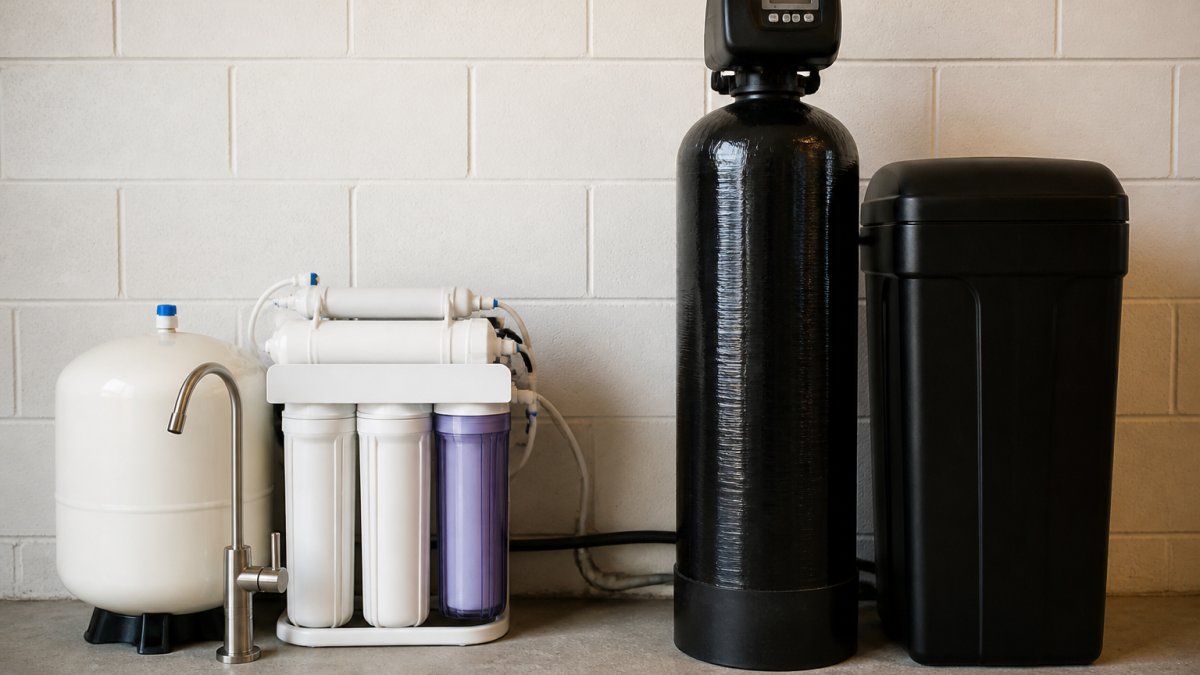
 comparison
Reverse Osmosis vs Water Softener Systems
Table of Contents
- Reverse Osmosis vs Water Softener Systems: Key Differences
- How Water Softeners Work: Ion Exchange and Hard Water Removal
- How Reverse Osmosis Systems Work: Membrane Filtration and Contaminant Reduction
- Signs You Need a Water Softener for Your Home
- Do You Need Both Systems? Well Water vs Municipal Water Scenarios
- Municipal Water with Moderate Hardness (60-180 ppm)
- Municipal Water with Taste, Odor, or Chlorine Concerns
- Well Water with Moderate Hardness (60-180 ppm) and No Known Contamination
- Well Water with Hardness + Iron, Sulfur, or Bacteria
- Well Water with Severe Contamination (High Iron, Sulfur, or Chemical Contaminants)
- How to Test Your Water and Make the Right Choice
- Water Softener Maintenance Schedule and Filter Replacement
- How to Change Reverse Osmosis Filters and System Care
- Environmental Impact and Long-Term Cost Comparison
- Frequently Asked Questions
Last Updated: September 28, 2026
Reverse Osmosis vs Water Softener Systems: Key Differences
Hard water leaves mineral deposits on appliances and dishes. Reverse osmosis vs water softener systems solve different problems: water softeners remove calcium and magnesium to prevent scale buildup, while reverse osmosis filters contaminants for drinking water purity. Some homes need one, many benefit from both. The choice depends on your water quality issues and whether you have municipal or well water.
| System Type | Primary Purpose | Best For | Main Limitation |
|---|---|---|---|
| Water Softener (Ion Exchange) | Removes calcium and magnesium | Protecting appliances and plumbing | Does not remove contaminants or improve drinking water taste |
| Reverse Osmosis | Removes dissolved solids and contaminants | Drinking and cooking water purity | Does not prevent scale in pipes and appliances |
| Salt-Free Conditioner | Prevents scale without salt | Hard water without sodium addition | Less effective for extreme hardness |
| Whole-House RO | Removes contaminants throughout home | Severe water quality issues | Higher cost and installation complexity |
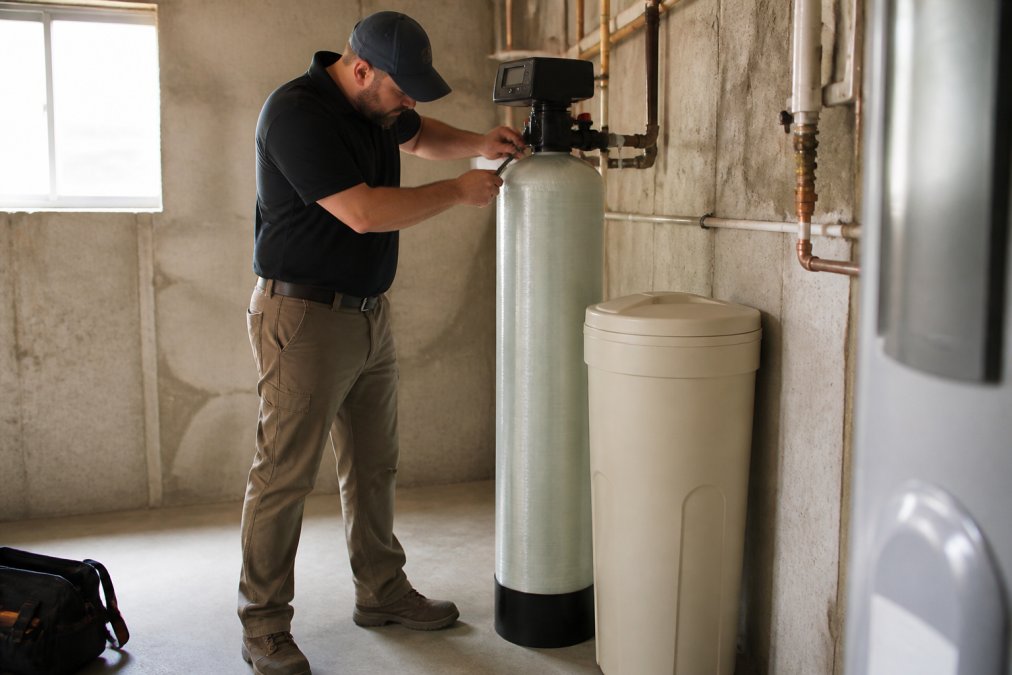
How Water Softeners Work: Ion Exchange and Hard Water Removal
Water softeners don't remove contaminants, improve taste, or reduce total dissolved solids. If your water has iron, sulfur smell, chlorine taste, or chemical contamination, a softener alone won't solve those problems.
How Reverse Osmosis Systems Work: Membrane Filtration and Contaminant Reduction
Point-of-use RO systems waste 3-4 gallons per gallon of pure water produced. Whole-house systems are more efficient but still generate waste water, making them less ideal for water-scarce regions.
Signs You Need a Water Softener for Your Home
Hard water leaves visible clues: white buildup on faucets, scale in kettles, cloudy spots on glassware. Appliance performance signals problems: water heaters work harder, dishwashers leave spots, washing machines require more detergent. Mineral buildup inside pipes and appliances is likely in older homes that have never been softened.
Do You Need Both Systems? Well Water vs Municipal Water Scenarios
The answer depends on your water source, your specific contaminants, and your priorities. Here's how the decision breaks down with concrete criteria:
Municipal Water with Moderate Hardness (60-180 ppm)
Recommendation: Water softener alone
Municipal water is treated and tested regularly by your local water authority. Request your water quality report to see what's in your water. If hardness is your primary concern, a water softener solves the problem efficiently, protects appliances, and extends water heater life by 3-5 years.
Municipal Water with Taste, Odor, or Chlorine Concerns
Recommendation: Water softener + point-of-use reverse osmosis at kitchen sink
Well Water with Moderate Hardness (60-180 ppm) and No Known Contamination
Recommendation: Water softener alone (after testing)
If your well water test shows hardness as the primary issue with no iron, sulfur, bacteria, or chemical contamination, a water softener is sufficient. Before installing, test for iron (above 0.3 ppm damages resin), sulfur (rotten-egg smell), bacteria, nitrates, and pH level (below 6.5 indicates corrosive water).
Well Water with Hardness + Iron, Sulfur, or Bacteria
Recommendation: Water softener + point-of-use reverse osmosis (or whole-house RO for severe cases)
Well Water with Severe Contamination (High Iron, Sulfur, or Chemical Contaminants)
Recommendation: Whole-house reverse osmosis system (or RO + specialized pre-treatment)
How to Test Your Water and Make the Right Choice
Test your water first. For municipal water, request your free annual water quality report from your local water authority. For well water, hire a certified lab to test for hardness, iron, manganese, sulfur, bacteria, coliform, pH, and nitrates. That test result guides the most cost-effective system combination for your home.
Water Softener Maintenance Schedule and Filter Replacement
Water softeners are relatively low-maintenance. Check your brine tank monthly and refill when it drops to one-quarter full. Resin beads last 15-20 years and regenerate automatically. If your water contains high iron, a pre-filter extends resin life. Sediment filters need replacement every 6-12 months.
How to Change Reverse Osmosis Filters and System Care
Point-of-use RO systems require filter changes every 6-12 months; sediment and carbon filters need replacement more frequently than the RO membrane (2-3 years). Changing filters is straightforward: turn off the system, depressurize, unscrew the old filter, install the new one, and flush. Whole-house RO systems require annual professional inspections.
Environmental Impact and Long-Term Cost Comparison
Water softeners and reverse osmosis systems carry different environmental and financial footprints. Understanding both helps you make a decision aligned with your budget and values.
Water Softener Environmental and Cost Profile
Water softeners discharge brine during regeneration cycles every 2-3 days, releasing 20-100 gallons per cycle. Over a year, that's roughly 2,400-12,000 gallons of salt-laden wastewater. In water-scarce regions, this raises environmental concerns. Financially, annual salt costs run $100-$300 for most households. The real benefit emerges from appliance longevity: a water heater protected from scale can last 12-15 years instead of 8-10, saving thousands in replacement costs.
Reverse Osmosis Environmental and Cost Profile
Point-of-use RO systems waste water at a 3:1 or 4:1 ratio. A household using 5 gallons of RO water daily generates 15-20 gallons of waste water. Whole-house RO systems are more efficient but still produce significant waste water. In water-scarce regions, this is a meaningful environmental trade-off. Filter replacement runs $75-$200 per year.
Maintenance Cost Breakdown: 5-Year Comparison
Water Softener (typical household, moderate hardness):
- Installation: Pricing depends on the specific system and installation requirements.
- Salt (5 years): Costs vary based on usage and salt type.
- Sediment filter replacement (if included): Costs vary.
- 5-Year Total: Please contact us for a detailed estimate.
Point-of-Use Reverse Osmosis:
- Installation: Pricing depends on the specific system and installation requirements.
- Filter replacements (sediment, carbon, membrane): Costs vary based on filter type and replacement frequency.
- 5-Year Total: Please contact us for a detailed estimate.
Whole-House Reverse Osmosis:
- Installation: Pricing depends on the specific system and installation requirements.
- Annual maintenance and filters: Costs vary based on system type and maintenance needs.
- 5-Year Total: Please contact us for a detailed estimate.
Piping Material Compatibility: A Hidden Cost Factor
Soft water is more corrosive to certain materials because it lacks the mineral coating that protects pipe interiors. Copper piping can develop pinhole leaks after 10-15 years; add a corrosion inhibitor to prevent this. PEX piping is resistant to soft water corrosion. Galvanized steel piping should avoid softeners, as soft water accelerates corrosion.
Well Water vs. Municipal Water: Cost and Environmental Implications
Municipal water with softening: A water softener alone typically costs less over 5 years than a whole-house RO system. Environmental impact is moderate (brine discharge). This is the most cost-effective path for hard municipal water.
Making the Environmental and Financial Choice
If water scarcity is a concern in your region, a water softener with salt-free conditioning or a point-of-use RO system (capturing waste water for landscape use) minimizes environmental impact. If budget is the primary concern, a water softener for hard water protection combined with a point-of-use RO at your kitchen sink offers the best 5-year value.
Frequently Asked Questions
What is the major difference between a water softener and a reverse osmosis system?
Water softeners use ion exchange to remove calcium and magnesium minerals that cause hardness and scale buildup on appliances and plumbing. Reverse osmosis systems use a semi-permeable membrane to remove total dissolved solids, contaminants, heavy metals, and chlorine for drinking water purity. Water softeners protect your home's plumbing and appliances; reverse osmosis improves drinking water quality and taste.
Do I need both a water softener and a reverse osmosis system?
It depends on your water quality. If you have hard water affecting appliances but also want purified drinking water, both systems complement each other. A water softener protects your whole home's plumbing, while a point-of-use reverse osmosis system under your kitchen sink provides drinking water free of sodium that the softener may introduce. For well water with contamination and hardness, combining both addresses both issues effectively.
What is a major downside of reverse osmosis water?
Reverse osmosis systems produce wastewater during filtration, typically 3 to 4 gallons of waste for every 1 gallon of purified water. This can increase water consumption and utility costs. Additionally, RO systems remove beneficial minerals along with contaminants, though this is not harmful to health. Point-of-use systems are also limited to one tap, so you only get filtered water where the system is installed.
How often should I replace filters in a reverse osmosis system?
Sediment and carbon pre-filters typically need replacement every 6 to 12 months, depending on your water quality and usage. The semi-permeable membrane usually lasts 2 to 3 years. If you have high sediment or iron in your well water, pre-filters may need more frequent changes. Regular filter replacement maintains water flow rate and system effectiveness, so follow your system's maintenance schedule and monitor water pressure for signs of clogging.
Can a water softener replace a reverse osmosis system?
No. A water softener removes only hardness minerals (calcium and magnesium) through ion exchange. It does not remove total dissolved solids, heavy metals, chlorine, fluoride, or other dissolved contaminants that affect drinking water taste and safety. If your primary concern is scale buildup and appliance protection, a softener is sufficient. If you need purified drinking water or have well water with iron, sulfur, or chemical contamination, reverse osmosis is necessary.
Understanding whether you need a water softener, reverse osmosis system, or both starts with knowing what's actually in your water. AquaShield Home Systems offers free water testing and transparent assessments to help you choose the right solution without pressure or upselling. Get a free estimate today and discover which system, or combination of systems, will give your family clean, great-tasting water tailored to your home's specific needs.