 Listicle
Best Reverse Osmosis System for PFAS Removal
Last Updated: November 19, 2026
Quick Summary
The best reverse osmosis system for PFAS removal carries third-party certification for PFAS reduction, not just a manufacturer's claim. Look for NSF/ANSI 53 certification that names the specific PFAS compounds and states a reduction percentage for each. A system can be a great water filter and still have no verified PFAS performance.
- Certification is compound-specific: a system certified for PFOA and PFOS is not automatically certified for other PFAS variants.
- Reverse osmosis is the most reliable single method for drinking water because it addresses the widest range of compounds at the point of use.
- Boiling and freezing do nothing to remove PFAS from water.
- Replace sediment and carbon pre-filters every 6-12 months and the RO membrane every 2-3 years.
- Skipping the pre-filter change is the most common cause of premature membrane failure.
Table of Contents
- Why PFAS Removal Matters for Your Drinking Water
- Reverse Osmosis Systems Certified to Reduce PFAS
- Side-by-Side Comparison of Leading RO Systems
- How to Remove PFAS from Water at Home
- Water Filters That Remove PFAS and Microplastics
- Reverse Osmosis Filter Replacement Schedule
- Total Cost of Ownership and Practical Trade-Offs
- Get a Free PFAS Water Assessment from AquaShield Home Systems
- Frequently Asked Questions
Why PFAS Removal Matters for Your Drinking Water
PFAS removal starts with understanding what these chemicals are and why they resist normal filtration.
PFOA and PFOS are the two most-studied members of the family. The EPA's PFAS research and health information explains that these compounds persist in soil, groundwater, and drinking water supplies, and that most people have some level of PFAS in their blood. That's the uncomfortable part most guides skip past: this isn't a rare contaminant you can assume you're avoiding.
Whether your tap water is safe depends on your source and your treatment. A standard pitcher filter won't touch PFAS. A properly certified reverse osmosis system can.
Below, we'll walk through which systems are actually certified, what certification covers, and how to choose one without overspending.
Reverse Osmosis Systems Certified to Reduce PFAS
The best reverse osmosis system for PFAS removal carries third-party certification for PFAS reduction, not just a manufacturer's claim.
Certification means an independent lab tested the system against a known challenge concentration and confirmed the reduction. Without it, you're trusting marketing copy.
Here's what to look for on the spec sheet:
- NSF/ANSI 53 for health-related contaminant reduction, including specific PFAS claims
- A named list of the specific PFAS compounds the system is certified against
- The reduction percentage stated for each compound, not a vague "reduces PFAS"
A system labeled "PFAS reduction" without a certification body behind it is a claim, not a result. Ask for the certificate number.
What NSF/ANSI 53 and 58 Certification Actually Covers
NSF/ANSI 53 covers health effects, meaning the system has been tested to reduce specific contaminants below a set limit. NSF/ANSI 58 covers reverse osmosis systems specifically, including their ability to reject dissolved solids and the contaminants named in the standard.
What most buyers miss: certification is compound-specific. A system certified for PFOA and PFOS is not automatically certified for every other PFAS variant. If your water has a broader mix, check the certificate's contaminant list rather than assuming blanket coverage.
Side-by-Side Comparison of Leading RO Systems
Most RO roundups rank systems by star rating or sticker price, which tells you almost nothing about PFAS performance.
The seven comparison dimensions that actually matter
- Certification scope. Which standard is the system certified to, NSF/ANSI 53, NSF/ANSI 58, or both, and does the certificate list PFAS compounds by name?
- Named PFAS compounds. PFOA and PFOS are the baseline. GenX chemicals, PFBS, PFHxS, and PFNA are increasingly listed. The longer the named list, the broader the verified coverage.
- Stated reduction percentage. Look for a per-compound figure on the certificate, not a marketing headline.
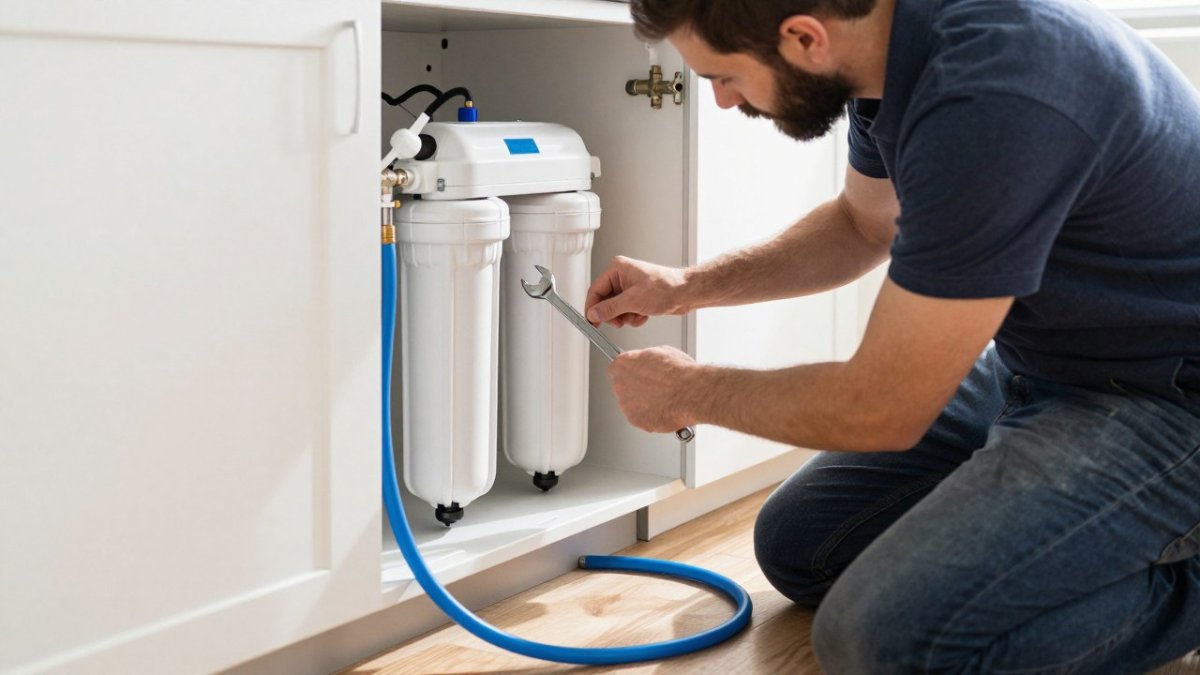
- Format and installation footprint. Under-sink needs a drain connection and a faucet hole; countertop needs neither; whole-home is a plumbing project with a different scope entirely.
- Rated capacity and flow. Gallons per day, tank size or tankless on-demand delivery, and recovery rate determine whether the system keeps up with a family of four during dinner prep.
- Filter train and replacement intervals. Count the stages, sediment, carbon block, membrane, post-filter, remineralization, and note the recommended interval for each.
- Warranty and service model. Component warranty length, whether filters are proprietary, and whether installation and service are handled locally or by the homeowner.
How the formats compare on those dimensions
| Dimension | Countertop | Under-Sink | Whole-Home |
|---|---|---|---|
| Installation | None, sits on counter | Drain line + faucet hole | Professional plumbing |
| Typical capacity | 1-3 gal batch | 50-600 gal/day | Sized to household demand |
| PFAS certification | Varies by model, verify | Varies by model, verify | Varies by system, verify |
| Water waste | Low (batch process) | Moderate to low (recovery-rate dependent) | Higher (treats all household water) |
| Maintenance access | Easy, user-serviceable | Under cabinet | Whole-system service |
| Best fit | Renters, small households | Homeowners, drinking/cooking water | Households also treating hardness, iron, or sulfur |
How to score a candidate in ten minutes
Pull the certificate number from the product page, look it up in the certifying body's public listing, and confirm three things: the standard, the named compounds, and the reduction percentage. Then check the manual for the filter train and replacement intervals. If any of those is missing, treat the PFAS claim as unverified.
Watch out: a system can carry NSF/ANSI 58 certification for RO performance and still have no PFAS-specific claim under 53. Buyers routinely conflate the two and end up with a well-built RO system that was never tested against the contaminant they were worried about.
Best for: homeowners who want the system matched to their water and installed correctly. Skip if: you're renting and can't install under-sink hardware, a countertop unit is the practical route.
How to Remove PFAS from Water at Home
Removing PFAS at home requires a treatment method that physically rejects or binds the molecules. Three methods work: reverse osmosis, granular activated carbon (GAC), and ion exchange (IX).
Reverse osmosis pushes water through a semipermeable membrane that rejects PFAS molecules along with other dissolved contaminants. GAC binds certain compounds as water passes through the carbon bed.
For a household dealing with a known PFAS issue, reverse osmosis is the most reliable single method for drinking water because it addresses the widest range of compounds at the point of use.
Under-Sink vs. Countertop vs. Whole-Home Systems
Under-sink systems hide below the cabinet and treat water at a dedicated faucet. Countertop systems sit on the counter and need no plumbing work, making them the renter-friendly choice.
If you're weighing whole-home treatment, whole home water filter installation covers what the job involves and who it suits. For most PFAS concerns focused on drinking and cooking water, a point-of-use under-sink system is the efficient answer.
Water Filters That Remove PFAS and Microplastics
Filters that handle both PFAS and microplastics need a physical barrier plus an adsorption or rejection stage. Microplastics are tiny plastic particles; PFAS are dissolved chemicals.
What works:
- Reverse osmosis rejects both dissolved PFAS and particulate microplastics at the membrane
- Certified carbon block filters can reduce some PFAS and capture larger particles, but check the certification
- Combination systems pair a sediment or carbon pre-filter with an RO membrane for broader coverage
The CDC's guidance on water treatment at home is a useful plain-language starting point for what different treatment methods do and don't remove. The short version: match the method to the contaminant, and verify with certification.
Reverse Osmosis Filter Replacement Schedule
Filter replacement timing depends on your water quality and how much you use the system, but a general schedule keeps performance from quietly degrading.
| Component | Typical Interval | Why It Matters |
|---|---|---|
| Sediment pre-filter | 6-12 months | Protects downstream stages from clogging |
| Carbon pre/post filters | 6-12 months | Adsorption capacity drops as it loads up |
| RO membrane | 2-3 years | Rejection performance falls off over time |
| Remineralization cartridge | 6-12 months | Restores taste and minerals |
If you want the step-by-step, how to change reverse osmosis filters walks through the process. Wondering how long the membrane itself lasts? How long reverse osmosis membranes last covers the signs it's time to replace.
Watch out: skipping the pre-filter change is the most common cause of premature membrane failure. A clogged pre-filter pushes sediment into the membrane, and that's an expensive part to replace early.
Total Cost of Ownership and Practical Trade-Offs
Sticker price is the least useful number in an RO purchase. The system you keep for a decade is the one whose filters you can afford to change on schedule. Total cost of ownership is the purchase price plus every replacement filter over the system's life, plus the water sent to drain, plus any service calls, divided by the years you actually use it.
The line items that make up the real number
- Purchase and installation. The system itself, plus any plumbing work, faucet, and drain connection if you're not installing it yourself.
- Sediment and carbon pre-filters. Usually changed every 6-12 months. Inexpensive individually but they add up over a decade.
- RO membrane. Typically every 2-3 years, the single most expensive replacement part on most systems.
Doing the math before you buy
Ask three questions of any candidate system:
- What is the full filter kit price, and how often does each stage need replacing?
- What is the membrane price and rated life?
- What is the recovery rate, how many gallons go to drain per gallon treated?
A system with a low upfront price but a proprietary filter kit changed every six months can cost more over five years than a higher-priced system with standard filters and longer intervals. The cheapest unit on the shelf is rarely the cheapest to own.
Water waste, flow rate, and practical usability
- Recovery rate. Older and lower-efficiency RO systems send several gallons to drain for every gallon treated. Tankless and higher-efficiency models cut that ratio substantially. If you're on a metered water bill, this is a real annual cost.
- Flow rate and storage. Tank systems deliver fast until the tank empties, then slow to a trickle while refilling. Tankless systems deliver on demand but can be sensitive to incoming water temperature and pressure. Match the delivery style to how your household actually uses water.
- Installation constraints. Under-sink work needs a drain connection and a faucet hole. Countertop units need neither but take up counter space and require manual filling. Whole-home treatment is a different scope of job with a different cost structure.
For a deeper roundup of specific models, see our guide to the 5 best under sink reverse osmosis systems. Cost depends on your water, your home, and the system that fits. Request a quote from AquaShield Home Systems for current pricing and a filter schedule.
Get a Free PFAS Water Assessment from AquaShield Home Systems
Guessing whether your water has a PFAS issue is the wrong approach. Testing tells you what's actually there, and the right system follows from the result.
AquaShield Home Systems is family-owned, licensed, and has served Northern Colorado and the Denver metro for over five years. We recommend a system matched to your water quality needs. If you're ready to move forward, reverse osmosis system installation is the next step.
If your water has never been tested for PFAS, that's the gap worth closing first. AquaShield Home Systems offers a free water assessment, licensed installation, and transparent pricing with no upsell pressure.
Frequently Asked Questions
Do all reverse osmosis systems remove PFAS?
No. A standard RO membrane can reject many PFAS compounds, but removal depends on the full system design and whether it has been tested. Look for a system with a certification that specifically lists PFAS reduction, not just a general water-quality claim. Carbon-only pitchers and basic filters are not designed for PFAS removal. If you are unsure, ask for the certification listing and check which compounds and reduction levels were tested before you buy.
How can I tell whether a reverse osmosis system is certified to reduce PFAS?
Check the product's certification listing from an independent testing body. The listing should name the specific PFAS compounds tested, such as PFOA and PFOS, and the reduction level claimed. A general 'removes contaminants' statement is not the same as a certified reduction claim. Ask the manufacturer for the certification document and verify it covers the system model you are buying, not just a similar model in the same product line.
How often should you replace reverse osmosis filters for PFAS reduction?
Follow the manufacturer's replacement schedule for each stage, because sediment and carbon pre-filters usually need changing more often than the RO membrane. A typical schedule is every 6 to 12 months for pre-filters and every 2 to 3 years for the membrane, but your water quality and usage affect this. Set a reminder, keep spare cartridges on hand, and replace all stages on time so the system keeps reducing PFAS at its tested performance.
Can a reverse osmosis system remove microplastics as well as PFAS?
Yes, an RO membrane can reject microplastics along with PFAS, but the pre-filters do much of the work by trapping larger particles before they reach the membrane. Choose a system with a sediment filter and a carbon block ahead of the RO stage, and check whether the manufacturer lists microplastic reduction in its tested claims. Whole-home filtration can also reduce microplastics at every tap, while a point-of-use RO system treats only the water you drink.
Is reverse osmosis water hard on the kidneys?
No. Drinking reverse osmosis water is not hard on the kidneys. RO removes minerals along with contaminants, but your body gets minerals from food, and drinking low-mineral water does not harm kidney function in healthy people. If you prefer the taste of water with minerals, choose a system with a remineralization stage. Talk to your doctor if you have a specific kidney condition and are concerned about your water intake.