 Listicle
Is a Sediment Filter Worth It for City Water?
Last Updated: November 21, 2026
Quick Summary
A sediment filter is worth it for city water because it traps rust, silt, and debris shed by aging distribution mains before they reach your taps and appliances. It does not soften water or remove chlorine, but it protects your water heater, softener, and fixtures from abrasive particles.
- A 5-micron cartridge is the standard choice for whole-house city water protection.
- Softeners pass sand, silt, and rust straight through, so a pre-filter protects the resin bed.
- Gritty aerator screens and rust-stained toilet tanks are the clearest signs you need one.
- Inspect the housing monthly and check the cartridge at three months to set your interval.
- Install the unit on the main line after the meter and before any softener or carbon stage.
Table of Contents
- What a Sediment Filter Actually Does for City Water
- City Water vs. Well Water: Why Sediment Still Shows Up
- Signs You Need a Sediment Filter on Municipal Water
- The Best Sediment Filter Micron Rating for City Water
- Protecting Appliances from Water Sediment
- A Sediment Filter Maintenance Schedule That Prevents Pressure Drop
- Whole-House vs. Point-of-Use: Where a Sediment Filter Belongs
- Pros, Cons, and What Installation Really Involves
- Frequently Asked Questions
What a Sediment Filter Actually Does for City Water
A sediment filter is a cartridge-based device that traps sand, silt, rust particles, and other suspended solids before water reaches your taps or appliances.
Most homeowners assume treated city water arrives clean. It leaves the treatment plant clean. The trip from plant to faucet is where things change. Older distribution mains shed rust and mineral scale, and water main repairs stir up debris that lands in your pipes.
Here is the practical distinction: a sediment filter does not soften water, remove chlorine, or improve taste the way a carbon stage does. It removes physical particles. That single job protects everything downstream, from your water heater to your ice maker.
The question homeowners ask most is simple: is it worth installing a sediment filter for city water when the utility already treats it? The answer depends on what is actually in your water, and that is measurable.
City Water vs. Well Water: Why Sediment Still Shows Up
Well water carries sediment from the ground. City water carries sediment from the pipes. Both end up at your fixtures.
Municipal systems pull from surface water or groundwater, treat it, and push it through miles of distribution main. Those mains age. Cast iron and galvanized steel lines corrode from the inside, and the rust flakes they shed travel with the flow.
Sediment load also climbs after heavy rain, snowmelt, or a drawdown in reservoir levels. Treatment plants manage it, but no plant controls what happens inside the pipe between the plant and your meter.
A common mistake is assuming a water softener handles this. It does not. Softeners exchange hardness minerals, calcium and magnesium, that are dissolved in the water. They pass sand, silt, and rust particles straight through. That is why a water softener pre-filter matters: the sediment cartridge protects the softener resin from fouling and keeps the system working the way it should.
Signs You Need a Sediment Filter on Municipal Water
The clearest sign is what you find when you take apart a faucet. Unscrew an aerator and look at the screen. A gritty, rust-colored film means particles are reaching your fixtures.
Other signals show up around the house:
- Toilet tanks with a layer of fine grit or rust staining at the waterline
- Cloudy water that clears after running the tap for a minute
- Brown or orange tint after a main break or hydrant flush nearby
- Clogged aerators and showerheads that lose flow within weeks of cleaning
- Water-using appliances that fail early or leave spots on dishes
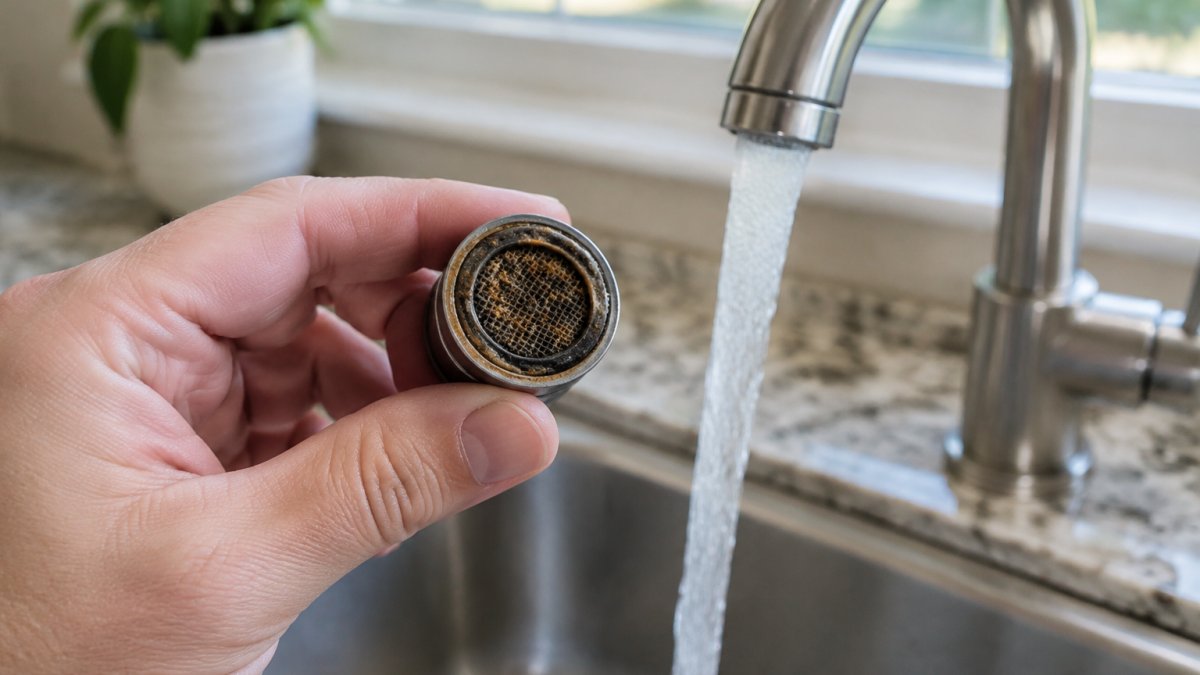
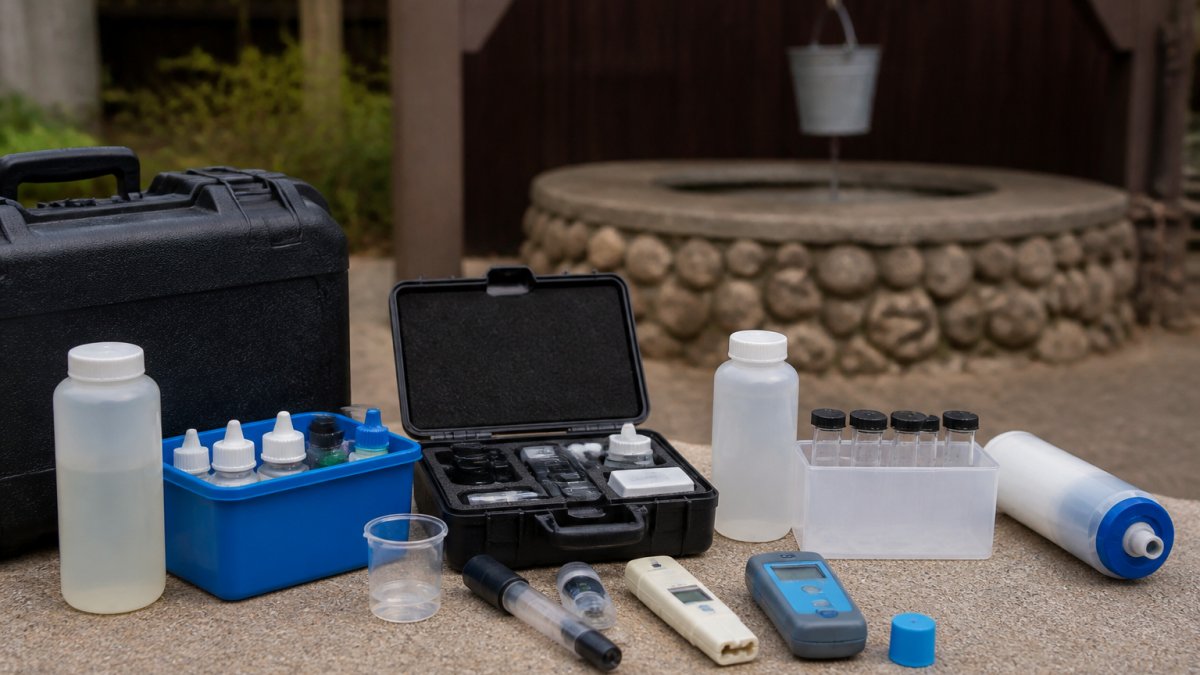
If two or more of these apply, test before you buy. A water quality testing baseline tells you what is in the water and how much sediment load you are dealing with. Testing also separates sediment problems from hardness problems, which need different equipment.
The Best Sediment Filter Micron Rating for City Water
The sediment filter micron rating used for city water is commonly 5 microns for whole-house protection, with 1 micron reserved for finer polishing. Micron rating describes the size of particle a filter captures, and it is the number that decides what gets through.
A micron is one millionth of a meter. For reference, a human hair is roughly 70 microns wide. Sand and silt are larger; fine rust and clay particles are smaller.
| Micron Rating | What It Captures | Best For |
|---|---|---|
| 20-30 micron | Sand, large rust flakes, grit | Coarse pre-filtration on dirty supplies |
| 10 micron | Silt, visible rust, debris | First stage ahead of a softener |
| 5 micron | Fine sediment, most rust | Standard whole-house protection |
| 1 micron | Fine clay, colloidal particles | Polishing stage or sensitive fixtures |
A common mistake is going straight to 1 micron because it sounds like the best protection. Finer media clogs faster, and a clogged cartridge is the number one cause of pressure loss. Most city water setups do well with a 5-micron cartridge, sometimes paired with a coarser first stage when sediment load runs high.
How Micron Rating Affects Flow and Pressure
Tighter filtration means more resistance. A 1-micron cartridge on a whole-house line can cost noticeable flow rate once it loads up, while a 5-micron unit holds flow far longer between changes.
Match the filter to your home's demand. A family of four with two and a half bathrooms pulls more water at once than a single occupant, and the housing and flow rate need to keep up at peak use. Size the housing for the worst-case draw, not the average.
Protecting Appliances from Water Sediment
Sediment is abrasive and it settles. Both traits shorten the life of anything that heats or moves water.
Inside a tankless water heater, sediment coats the heat exchanger and insulates it, which drives up energy use and can trigger error codes. In a tank unit, grit collects at the bottom and grinds against the tank lining. Washing machines pull sediment into inlet screens and valves. Dishwasher spray arms clog.
The protection is mechanical: stop the particles before they enter the appliance. A whole-house sediment stage upstream of the water heater handles this for every fixture at once. For a broader look at how filtration protects a home, see what a whole house water filter does for your plumbing and appliances.
Plumbing system protection extends to the pipes themselves. Sediment contributes to debris accumulation at low points and behind valves, and over time that buildup narrows flow and stresses joints. Clean water in means fewer repairs out.
A Sediment Filter Maintenance Schedule That Prevents Pressure Drop
A sediment filter maintenance schedule is the difference between steady pressure and a slow decline you notice only when shower flow turns weak. Cartridge replacement is the core task, and the interval depends on sediment load, not the calendar alone.
A workable baseline for most city water homes:
- Inspect the housing and pressure gauge monthly
- Check the cartridge at 3 months and note how loaded it looks
- Replace the cartridge on a schedule based on pressure readings and sediment load
- Shorten the interval if sediment load is high
- Replace O-rings at every cartridge change to prevent leaks
- Sanitize the housing at least once a year
Keep a log of dates and pressure readings. Two or three changes tell you the real interval for your water. For a full walkthrough of filter schedules and softener care, our whole home filtration system maintenance guide covers the seasonal checklist, and if you would rather hand the work off, our team handles filtration repair and maintenance for local homeowners.
Diagnosing Water Pressure Drop
Pressure loss is the most common complaint after a filter install, and it is almost always diagnosable. Work through these checks in order:
- Compare pressure before and after the filter. Install gauges on both sides of the housing. A growing gap means the cartridge is loading up.
- Check the cartridge. A heavily discolored or collapsed cartridge is the answer more often than not.
- Verify the bypass valve. A partially closed or failed bypass valve restricts flow independent of the filter.
- Inspect the housing assembly. A pinched or worn O-ring, or a cracked housing, can choke flow.
- Look at the flow rate demand. If pressure only drops when two fixtures run at once, the housing may be undersized for the home.
- Rule out the plumbing. Sediment downstream in aerators and valves can mimic filter problems.
If a fresh cartridge and a clean housing still leave you with weak pressure, the problem is upstream or in the plumbing, and it is worth having a licensed plumber look at it.
Whole-House vs. Point-of-Use: Where a Sediment Filter Belongs
Whole-house filtration treats every drop entering the home. Point-of-use treatment handles one fixture, usually the kitchen tap or the refrigerator line. For sediment, whole-house placement is the better fit in most cases.
The reason is simple: sediment damages appliances and fixtures throughout the house, not just at the kitchen sink. A point-of-use inline filter protects one faucet and leaves the water heater, washer, and dishwasher exposed. An inline filter at the fridge is useful for polishing drinking water, but it is not a substitute for whole-house sediment removal.
| Placement | Protects | Best For |
|---|---|---|
| Whole-house sediment filter | Every fixture, appliance, and the softener | Most city water homes with sediment issues |
| Point-of-use inline filter | One faucet or appliance | Drinking water polishing, renter-friendly setups |
| Water softener pre-filter | The softener resin bed | Homes with both hardness and sediment |
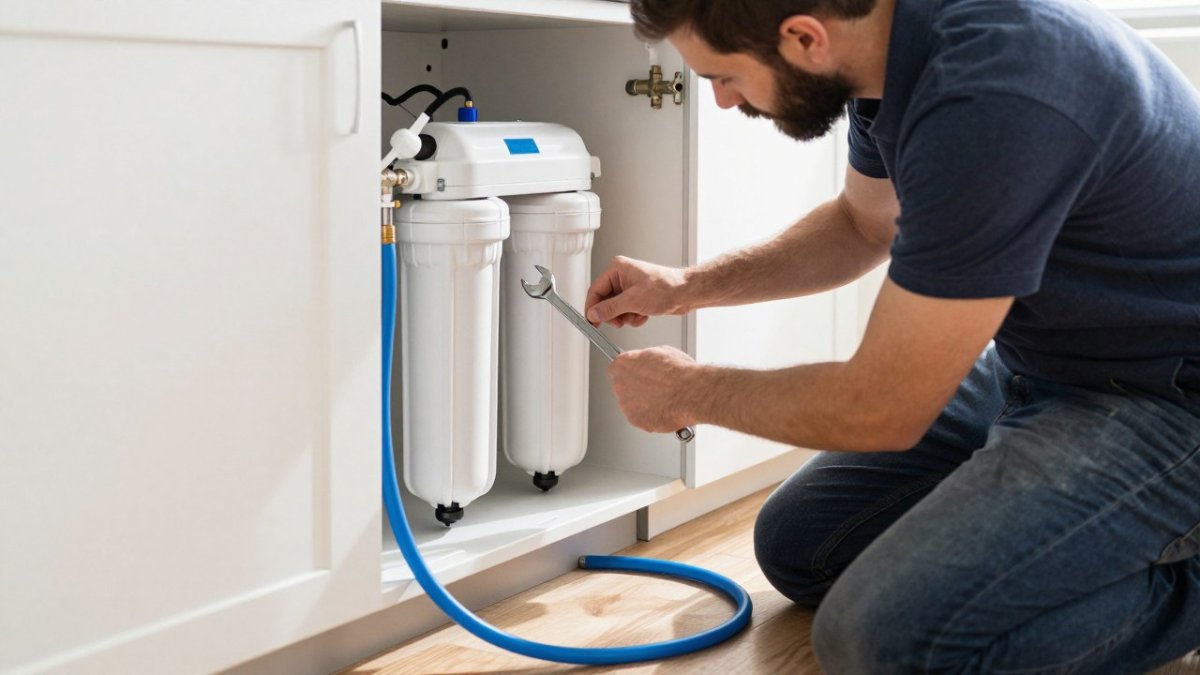
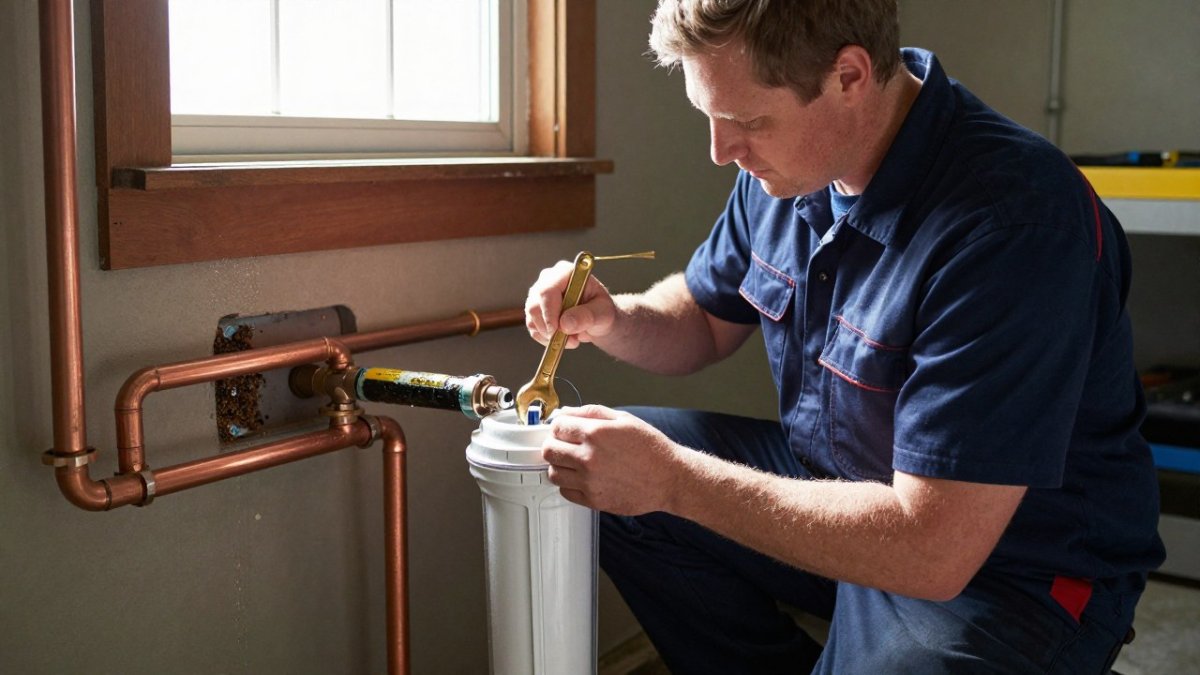
Where does the whole-house unit go? Install it on the main line after the meter and before any softener or carbon stage, with a bypass valve so you can service it without shutting off the house. If you want that work done properly the first time, whole home water filter installation is the service to look at.
Pros, Cons, and What Installation Really Involves
Sediment filtration earns its place in most city water homes, but it is not a universal yes. Here is the honest breakdown.
Pros:
- Protects appliances, fixtures, and the softener from abrasive particles
- Keeps water clarity consistent, especially after main breaks
- Low operating cost compared with appliance repairs
- Simple maintenance once the schedule is set
Cons:
- Cartridges need regular replacement, and skipping it causes pressure drop
- Does not address hardness, chlorine, or taste on its own
- Requires a mounting location and a drain or shutoff nearby
- Poorly sized units restrict flow at peak demand
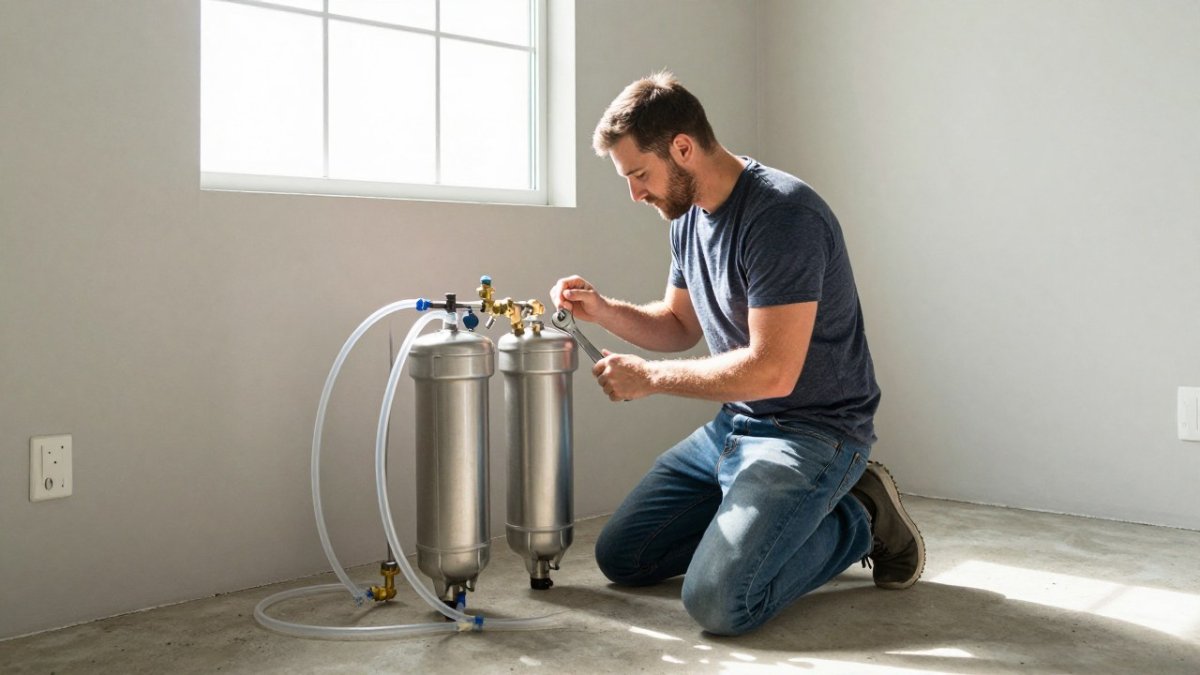
What installation involves. A whole-house sediment filter goes on the main water line, usually in a garage, utility room, or crawlspace.
DIY vs. professional. Swapping a cartridge is a reasonable DIY task. Cutting into the main line, sizing the housing, and setting up a bypass is not, especially if you are not comfortable with plumbing code and leak risk.
Pricing depends on the system, the home's plumbing layout, and the water test results, so current prices are best confirmed through a quote. You can get a free estimate from AquaShield Home Systems.
If your faucets are clogging and your appliances are aging faster than they should, the fix starts with knowing what is in your water.
Frequently Asked Questions
Does city water contain sediment?
Yes, treated municipal water can still carry sediment. Sand, silt, rust particles, and mineral scale flake off aging pipes and mains on the way to your home, especially after main breaks or hydrant flushing. The sediment filter catches these particles before they reach fixtures and appliances. If you notice cloudy water or grit in aerators, a sediment filter is worth considering.
How often do you need to change a sediment filter?
A sediment filter maintenance schedule should follow actual pressure readings rather than a calendar. Check the pressure gauge before and after the housing to see how loaded the cartridge is. Areas with high sediment may need more frequent changes than cleaner municipal supplies.
Do sediment filters protect water softeners?
Yes. A sediment filter placed before a water softener acts as a pre-filter, trapping sand, silt, and rust before they foul the resin bed. This protecting appliances from water sediment approach extends softener life and keeps regeneration efficient. Skipping the pre-filter lets debris accumulate in the resin, which reduces softening capacity and can lead to costly service calls.
Is a sediment filter the same as a water softener?
No. A sediment filter removes physical particles down to a rated micron size, while a water softener uses ion exchange to remove hardness minerals like calcium and magnesium. They solve different problems and often work together: the sediment filter protects the softener. If your goal is reducing scale and hard water buildup, you need a softener; if it is grit and rust, a sediment filter is the fix.