 how-to
How to Remove Rotten Egg Smell From Well Water
Table of Contents
- Start With a Diagnostic Sequence Before You Treat Anything
- Well Water Testing for Sulfur: What to Test and How to Read Results
- Shock Chlorination: Step-by-Step Well Disinfection Safety
- Rotten Egg Smell in Hot Water Only: What That Tells You
- Choosing a Filter for Sulfur Smell in Well Water
- How Long Does It Take to Get Sulfur Smell Out of Water?
- Costs, Maintenance Intervals, and When to Escalate
- Frequently Asked Questions
Last Updated: October 13, 2026
Start With a Diagnostic Sequence Before You Treat Anything
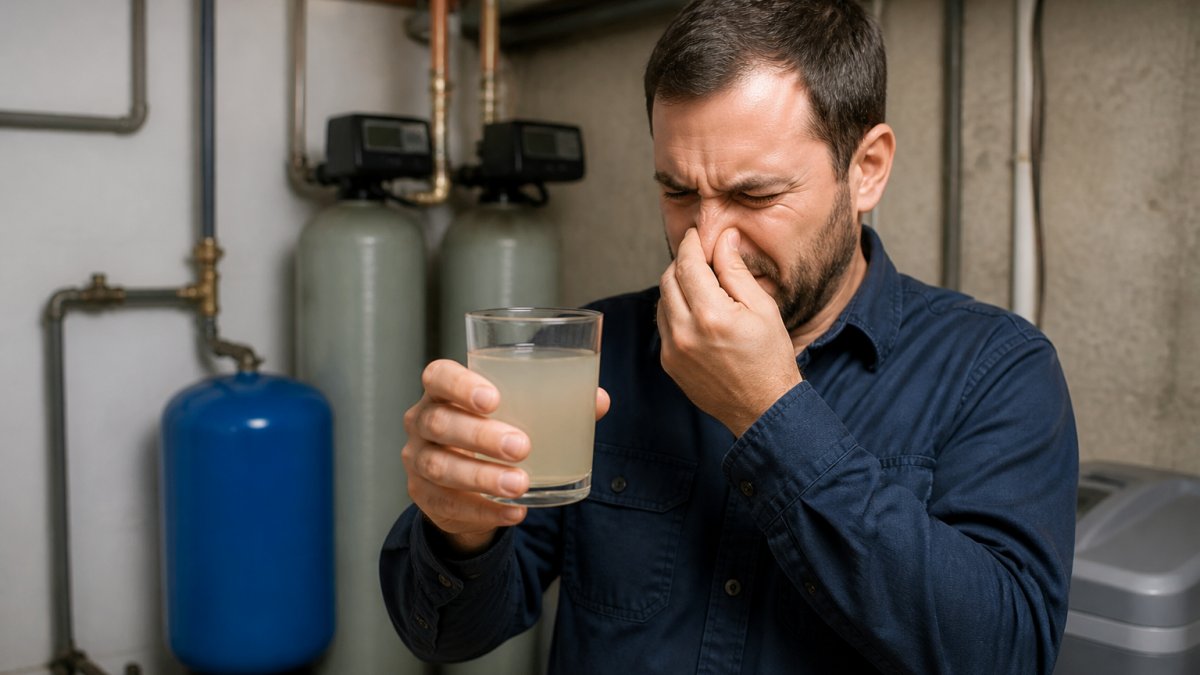
A rotten egg smell in well water almost always traces back to hydrogen sulfide gas, and the source of that gas decides which fix actually works.
Hydrogen sulfide is a naturally occurring gas that dissolves into groundwater as it moves through underground rock and soil. It smells like rotten eggs at very low levels, which is why a sulfur odor shows up long before the water looks any different.
Here is the sequence we recommend:
- Run the smell test on hot and cold water separately.
- Check whether the odor shows up in every tap or just one.
- Test the raw well water before it hits any treatment equipment.
- Match the result to a treatment path.
Skip a step and you risk buying a filter for sulfur smell in well water that never touches the actual problem.
Identify Whether the Odor Comes From Hot Water, Cold Water, or Both
Hot water only points to your water heater. Cold water only points to the well or the plumbing between the well and the tap. Both means the sulfur is in the groundwater itself, and you need whole-house treatment.
That single test saves more money than any other step in this process. Before you call anyone, run one tap on cold for a minute and smell it. Then run the hot side and smell that. Write down what you find.
Well Water Testing for Sulfur: What to Test and How to Read Results
Well water testing for sulfur should cover hydrogen sulfide, iron, manganese, and bacteria, because these contaminants travel together and each one changes your treatment plan. A basic test that only checks for sulfur will miss half the story.
We recommend an independent lab test rather than a strip test. Strips give you a rough range, and sulfur is one of the hardest contaminants to read that way. A certified lab gives you a number you can act on.
What to test for:
- Hydrogen sulfide levels
- Iron and manganese
- Sulfate-reducing and iron bacteria
- pH and hardness
Read the results in context. High iron plus sulfur usually means iron bacteria are involved, and that changes which treatment you pick.
Shock Chlorination: Step-by-Step Well Disinfection Safety
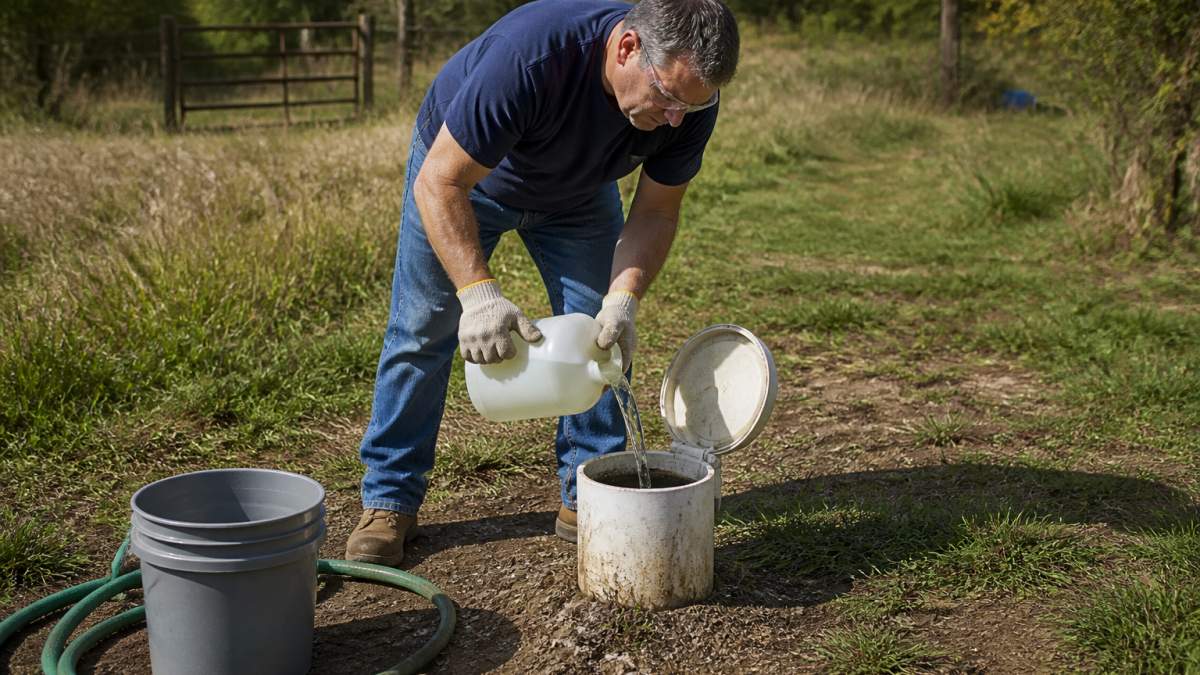
Shock chlorination is the standard first step for killing sulfur-reducing and iron bacteria that have colonized a well casing, drop pipe, pressure tank, or household plumbing. It works when the bacteria are living in the well and distribution system rather than in the deep groundwater itself. If the sulfur is coming from the aquifer, shock chlorination will knock the odor down for a few days and then it will return.
Safety First
Chlorine is a strong oxidizer. Done carelessly, well disinfection can harm you, damage the pump, or kill the beneficial bacteria in a septic system.
Before you start:
- Wear gloves, eye protection, and old clothes you can ruin.
- Ventilate the area and never mix chlorine with ammonia, acids, or other cleaners.
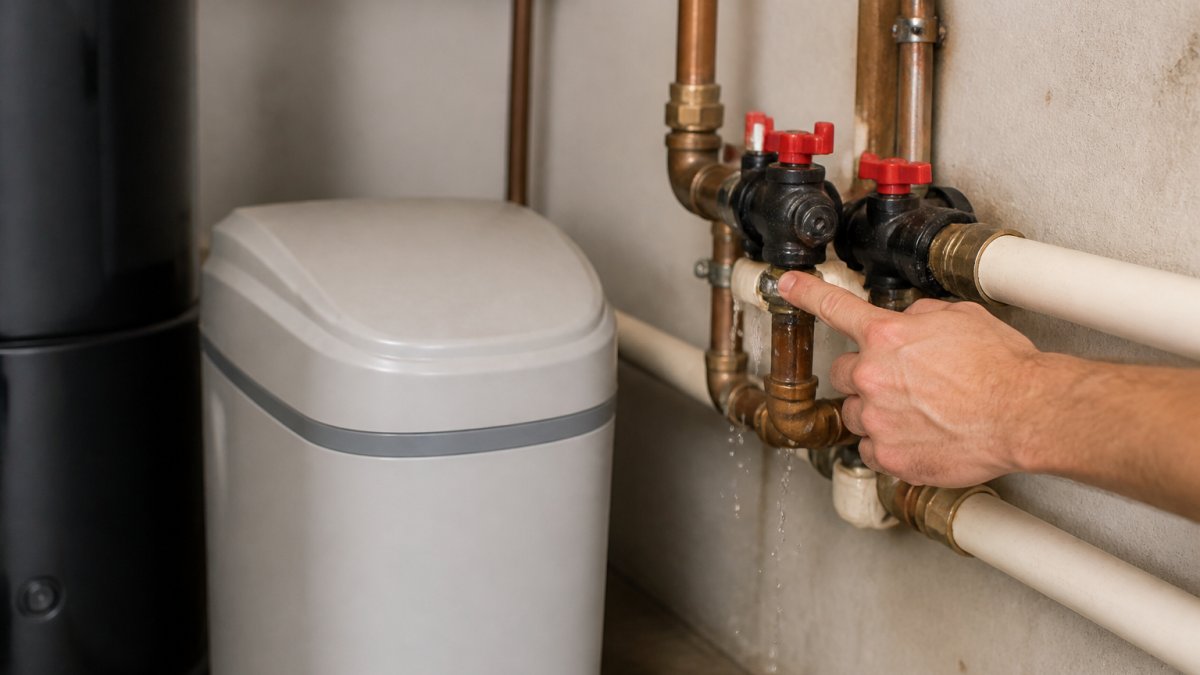
- Bypass any water softener, carbon filter, or reverse osmosis system so the chlorine does not destroy the media or membrane.
- Keep pets and kids away from the well head and away from any tap you are running.
- Confirm your well is not connected to a shared or public supply.
Dosage and Contact Time
Most state and county health departments publish a shock chlorination fact sheet with a dosage table based on well diameter, water depth, and casing volume.
Contact time matters as much as dose. A common target is 12 to 24 hours of contact before flushing, with the well capped and no water used inside the house during that window. If your water pH is above 7.5, chlorine is much less effective, and many well contractors add a small amount of white vinegar or a pH-adjusting agent to bring the water into a range where the chlorine can actually oxidize the bacteria.
The Process
- Calculate the standing water volume in your well using the casing diameter and static water level.
- Mix the chlorine in a clean bucket of water and pour it down the well casing.
- Run a hose from an outdoor spigot back into the well casing and circulate for 15 to 30 minutes so the chlorinated water contacts the casing walls, drop pipe, and pump.
- Open every cold and hot tap in the house one at a time until you smell chlorine at each fixture, then close it. This pushes chlorinated water through the entire plumbing system.
- Let the system sit for 12 to 24 hours.
- Flush a hose to a safe drain away from the septic system, lawn, and any stream until the chlorine smell is gone, then flush every fixture.
Do not skip the flush. Leftover chlorine will corrode fixtures, degrade rubber seals, and destroy any treatment equipment downstream.
Flush and Scrub the Well System and Plumbing System
Flushing alone often leaves bacteria behind on the well walls, in the pitless adapter, and inside the pressure tank. Scrubbing the accessible portion of the casing with a dedicated well brush and surging the water with a hose loosens that biofilm so the chlorine can reach it.
After the chlorine sits, run a hose to a safe drain and flush until the smell clears. Then retest.
When Shock Chlorination Is Not Enough
If the sulfur smell comes back within a few weeks, the bacteria were never fully removed, or the sulfur is coming from the aquifer rather than the well. At that point, repeated shock treatments are a waste of chlorine and a risk to your pump and pressure tank. The next step is usually continuous oxidation and filtration, which is covered in the treatment section below.
For dosage tables, contact time, and any local reporting requirements, follow your state or county health department well disinfection guidance and the well manufacturer's instructions. Those documents override any general guidance here.
Rotten Egg Smell in Hot Water Only: What That Tells You
A rotten egg smell in hot water only is almost always a water heater problem, not a well problem. The heater creates the perfect warm, low-oxygen environment for sulfur-reducing bacteria to grow inside the tank.
The fix here is different from a well-wide treatment. You typically need to disinfect and flush the water heater itself, and in some cases replace the anode rod, which can feed the bacteria. If the smell returns quickly after flushing, the tank may be too far gone and replacement is the honest answer.
Before you spend money on a whole-house system, rule this out. It is the cheapest problem to fix and the most commonly misdiagnosed.
Choosing a Filter for Sulfur Smell in Well Water
A filter for sulfur smell in well water has to match the sulfur level in your water. Light sulfur responds to a carbon filter. Heavier sulfur needs oxidation first, because carbon alone cannot keep up.
Here is how the main treatment options compare:
| Treatment | Best For | How It Works | Watch Out For |
|---|---|---|---|
| Activated carbon filter | Light sulfur, taste and odor | Adsorbs gas as water passes through | Media needs regular replacement |
| Chlorine injection | Moderate to heavy sulfur | Oxidizes gas, then filters it out | Needs contact time and dosing control |
| Hydrogen peroxide injection | Heavy sulfur, no chlorine taste | Strong oxidation, no chemical aftertaste | Higher operating cost |
| Ozone | Heavy sulfur, whole-house | Powerful oxidation, no added chemical | Needs professional setup |
| Point-of-use filter | One tap only | Small carbon unit at the faucet | Does not fix the whole house |
For most homes dealing with sulfur and iron together, we recommend oxidation followed by filtration rather than carbon alone. It costs more up front, but it actually removes the odor instead of masking it for a few weeks.
Treatment Decision Tree and Its Limitations
Use this decision tree to narrow your options:
- Hot water only? Disinfect or replace the water heater first.
- Cold water only? Check the well and plumbing for bacteria.
- Both, light odor? Start with a carbon filter.
- Both, heavy odor? Go to oxidation plus filtration.
- Iron or manganese also high? Add iron removal to the plan.
The limits matter. No single treatment handles every water chemistry. Heavy sulfur, high iron, and low pH together often need a multi-stage system, and a single off-the-shelf unit will not cut it.
How Long Does It Take to Get Sulfur Smell Out of Water?
Most homeowners see the sulfur smell gone within a day of a proper shock chlorination, or within a few days of installing a correctly sized treatment system. If the odor lingers past a week, the source was misdiagnosed.
Timeline at a glance:
- Shock chlorination: odor gone within 24 hours, retest at 2-4 weeks.
- Water heater flush: same day, watch for return within a month.
- Carbon filter install: immediate, but replace media on schedule.
- Oxidation system: immediate, with a short break-in period.
If the smell comes back, that is your signal to retest rather than re-treat blindly. Repeating the same fix on the same misdiagnosed problem wastes money.
Costs, Maintenance Intervals, and When to Escalate
Pricing for well water treatment depends on your water chemistry, system size, and how many stages you need, so we quote every job after testing rather than guessing over the phone. Operating costs come down to media replacement, chemical use, and electricity for injection or ozone systems.
Maintenance you can expect:
- Carbon media: replace on a set schedule, often yearly.
- Chlorine or peroxide: refill the chemical tank as needed.
- Ozone system: periodic service on the generator.
- Whole-house system: annual check and filter changes.
Escalate to a licensed pro when the odor returns after treatment, when multiple contaminants show up on your test, or when you are not sure which system fits.
Rotten egg smell in well water is solvable, but only when you find the real source first.
Frequently Asked Questions
Why does my well water smell so bad?
The rotten egg smell comes from hydrogen sulfide gas, which forms when sulfur-reducing bacteria break down naturally occurring sulfur and organic matter in the well. Iron bacteria can create similar odors. The smell is strongest when water first runs, because gas that built up in the well system and plumbing system escapes at the tap. Testing confirms whether bacteria, hydrogen sulfide, or both are the source before you choose a treatment.
Is well water that smells like rotten eggs safe to drink?
Hydrogen sulfide is generally not considered a health hazard at the levels that cause a rotten egg smell, but the odor makes water unpleasant and can indicate sulfur bacteria or other contamination. Have the well tested for coliform bacteria and nitrates, especially if the smell appeared suddenly. Until results come back, use bottled water for drinking and cooking, and avoid mixing bleach with sulfide-heavy water in closed spaces.
Why does only my hot water smell like rotten eggs?
When the rotten egg smell in hot water only shows up, the problem usually lives in the water heater, not the well. The magnesium anode rod reacts with sulfate in the water to produce hydrogen sulfide gas. Replacing the anode with an aluminum or zinc rod, or removing it in favor of a powered anode, often eliminates the odor. If the cold water also smells, the source is the well itself and shock chlorination is the next step.
Can a water softener remove sulfur smell from well water?
No. A water softener exchanges calcium and magnesium for sodium and has no effect on hydrogen sulfide or sulfur bacteria. A filter for sulfur smell in well water needs oxidation first, using chlorine injection, hydrogen peroxide, ozone, or aeration, followed by activated carbon filtration and adequate contact time. Whole-house treatment sized to your flow rate and sulfide level works far better than a point-of-use filter on one tap.