 How-to
7 Common Water Softener Problems and How to Fix Them
Last Updated: October 30, 2026
Quick Summary
Most water softener problems trace back to a unit that is bypassed, unplugged, or sitting on a salt bridge, so check power, salt, and the bypass valve first. A salt bridge is a hard crust above the water line that you break by pushing a broom handle down through it. Leaks usually come from loose connections, a worn O-ring, or a cracked valve body rather than the tank.
- Test soft water by shaking dish soap in a glass of cold tap water; soft water foams quickly and stays foamy.
- A salt bridge sounds hollow when tapped, while salt mush is wet, sludgy salt that clogs the brine line.
- Never pour hot water into the brine tank to melt a bridge, as it can crack the tank and damage the valve.
- Regeneration failures usually trace to a clogged brine line, a bad timer setting, or a stuck valve.
- Call a professional when the unit passes every basic check but still delivers hard water or the tank itself leaks.
Table of Contents
- How to Tell If Your Water Softener Is Working
- First Checks When Your Water Softener Is Not Working
- How to Break a Water Softener Salt Bridge
- Fixing Water Softener Regeneration Problems
- What to Do When Your Water Softener Is Leaking
- When to Call a Professional for Water Softener Repair
- Get a Free Estimate for Expert Water Softener Repair
- Frequently Asked Questions
How to Tell If Your Water Softener Is Working
A working softener should leave your soap lathering easily and your shower glass free of white film. If either changes, the system is likely struggling. Troubleshooting common water softener problems starts with one simple question: is the unit actually softening, or just running?
Here is the fastest test. Fill a clear glass with cold tap water and add a few drops of dish soap. Shake it hard. Soft water foams up quickly and stays foamy. Hard water gives you thin, flat suds and a cloudy glass.
You can also check the brine tank. Look for salt that sits at a normal level, not crusted into a solid block. And listen during a regeneration cycle. You should hear water moving and the control valve ticking through its steps.
Most "broken" softeners are not broken at all. They are bypassed, unplugged, or sitting on a salt bridge.
Below, we'll show you exactly how to diagnose each of the seven most common failures and fix the ones you can handle yourself.
Here is a quick-reference summary of the symptoms and fixes covered in this guide.
| Problem | Cause | Fix |
|---|---|---|
| No soft water | Unit bypassed, unplugged, or salt bridge | Check power, salt, and bypass valve first |
| Salt bridge | Hard crust of salt above the water line | Push a broom handle down through the crust |
| Salt mush | Wet, sludgy salt from high-moisture salt or overfilling | Scoop out loose chunks and mushy salt |
| Regeneration failure | Clogged brine line, bad timer setting, or stuck valve | Disconnect and flush the brine line clear |
| Leak at bypass valve | Loose nut or worn O-ring | Tighten the nut or replace the O-ring |
| Leak at brine line fitting | Cracked ferrule or loose connection | Repair the cracked ferrule or loose connection |
| Leak from drain line | Loose clamp or line pulled from standpipe | Tighten the clamp or reseat the line |
| Leak under tank | Cracked resin tank | Replacement |
First Checks When Your Water Softener Is Not Working
When your water softener is not working, check power, salt, and the bypass valve before anything else. These three account for most no-soft-water calls we see. Each check takes under five minutes.
Check the Bypass Valve and Power Supply
Start at the wall. Confirm the unit is plugged into a live outlet and the display is lit. A tripped GFCI outlet or a loose plug will stop regeneration cold.
Next, find the bypass valve behind or beside the unit. It has a lever or knob with two settings: service and bypass. If someone opened it for plumbing work and never set it back, water flows straight past the softener. That means hard water at every tap while the unit sits idle.
Turn the valve to service and run a tap for a minute. Then retest with the soap shake.
Test Your Water for Hardness
A cheap test strip confirms what your soap already told you. Dip the strip in a glass of tap water, wait the time printed on the bottle, and compare the color to the chart.
Test both before and after the softener if you can. Water that tests hard going in and hard coming out points to the softener itself. Water that tests hard at every tap, including outdoor spigots, often means the unit is bypassed.
If your water also stains fixtures orange or smells like metal, hardness may not be the whole story. Learn whether a water softener removes iron before assuming hardness is the only issue.
How to Break a Water Softener Salt Bridge
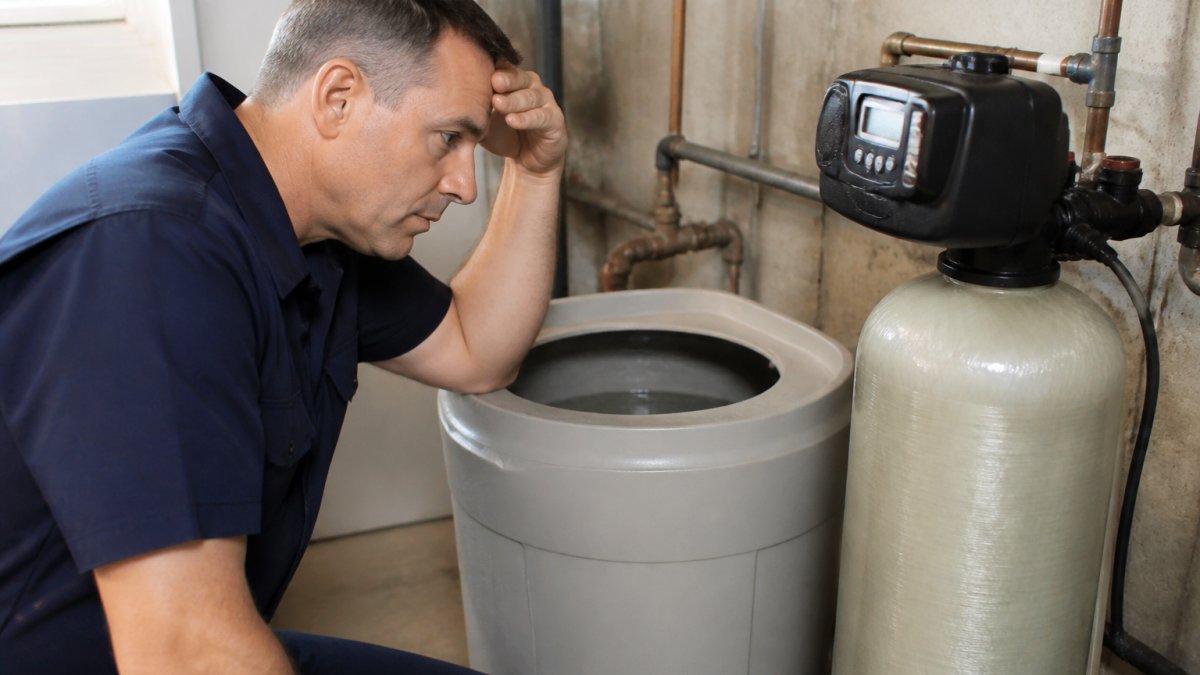
A salt bridge is a hard crust of salt that forms above the water line, leaving a hollow space underneath. The softener thinks it has salt, but no brine forms. Break it by pushing a broom handle or long tool down through the crust until you feel it give way.
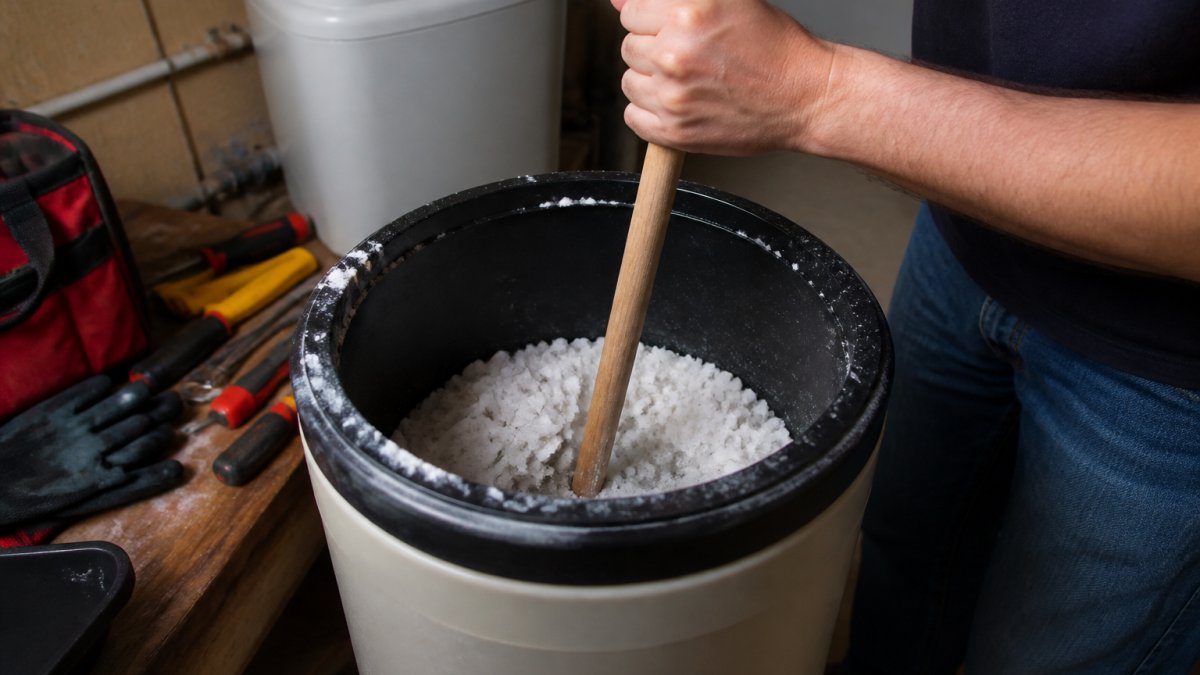
Here is the full process:
- Turn off the softener at the control panel.
- Remove the lid from the brine tank.
- Push a clean broom handle straight down through the salt until you hit the water below.
- Work around the tank to break up the whole crust.
- Scoop out loose chunks and any mushy salt.
- Add fresh salt and restart a manual regeneration.
Signs of a Salt Bridge vs. Salt Mush
A salt bridge looks solid on top but sounds hollow when you tap it. Salt mush is different: wet, sludgy salt that clogs the brine line and never dissolves properly. Mush usually comes from cheap, high-moisture salt or from overfilling the tank.
Watch out: never pour hot water directly into the brine tank to melt a bridge. It can crack the tank and damage the valve.
Fixing Water Softener Regeneration Problems
Water softener regeneration problems usually trace back to a clogged brine line, a bad timer setting, or a stuck valve. Regeneration is the cycle that washes hardness minerals out of the resin and recharges it with sodium. Skip it, and the resin exhausts in a few days.
Common Causes of Regeneration Failure
Check these in order:
- Brine line clogged or kinked: disconnect it and flush it clear.
- Salt level too low: the unit needs salt above the water line to make brine.
- Timer or control set wrong: confirm the regeneration time and frequency match your household size.
- Drain line blocked: if the unit cannot push wastewater out, the cycle stalls.
- Valve stuck: mineral buildup can freeze the piston; a valve cleaning often fixes it.
A common mistake is resetting the timer without checking the brine line. The unit cycles, but no brine reaches the resin, so nothing improves.
Once you have the cycle running again, keep it that way with a simple maintenance routine. Our whole home water filtration system maintenance guide covers filter schedules, cartridge changes, and softener care.
What to Do When Your Water Softener Is Leaking
A water softener leaking at the base or fittings needs the water supply shut off first, then a careful look at where the drip starts. Most leaks come from loose connections, a worn O-ring, or a cracked valve body, not the tank itself.
Locating the Source of the Leak
Dry everything with a towel, then run the unit through a manual regeneration and watch. If the drip traces back to the bypass valve, this step-by-step guide to a leaking bypass valve walks through the repair. Trace the first bead of water upward:
- Leak at the bypass valve: usually a loose nut or a worn O-ring.
- Leak at the brine line fitting: often a cracked ferrule or loose connection.
- Leak from the drain line: a loose clamp or a line pulled out of the standpipe.
- Leak under the tank: a cracked resin tank, which means replacement.
Watch out: ignore a slow drip and you can end up with a warped floor or a soaked drywall base. Fix it the same week you spot it.
When to Call a Professional for Water Softener Repair
Call a professional when the unit passes every basic check but still delivers hard water, when the valve or control board has failed, or when a leak comes from the tank itself. Those repairs need parts and tools most homeowners do not keep on hand.
Signs it is time to hand it off:
- The control panel throws an error code you cannot clear.
- The unit regenerates but your water stays hard.
- Water pools around the base after every cycle.
- The resin tank is cracked or the valve body is damaged.
- The system is old enough that parts are hard to source.
We are licensed installers and plumbers, and we have served Northern Colorado for over five years. For homeowners who have tried the basic fixes and still have a failing system, expert water softener repair in Wellington, CO is the next step.
Get a Free Estimate for Expert Water Softener Repair
Some softener problems are a broom handle and a test strip away from solved. Others need a trained eye on the valve, the resin, or the plumbing behind the wall. Knowing which is which saves you time and money.
At AquaShield Home Systems, we are family-owned, licensed, and take a no-pressure approach. We handle whole-home softeners, reverse osmosis systems, and iron removal, all matched to your home's water.
Get started with AquaShield Home Systems and get your soft water back without the guesswork. Get a free estimate today.
Frequently Asked Questions
Why is my water softener not softening the water?
The most common reasons a water softener stops softening are a salt bridge or empty salt tank, a bypass valve left open, a power outage that reset the timer, or a clogged resin bed. Start by checking the salt level and breaking up any crust, confirm the bypass is in the service position, and test your water with a hardness kit. If hardness stays high after a manual regeneration, the resin or control valve may need professional service.
What causes a salt bridge in a water softener, and how do I fix it?
A salt bridge forms when high humidity or the wrong salt type causes the top layer of salt to harden into a crust while the space beneath stays hollow. You will see a full tank but get hard water. Break the bridge by pouring hot water over the crust and carefully poking it with a long, blunt tool. Never use a sharp object. After breaking it, run a manual regeneration and switch to high-purity salt pellets to reduce recurrence.
Why is my water softener stuck in regeneration?
A softener stuck in regeneration usually points to a blocked drain line, a faulty timer or control board, or low water pressure. Check that the drain hose is not kinked or frozen and that the flow control is clear. If the unit runs past its normal cycle time, unplug it for a minute and restart. Persistent regeneration problems, especially repeated cycles, often mean the valve motor or sensor needs a licensed technician.
When should I call a professional to repair a water softener?
Call a licensed professional if you see water pooling around the tank, if the unit leaks from the valve body, if regeneration fails after you have cleared the drain line, or if hardness remains high after a manual regeneration and salt check. Also call if the system is more than 10 years old and repairs stack up. A licensed plumber can confirm whether a repair or replacement makes more sense for your home.