 listicle
Signs Your Home Needs Water Softening: 8 Clear Warnings
Table of Contents
- 8 Signs Your Home Needs Water Softening
- How to Test Water Hardness at Home and Read the Results
- Hard Water Stains on Faucets and Showerheads: What They Mean
- Hard Water Effects on Appliances and How Fast They Show Up
- Water Softener Maintenance Signs You Should Never Ignore
- When Softening Is Not the Answer: Other Causes and Trade-Offs
- Your Symptom-to-Action Checklist Before You Buy
- Conclusion: Match the Fix to the Symptom
- Frequently Asked Questions
Last Updated: October 9, 2026
8 Signs Your Home Needs Water Softening
Below, we'll show you exactly how to read each symptom, confirm it with a test, and match the fix to your household.
Hard water announces itself through a handful of repeatable symptoms. The eight signs below are the ones we see most often in homes across Northern Colorado and the Denver metro area.
- Scale and crust on faucets and showerheads
- Cloudy glassware and spotty dishes
- Soap and shampoo that won't lather
- Soap scum on showers, tubs, and fixtures
- Dry, itchy skin after bathing
- Dull, stiff, or faded laundry
- Reduced appliance efficiency and shorter appliance life
- Rust-colored or chalky stains that keep coming back
Each sign points to the same underlying cause: dissolved calcium and magnesium in your water. Here's how to read them.
Scale and Crust on Faucets and Showerheads
The most reliable early warning is scale buildup. It shows up as a white, chalky crust around the base of faucets, on showerheads, and along the rim of a coffee maker or kettle.
A common mistake is treating this as a cleaning problem. It is a water problem. If you are scrubbing the same fixture every week, the minerals are still in the water supply feeding it.
Cloudy Glassware, Spotty Dishes, and Soap That Won't Lather
Cloudy glassware and spotty dishes are classic signs of hard water. After a dishwasher cycle, glasses come out with a film or white spots because calcium and magnesium interfere with detergent and rinse agents.
The same minerals react with soap to form a sticky residue instead of a clean lather. If you find yourself using more shampoo, more dish soap, and more laundry detergent to get the same result, hard water is likely the reason.
Dry Skin, Dull Hair, and Stiff, Gray Laundry
Dry, itchy skin after bathing often traces back to hard water. The minerals left on your skin pull moisture away and can leave a soapy film that blocks your natural oils.
Laundry tells the story too. Whites turn gray, colors fade, and fabrics dry stiff because detergent struggles to rinse clean. If your towels feel like cardboard, that is mineral residue, not the fabric wearing out.
How to Test Water Hardness at Home and Read the Results
The fastest way to confirm hard water is a home test, and the most accurate is a lab or in-home professional test. Water hardness is measured in grains per gallon or parts per million of dissolved calcium and magnesium.
For a more precise result, ask a water treatment professional to test a sample and explain what the numbers mean for your household size and plumbing. As documented in U.S.
| Test Method | What It Tells You | Best For |
|---|---|---|
| Test strips | Rough hardness range | A quick first check |
| Liquid drop kit | More precise grains per gallon | DIY confirmation |
| Professional test | Full mineral profile | Choosing a system |
Hard Water Stains on Faucets and Showerheads: What They Mean
Hard water stains on faucets and showerheads are mineral deposits, not dirt. The white or chalky film is calcium carbonate left behind as water evaporates.
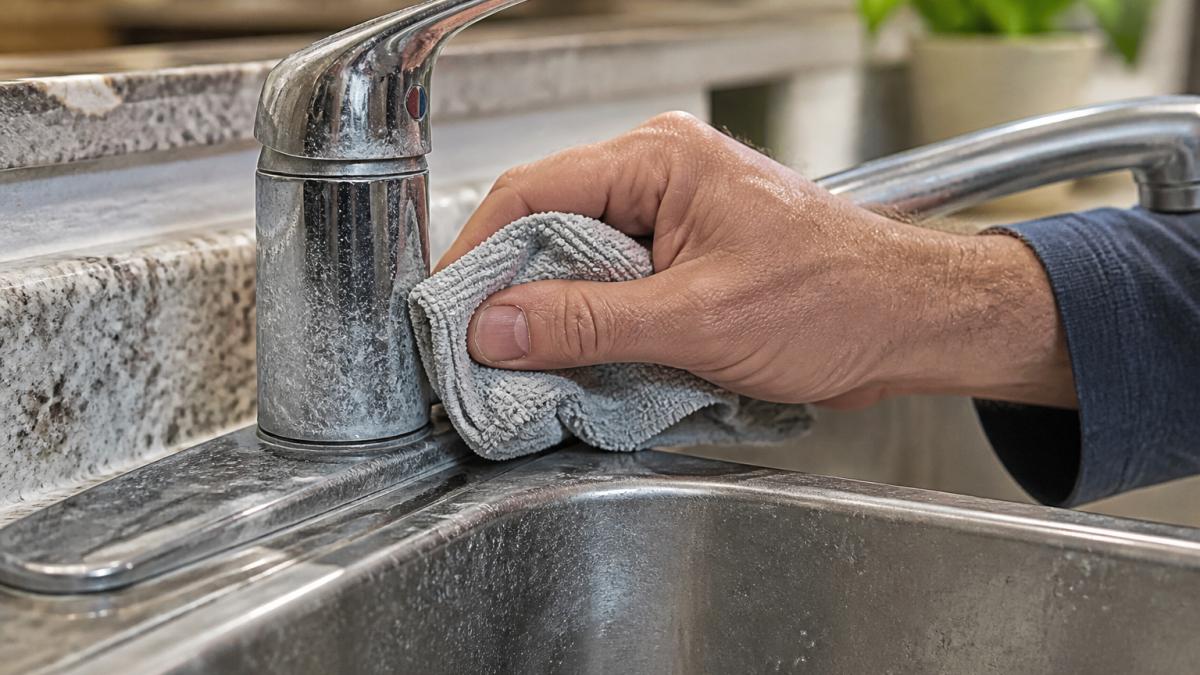
These stains matter because they signal what is happening inside your pipes and appliances, where you cannot see it. The same minerals coating your showerhead are coating the inside of your water heater.
Hard Water Effects on Appliances and How Fast They Show Up
Appliances feel hard water first and hardest, and the reason is mechanical.
The same process plays out differently in each appliance:
- Water heater: Sediment blankets the burner or element, raising recovery time and energy use. In gas units, you may hear popping or rumbling as trapped water flashes to steam under the sediment layer.
- Dishwasher: Scale coats the heating element and spray arms, reducing spray pressure and leaving film on glassware even after a clean cycle.
- Washing machine: Mineral deposits stiffen fabrics and can clog inlet screens and internal valves. Detergent also has to work harder, so you use more per load.
- Coffee maker and kettle: Scale builds on the heating surface, slowing brew times and altering taste.
- Ice maker and refrigerator water line: Scale narrows the line and can reduce ice production over time.
How fast this shows up depends on three things: your water's hardness in grains per gallon, how much hot water your household uses, and how well you maintain the equipment.
This is where a whole-home softener changes the math. By removing calcium and magnesium before water enters the plumbing, softening keeps those minerals from ever reaching the heating elements and valves that fail first.
Water Softener Maintenance Signs You Should Never Ignore
A water softener that stops working can look like hard water returning. Watch for these maintenance signals:
- Soap stops lathering again after working fine for months
- The brine tank is low on salt or the salt has formed a solid crust
- The system runs but the water feels different, or you notice new spotting
- Regeneration runs at odd times or not at all
Softening works through ion exchange, where resin beads swap calcium and magnesium for sodium. When the resin is exhausted or the brine tank is not regenerating properly, hardness slips back through. If you are unsure whether your system is doing its job, a professional inspection is worth the call.
When Softening Is Not the Answer: Other Causes and Trade-Offs
Not every symptom means you need a softener, and buying one before ruling out other causes is the most common and costly mistake we see. Before you commit to equipment, work through the competing explanations below.
Rule out other causes first
- Cloudy or spotted dishes: A failing dishwasher, a clogged spray arm, or a rinse-aid dispenser that is empty can produce the same result as hard water. Run a load with a known-good rinse aid and check the spray arms before blaming your water.
- Dry, itchy skin: A water heater set above 120°F strips more moisture from skin, and some skin conditions flare regardless of water quality. If the irritation follows you outside the shower, water hardness is probably not the whole story.
- Rust-colored stains: These usually point to iron in the water or corroding galvanized pipes, not hardness. A standard ion-exchange softener handles small amounts of clear-water iron, but ferric iron (the kind that leaves orange sediment) needs an iron filter ahead of the softener.
- Soap scum that returns immediately: Cleaning-product residue and bar-soap binders can leave film even on soft water. Switch to a liquid body wash and a chelating cleaner for one week to see whether the film changes.
- New spotting after months of clear glassware: If a softener is already installed, the problem is usually the softener, not the water. Check salt level, brine tank condition, and regeneration schedule before assuming the supply changed.
Weigh the trade-offs honestly
- Sodium: Ion-exchange softening swaps calcium and magnesium for a small amount of sodium. For most households the added sodium is minor, but if you are on a sodium-restricted diet, keep a separate unsoftened tap for drinking and cooking, or pair the softener with a reverse osmosis system at the kitchen sink.
- Maintenance: Softeners need salt refills, periodic brine tank cleaning, and resin that eventually wears out. Budget for ongoing consumables, not just installation.
- Wastewater: Regeneration flushes a brine solution to drain on a set schedule. Modern demand-initiated units regenerate based on actual water use, which cuts salt and water waste compared with older timer-based models.
- Space and drainage: A softener needs a footprint near the main line and a drain or floor drain connection. Not every home has an easy spot.
If you rent or cannot install a whole-home system
A whole-home softener ties into the main water line, which many renters cannot modify. Workable alternatives include:
- Point-of-use softening or filtration at the kitchen tap or showerhead, which targets the water you actually drink or bathe in.
- Portable or countertop softeners that treat a limited volume and can move with you.
- Reverse osmosis under the sink for drinking and cooking water, which addresses taste and dissolved solids even when the rest of the house stays hard.
- A conversation with your landlord about a shared upgrade, especially if scale is already damaging the building's water heater.
Check your local water report before you decide
Municipal water systems publish an annual consumer confidence report, sometimes called a water quality report, that lists hardness, iron, and other measured parameters for the prior year.
A no-pressure assessment that starts with a test, not a sales pitch, is the fastest way to sort out which fix actually matches your household.
Your Symptom-to-Action Checklist Before You Buy
Use this checklist to move from symptom to decision:
- List every symptom you notice (scale, spots, dry skin, stiff laundry)
- Test your water and record the hardness level
- Check whether iron or sulfur is also present
- Note your household size and daily water use
- Decide between a softener, a filter, or both
- Get a professional assessment before committing
- Confirm the installer is licensed and the pricing is transparent
AquaShield Home Systems offers a free estimate and a no-pressure assessment, so you can see the numbers before you decide. With over five years serving the area and a team of licensed installers and plumbers, we match the system to your water, not the other way around.
Conclusion: Match the Fix to the Symptom
The hardest part of dealing with hard water is not spotting the signs. It is choosing the right fix without overspending on the wrong one. A quick test and an honest assessment will tell you whether you need softening, iron removal, or something simpler.
At AquaShield Home Systems, we provide whole-home water softeners, reverse osmosis systems, and iron removal, all installed by licensed professionals with transparent pricing and no pressure.
Frequently Asked Questions
How do you know if you have hard water in your home?
Watch for scale crust on faucets and showerheads, cloudy glassware, soap scum in the tub, dry skin after bathing, and stiff or gray laundry. These point to calcium and magnesium in your supply. Confirm it with a water hardness test rather than guessing, since the same symptoms can come from a failing water heater or a clogged aerator. A reading above roughly 7 grains per gallon is widely treated as hard.
How can I test my home's water hardness, and what do the numbers mean?
You have three practical options: a drop-count kit, test strips, or a lab sample through your utility or a certified lab. Results come in grains per gallon or parts per million, and 1 grain per gallon equals about 17.1 ppm. Under 3.5 gpg is soft, 3.5 to 7 is moderately hard, 7 to 10.5 is hard, and above 10.5 is very hard. Test before you buy any water softening equipment.
What are the most common signs that a home needs a water softener?
The clearest signs are mineral buildup on fixtures, spotty dishes, soap that will not lather, soap scum on shower doors, dry skin and dull hair, and fading or stiff laundry. Appliances are the expensive part: scale coats heating elements and water heater tanks, which cuts efficiency and shortens service life. If you see three or more of these at once, testing is the logical next step.
How do I know if my water softening system is working?
Check the basics first: salt level in the brine tank, no salt bridges or mushing, and a regeneration cycle that runs on schedule. Then test your treated water with the same kit you used before the install. A working ion exchange system should drop hardness to near zero. If a softener is installed but fixtures still crust over, the unit may be undersized, the resin beads may be fouled, or a bypass valve may be stuck open.